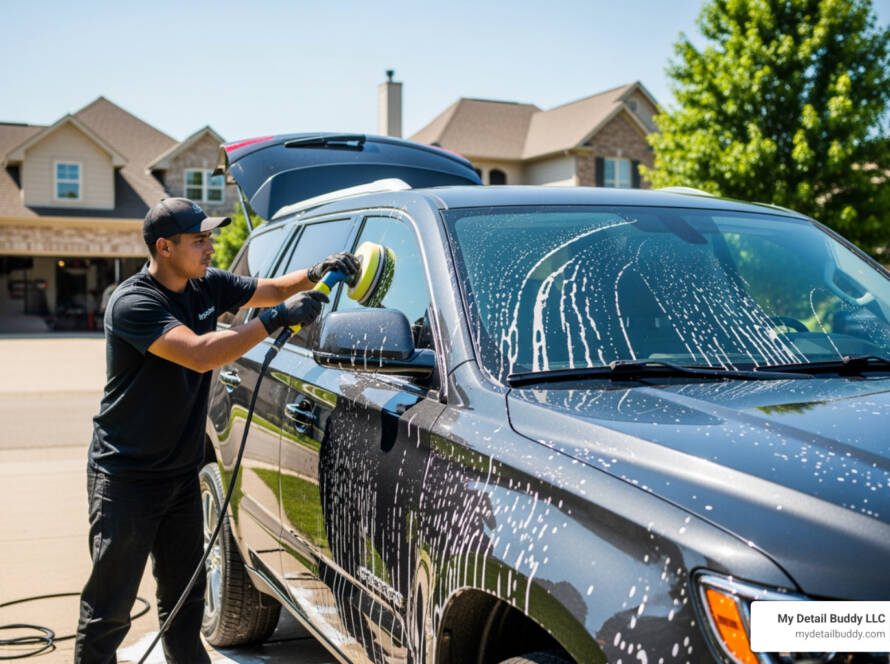
How To / Under the hood
How to clean an engine bay
safely (without soaking anything important).
A clean engine bay makes leaks easier to spot, keeps leaves and pollen away from the air intake, and looks great when you pop the hood to sell or trade in. Here is how to clean an engine bay the careful way, and the parts you should keep dry.
Worth the effort
Why clean your engine bay?
Spot leaks early
Oil, coolant and power steering leaks are easy to see on a clean engine and almost invisible on a grimy one.
Clear out leaves and pollen
Fall leaves and spring pollen pile up in the cowl near the windshield and around the air intake. Clearing them helps drainage and airflow.
Higher resale value
Buyers and dealers pop the hood. A clean engine bay tells them the car was cared for.
Before you start
Engine bay safety checklist
- Let the engine coolNever spray water or degreaser on a hot engine. It can crack hot parts and the cleaner flashes dry instantly. Warm to the touch is the limit.
- Know what to keep dryThe air intake or filter box, the alternator, exposed fuse boxes and any open electrical connectors.
- Cover sensitive partsA plastic bag or plastic wrap over the intake opening and exposed electrical parts adds peace of mind.
- Remove loose debris firstPull leaves, pine needles and twigs out by hand or with a shop vac, especially from the cowl area.
Step by step
How to clean an engine bay
- Lightly mist the engine bayA gentle spray of water, just enough to dampen the surfaces. Not a soaking.
- Spray a diluted degreaserUse an engine degreaser or all-purpose cleaner diluted for engine use. Work from the bottom up so it doesn’t streak.
- Agitate with brushesSoft detailing brushes for plastic covers and hoses, a stiffer brush for greasy metal. Let the cleaner dwell a minute or two, but don’t let it dry.
- Rinse with low pressureA garden hose on a gentle shower setting. Rinse top to bottom. No pressure washer close up.
- Dry it offBlow out water with compressed air or a leaf blower, then wipe the plastic covers with a microfiber towel.
- Remove covers and idle the engineTake off any plastic bags, then let the engine run for a few minutes so the heat dries hidden spots.
- Dress the plastics (optional)A water-based, non-greasy dressing gives plastics and hoses a clean, satin look. Avoid oily products that attract dust.
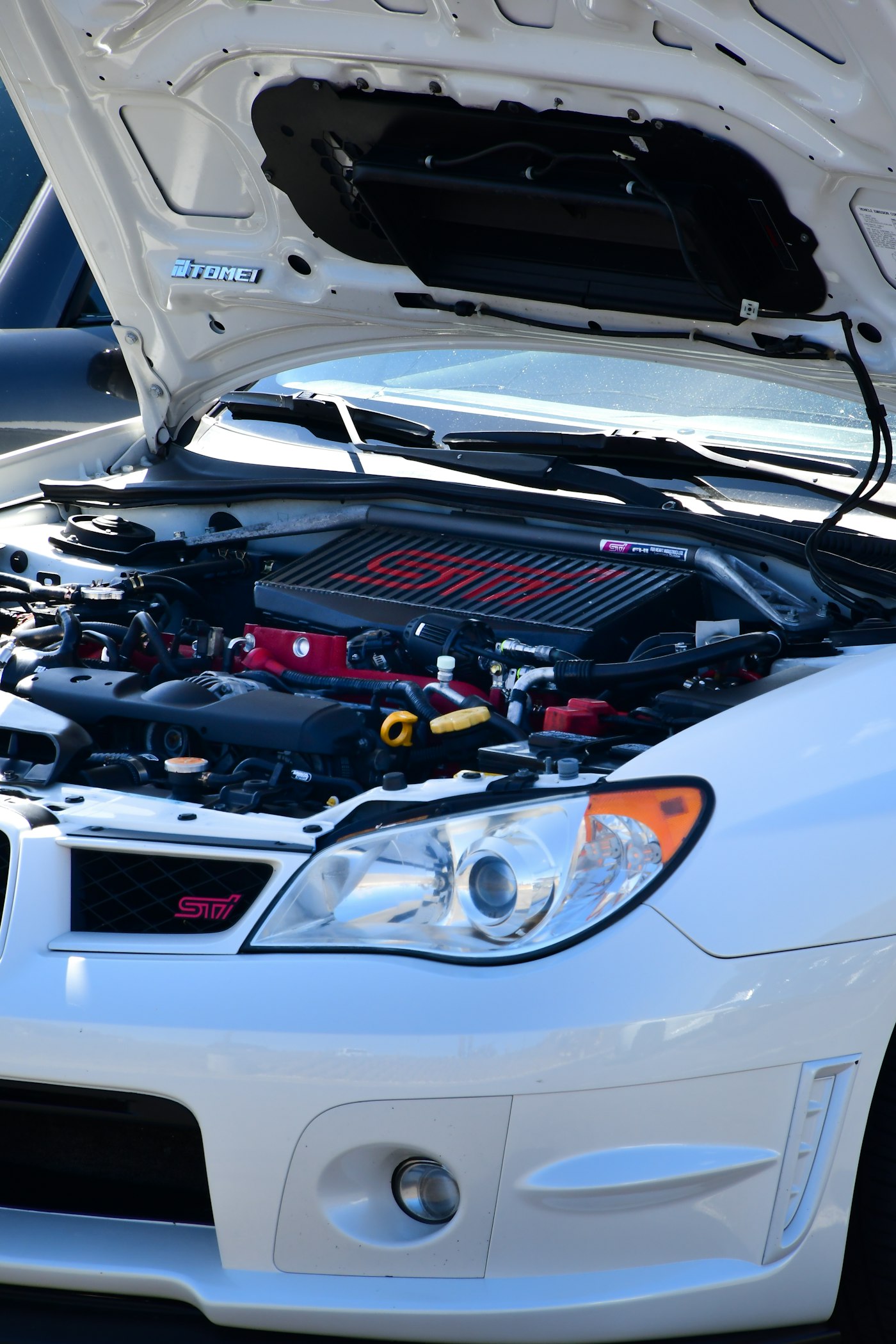
Read this if you drive one
Hybrids and electric cars
Be extra careful. Hybrids and EVs have high-voltage parts under the hood, usually marked with orange cables. Never spray water directly at orange cables, inverters or high-voltage connectors, and check your owner’s manual before cleaning. When in doubt, stick to wiping plastic covers with a damp microfiber towel, or leave it to a pro.
Don’t do this
Engine bay cleaning mistakes
- Pressure washing up closeHigh pressure can force water into connectors and sensors and strip labels. Low pressure only.
- Cleaning a hot engineCleaner bakes on, and cold water on hot metal is never a good idea.
- Using undiluted harsh degreaserIt can stain aluminum and dry out rubber hoses. Follow the dilution on the label.
- Greasy, shiny dressingsThey look wet for a day, then collect dust and dirt.
Low pressure.
Cool engine. Every time.
Waxhaw + South Charlotte
Want it done right?
We’ll pop the hood.
We clean engine bays safely in your driveway, with the right products for plastics, rubber and metal. This October, our Fall Reset full detail includes a free engine bay detail or headlight restoration. See fall specials or call or text Samuel at (704) 292-0757.
Want a price first? Get a free quote.
Quick answers
Is it safe to wash your engine bay with water?
On most modern cars, yes, if the engine is cool, you avoid soaking electrical parts and the air intake, and you rinse with low pressure. Check your owner’s manual, especially on hybrids and EVs.
Can I use a pressure washer on my engine?
We don’t recommend it up close. High pressure can push water into connectors and sensors. A garden hose on a gentle setting is enough.
How often should you clean your engine bay?
Once or twice a year is plenty for most drivers, plus anytime you’re selling the car or tracking down a leak.
What should I cover before cleaning my engine?
The air intake or filter box opening, the alternator and any exposed fuse boxes or electrical connectors. A plastic bag works fine.