Your car’s paint takes a beating every day, UV rays, bird droppings, road grime, tree sap. You know it needs protection, but the ceramic coating vs wax debate can make choosing the right option feel unnecessarily complicated. Both promise to shield your finish and keep your ride looking sharp, but they work in fundamentally different ways and deliver very different results over time.
Want it done for you? My Detail Buddy installs mobile ceramic coating in Waxhaw, NC right in your driveway. Get a free quote.
At My Detail Buddy, we apply both wax and professional-grade ceramic coatings as part of our mobile detailing services across Waxhaw, Charlotte, and the surrounding areas. We’ve seen firsthand how each option performs on hundreds of vehicles, from daily drivers parked outside year-round to garage-kept luxury cars that only come out on weekends. That hands-on experience puts us in a solid position to break down what actually matters when you’re deciding between the two.
This article walks through durability, cost, application process, maintenance demands, and long-term value so you can make a confident decision based on how you use and care for your vehicle. No sales pitch, just a straightforward comparison built on what we see working (and not working) every day on the job.
Why paint protection choices matter
Your car’s clear coat is thinner than you probably think. On most vehicles, it measures somewhere between 1.5 and 2 mils thick, roughly the width of a human hair. That thin layer is the only barrier standing between the color underneath and everything the environment throws at it daily. Once it degrades, you’re looking at oxidation, fading, and paint that cannot be restored without professional intervention.
When you skip protection entirely, you’re not just risking a dull finish. You’re shortening the usable life of the paint itself, which directly affects your vehicle’s resale value. Whether you’re comparing ceramic coating vs wax or just starting to research your options, understanding what’s actually at stake for your paint’s long-term health makes it much easier to invest at the right level.
What the environment does to unprotected paint
Every drive exposes your paint to a combination of UV radiation, road contaminants, and chemical fallout that work together to break down your clear coat. UV rays cause oxidation, which makes paint look chalky and faded over time. Bird droppings and tree sap are acidic and can etch permanently into unprotected clear coat within hours on a hot day.
Road grime, iron particles from brake dust, and industrial fallout bond to paint surfaces and start a slow corrosion process you often won’t notice until the damage is already deep. Washing your car regularly helps, but water and soap alone won’t stop these contaminants from making contact with bare paint.
The longer unprotected paint is exposed to UV rays and chemical fallout, the more likely the damage becomes permanent, because etching that cuts through the clear coat cannot be reversed with polishing alone.
How paint condition affects your car’s value
Resale value drops significantly when paint shows oxidation, swirl marks, or dull patches. Buyers and dealerships assess paint condition as one of the first factors when pricing a used vehicle. A car with clean, well-maintained paint can command hundreds to thousands of dollars more at sale compared to the same model with visibly degraded paint.
Paint correction services, which involve machine polishing to remove surface defects, cost more and take more time than simply applying a protective layer upfront. If your vehicle already has some light swirls or minor oxidation, addressing those before applying any protection makes sense, but waiting until the damage is severe limits your options considerably.
Why the right protection product matters
Not all protective products offer the same level of performance, and choosing the wrong one for your situation wastes both time and money. A weekend car stored in a garage has very different needs than a daily driver parked outside in the Carolina sun year-round. Matching the protection method to how you actually use and store your car is what separates a smart investment from a short-term fix that leaves you reapplying product every few months.
Your budget, your schedule, and your tolerance for maintenance all play a role in the decision too. Some products require professional installation and significant upfront cost but deliver years of protection. Others are quick and affordable but demand regular reapplication to stay effective. Getting clear on your priorities before choosing makes the whole decision much simpler.
What ceramic coating is and what it does
Ceramic coating is a liquid polymer applied directly to your vehicle’s paint that chemically bonds to the clear coat and forms a semi-permanent protective layer on the surface. Unlike products that sit on top of paint temporarily, ceramic coating integrates with the clear coat at a molecular level, meaning it does not wash away, evaporate, or break down quickly under normal driving conditions. The result is a hard, hydrophobic shell that repels water, contaminants, and UV radiation far longer than traditional wax.
How ceramic coatings bond to paint
The chemistry behind ceramic coating is what separates it from wax in the ceramic coating vs wax conversation. Most professional-grade coatings use silicon dioxide (SiO2) as their primary ingredient, sometimes combined with titanium dioxide for added hardness. When applied to a properly prepared surface, the coating undergoes a curing process that forms a covalent bond with the clear coat, making it resistant to removal by water, soap, and light chemical exposure.
Because the bond is chemical rather than mechanical, ceramic coating cannot be removed by regular washing, which is why surface preparation before application is so critical.
Proper preparation means the paint must be fully decontaminated and polished before the coating goes on. Any defects, swirl marks, or contamination trapped under the coating will stay there permanently, which is why professional application makes a significant difference in the final result.
What ceramic coating actually protects against
Ceramic coating creates a surface that is highly resistant to UV oxidation, bird dropping etching, tree sap, road grime, and light chemical exposure from car wash products. The hydrophobic properties cause water to bead tightly and roll off the surface, carrying contaminants with it rather than letting them sit and work into the paint.
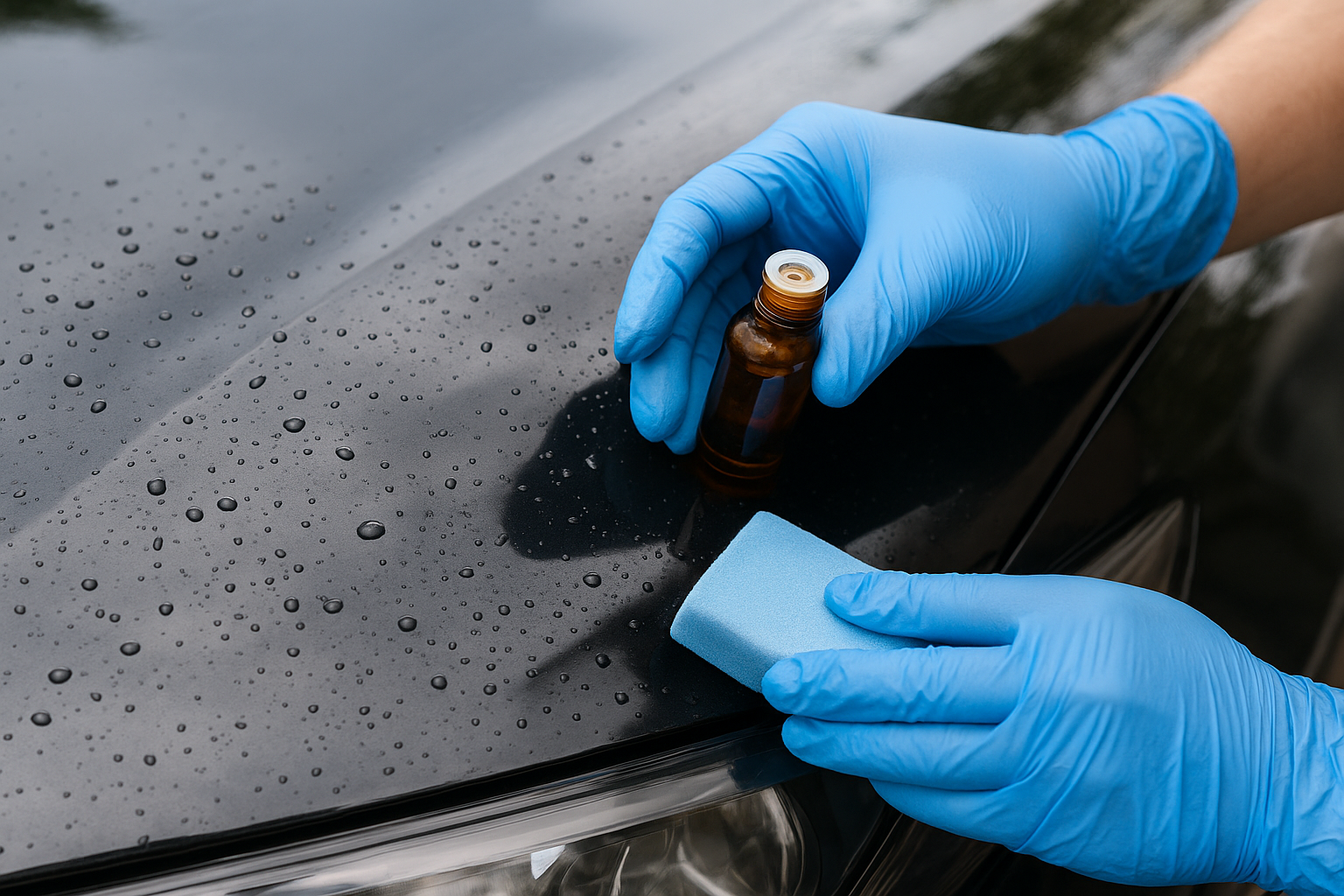
High-quality ceramic coatings applied by a professional typically last anywhere from two to five years depending on the product tier, environmental exposure, and how well you maintain the vehicle afterward. That durability makes ceramic coating the stronger long-term investment for vehicles that spend significant time outdoors.
What car wax is and what it does
Car wax is a naturally derived or synthetic compound that sits on top of your paint as a protective film rather than bonding to it chemically. Traditional carnauba wax comes from the leaves of the Brazilian carnauba palm and has been used for vehicle paint protection for decades. Synthetic waxes, often called paint sealants, use polymer-based formulas designed to last longer than natural carnauba. Both work by creating a sacrificial barrier between your clear coat and the environment, and both wear away with time, heat, and washing.
How wax protects your paint
Wax fills minor surface imperfections and creates a smooth, reflective layer that temporarily repels water, light dust, and mild contaminants. That layer produces the warm, glossy appearance many car owners associate with a freshly detailed vehicle. When water hits a freshly waxed surface, it beads up and rolls off, reducing the chance that minerals and contaminants from water stay in contact with your paint.
The protection wax provides is real, but it is entirely temporary because the film physically wears away rather than bonding to the clear coat the way ceramic coating does.
Depending on the product and how often the vehicle is washed or exposed to heat, most carnauba-based waxes last between four and eight weeks before they need reapplication. Higher-quality synthetic sealants can stretch that window to four to six months, but neither option approaches the longevity you get when comparing ceramic coating vs wax from a durability standpoint.
What wax can and cannot do
Wax does a solid job protecting against light UV exposure, minor water spotting, and surface-level contamination during its active lifespan. It is also forgiving to apply, easy to remove, and widely available at any auto parts store. You do not need professional equipment or extensive preparation to get a good result with wax, which makes it accessible for most vehicle owners.
Wax cannot stop bird dropping etching, deep chemical exposure, or scratch resistance the way a harder coating can. It also provides no meaningful protection once it degrades, which happens faster in hot, sunny climates like the Carolina summers that vehicles in this area regularly face.
Ceramic coating vs wax side-by-side
Putting ceramic coating vs wax head-to-head makes the core differences impossible to ignore. Both products protect your paint to some degree, but they operate at completely different levels of performance, cost, and commitment. Laying out the key factors side by side gives you a clearer, faster way to evaluate what you’re actually comparing before you invest time or money in either option.
Durability and cost compared
The durability gap between the two products is the most important number in this comparison. Professional ceramic coatings hold up for two to five years before needing significant attention, while carnauba wax breaks down in four to eight weeks and synthetic sealants stretch that window to four to six months at best. That difference compounds quickly when you factor in the time and expense of repeated wax applications across the full lifespan of your vehicle.
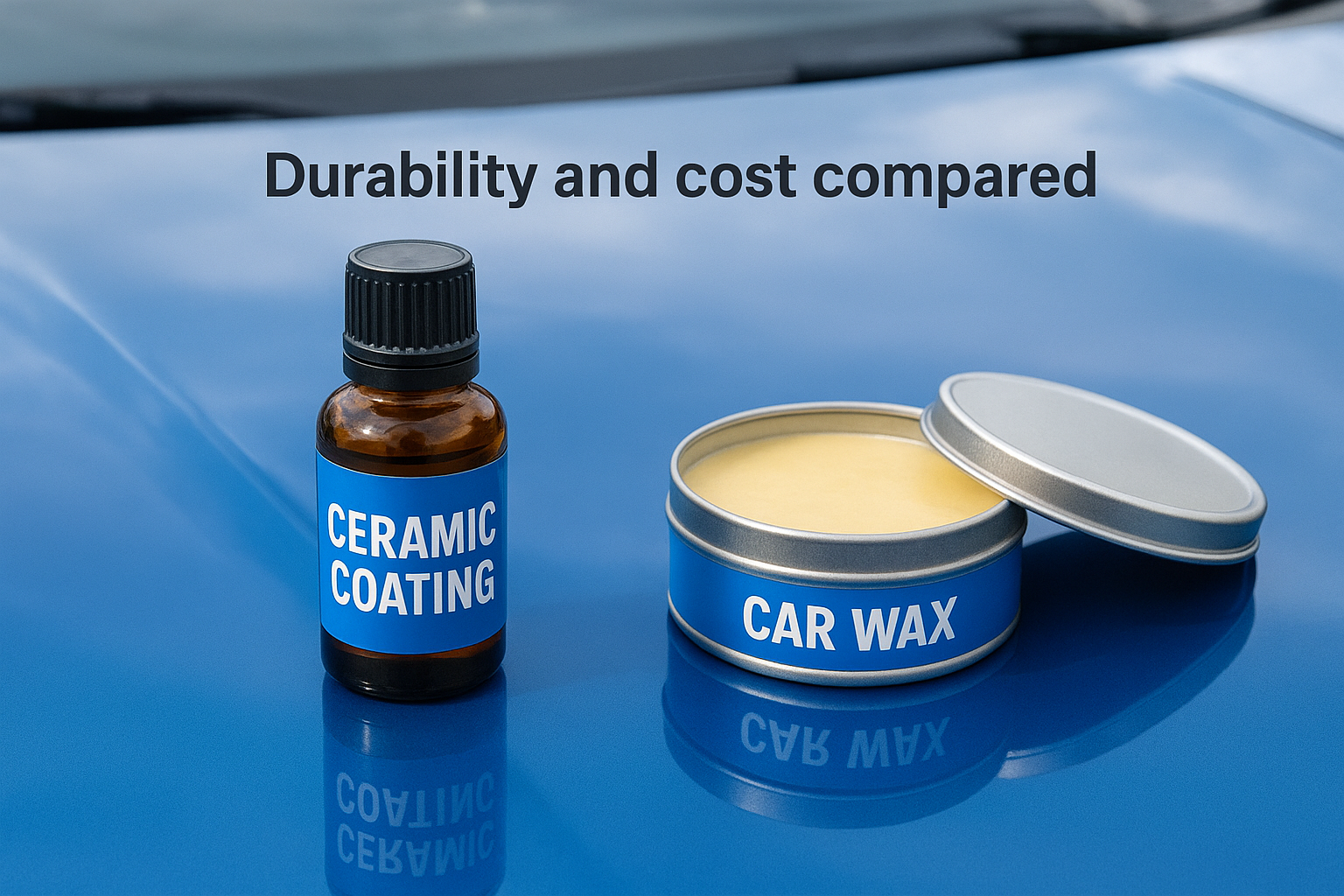
Over a five-year period, the total cost of consistent wax reapplication can approach or exceed the cost of a single professional ceramic coating, without ever delivering the same level of protection.
| Factor | Ceramic Coating | Car Wax |
|---|---|---|
| Durability | 2 to 5 years | 4 weeks to 6 months |
| Upfront cost | $500 to $2,000+ | $15 to $50 |
| Application | Professional recommended | DIY-friendly |
| Scratch resistance | Moderate | Minimal |
| UV protection | Strong, long-lasting | Moderate, temporary |
| Hydrophobic performance | High | Moderate |
Which option fits your situation
Ceramic coating fits your needs if your vehicle spends most of its time parked outside, if you own a newer or higher-value car worth protecting long-term, or if you simply want to stop thinking about paint maintenance for years at a stretch. The upfront cost is higher, but the protection-per-dollar calculation over a multi-year window works in your favor compared to running through seasonal wax cycles repeatedly.
Wax remains a reasonable choice when your budget is tight right now, your vehicle is older and not worth a major investment, or you want a quick refresh before an event or sale. It also works well for garage-stored cars that face limited UV exposure and minimal road contamination, where lower protection demands mean wax holds up adequately between applications.
How to apply and maintain each option
The application process is where ceramic coating vs wax starts to feel like two completely different commitments. Wax is something most vehicle owners can handle at home in an afternoon. Ceramic coating, done properly, requires careful surface preparation, controlled conditions, and technical knowledge that takes the process well beyond a typical weekend detail.
How to apply and maintain ceramic coating
Professional ceramic coating starts with a thorough paint decontamination and polishing stage before the coating ever touches your vehicle. Any surface contamination, swirl marks, or oxidation present at the time of application gets locked in permanently once the coating cures, so this step is not optional. Most professional installations take one to two full days depending on the size of the vehicle and the paint correction work required beforehand.
Skipping proper paint preparation before ceramic coating is the most common reason DIY applications fail to perform the way professional-grade products should.
After the coating cures, maintenance is straightforward. You wash the vehicle regularly using a pH-neutral car wash soap and avoid abrasive products or automatic brush washes that can degrade the coating faster. Annual inspections help catch any areas where the coating has thinned or worn, and a professional top-coat treatment every year or two can extend the coating’s effective lifespan significantly.
How to apply and maintain car wax
Wax application is a task you can complete in your driveway with basic supplies. You apply it in thin, even sections using a foam applicator pad, let it haze over, and then buff it off with a clean microfiber towel. Working in shade rather than direct sunlight prevents the wax from drying too fast and leaving a streaky, difficult-to-remove film on the surface.
Maintaining wax protection means staying consistent with reapplication. Since most waxes degrade within four to eight weeks under real driving conditions, you need to build reapplication into your regular car care routine. Avoiding harsh soaps or high-pressure touchless washes also helps, since those strip the wax layer faster than normal wear would and shorten the time between each application cycle.
How to choose what’s right for your car
Deciding between ceramic coating vs wax comes down to three factors: how you use your car, where you store it, and what you want to spend now versus later. There is no single right answer for every vehicle owner, but there is a better answer for your specific situation once you get honest about those three things.
Consider how you store and use your vehicle
If your car sits outside most of the time, exposed to sun, rain, and road fallout on a daily basis, wax will not keep up with the protection demands your paint actually faces. Reapplying every four to eight weeks sounds manageable in theory, but it is difficult to stay consistent with in practice, especially during the hot Carolina summers that accelerate product breakdown faster than most product labels suggest. Ceramic coating removes that maintenance burden entirely and holds up against the exact conditions that wear through wax quickly.
If you park outdoors year-round in a climate with strong UV exposure, wax reapplication schedules rarely hold up in practice.
Vehicles that spend most of their time in a garage face significantly less environmental stress. For a weekend car or a daily driver with reliable indoor storage, wax delivers adequate protection between wash cycles without requiring the upfront investment that ceramic coating demands. Lower exposure means lower protection requirements, and wax covers those requirements well.
Match your budget to your long-term plan
Your upfront budget matters, but so does what you expect to spend across the next several years. A single professional ceramic coating runs between $500 and $2,000 depending on vehicle size and product tier. Consistent wax applications across the same window add up faster than most owners expect when you factor in product cost, your time, and seasonal reapplication.
If you own a newer vehicle or plan to keep your current one for several more years, the math on ceramic coating improves steadily over time. For an older vehicle you plan to sell or replace within a year, wax gets the job done without locking money into a long-term protection product that ultimately benefits the next owner more than you.
Final takeaways
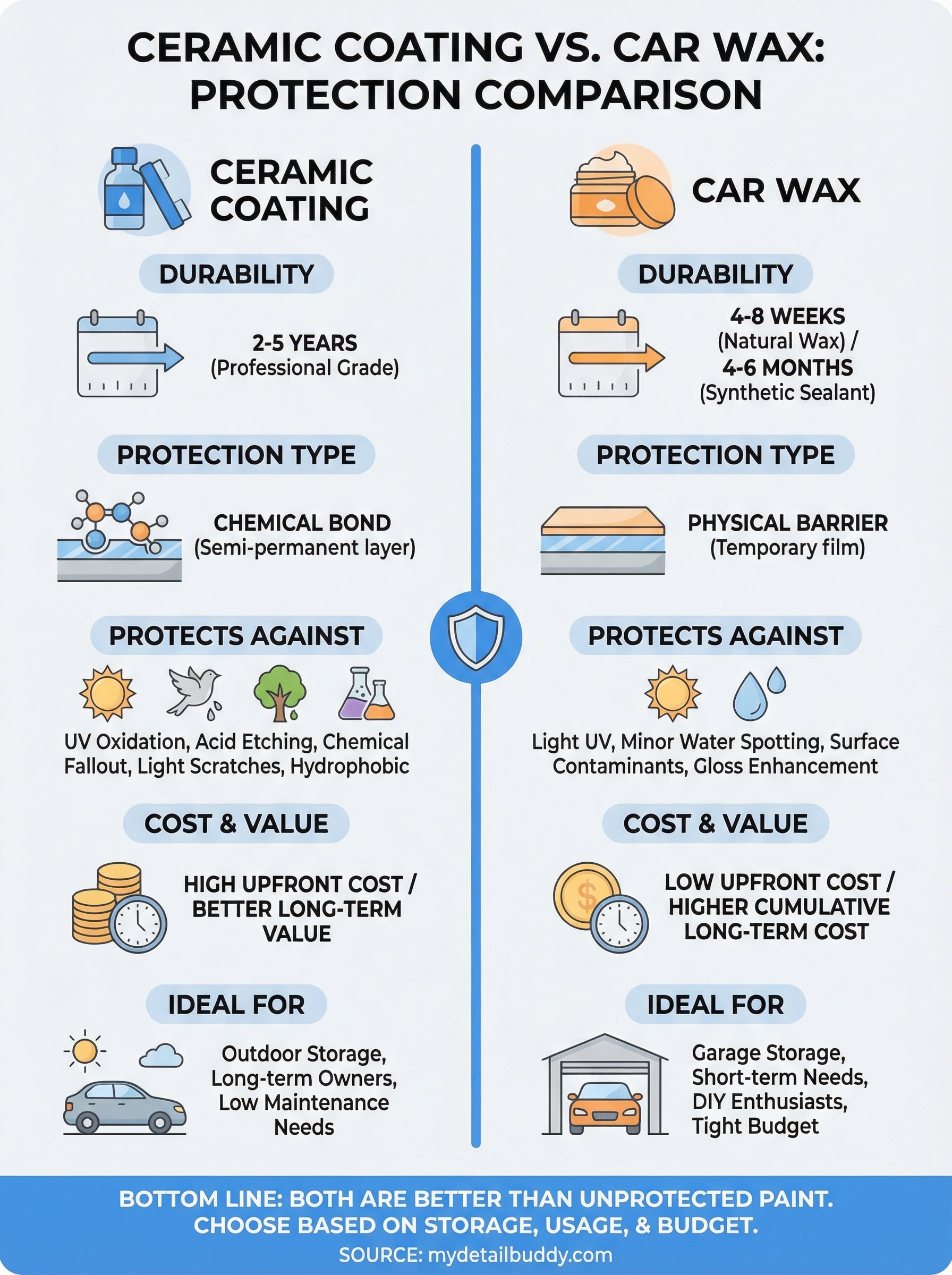
The ceramic coating vs wax decision is simpler than it might seem once you work through your actual situation. Ceramic coating wins on durability, protection strength, and long-term value, but it requires professional application and a larger upfront investment. Wax delivers real protection for vehicles with lighter exposure demands or tighter budgets, as long as you stay consistent with reapplication and understand its limits.
Both options beat doing nothing. Unprotected paint degrades faster than most owners expect, and fixing that damage costs far more than preventing it would have. If your vehicle spends its days outside in the Carolina sun, ceramic coating is the smarter call. If you garage your car or need a lower-cost starting point, wax covers you between details.
Ready to protect your vehicle the right way? Book a ceramic coating or detailing package with My Detail Buddy and get professional results brought directly to your door.