

Leather seats look and feel great, until they don’t. Dirt, body oils, and spills build up faster than most people realize, and if you’re wondering how to clean car leather seats without causing damage, you’re asking the right question. The wrong product or technique can crack, discolor, or dry out leather permanently. Knowing the safe approach matters just as much as doing the cleaning itself.
At My Detail Buddy, we clean and restore leather interiors across Waxhaw, Charlotte, and the surrounding North Carolina area every week as part of our mobile detailing service. We’ve seen what neglect does to leather, and what bad DIY advice does, too. That hands-on experience is exactly what shaped this guide. Whether you’re maintaining a luxury sedan or keeping your family SUV looking fresh, the methods here are ones we trust and use ourselves.
This guide walks you through everything from choosing the right cleaning products (including household alternatives like soap, water, and vinegar) to step-by-step techniques that protect the leather while getting it genuinely clean. We’ll also cover conditioning, common mistakes to avoid, and when it makes sense to call a professional instead of handling it on your own.
What you need and what to avoid
Before you start cleaning, having the right supplies on hand saves time and prevents mistakes. Leather is more sensitive than most people assume, and using the wrong product even once can leave a stain, strip the finish, or dry out the surface permanently. Getting set up properly is the first real step in learning how to clean car leather seats the right way.
What to gather before you start
You don’t need an expensive kit to do this well. A few quality basics cover everything, and some of them you may already have at home. Here’s what to have ready before you start:
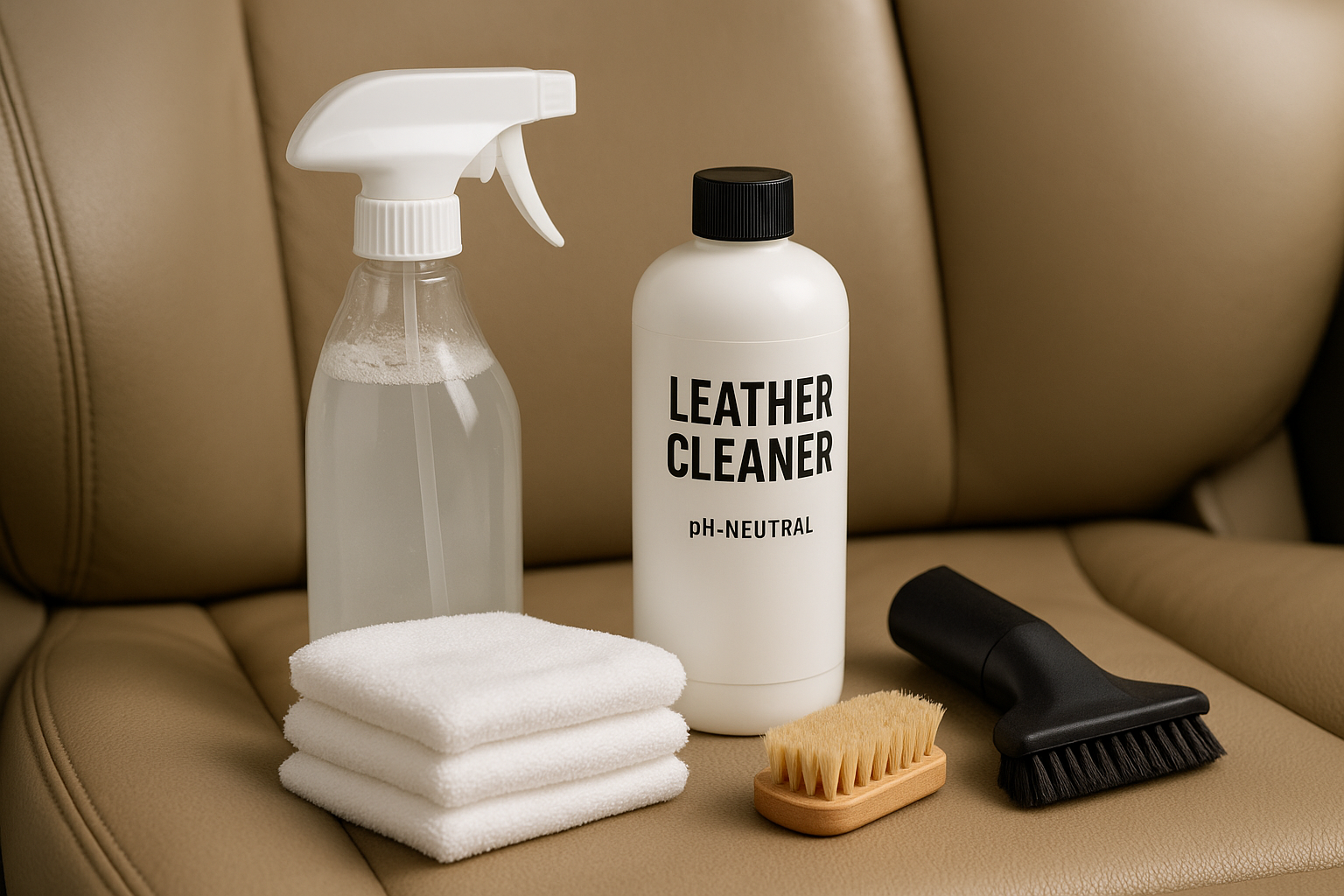
- pH-neutral leather cleaner (or mild dish soap like Dawn diluted in water)
- White microfiber cloths (at least 3-4, so you’re not rubbing dirt back in)
- Soft-bristle detailing brush or a dedicated leather brush
- Leather conditioner (look for products containing lanolin or natural oils)
- Small spray bottle for your cleaning solution
- Vacuum with a soft brush attachment
A diluted mix of distilled water and a small amount of mild dish soap is a reliable household alternative when you don’t have a dedicated cleaner on hand.
Products and habits that damage leather
Knowing what to avoid matters as much as knowing what to use. Bleach, ammonia-based cleaners, and alcohol-heavy wipes will strip the protective coating off your leather and cause cracking over time. Baby wipes are common in DIY circles, but most contain chemicals that dry out the leather with repeated use.
Scrubbing too hard is another mistake that adds up fast. Aggressive scrubbing with rough materials creates surface damage that builds invisibly until the leather starts to crack or peel, so stick with microfiber cloths and soft brushes throughout the entire process.
Step 1. Dry clean and prep the seats
Before any liquid touches your leather, you need to remove loose debris first. Skipping this step means you’ll push grit and crumbs deeper into the seams and stitching when you start wiping, which makes the job harder and can scratch the surface over time. Prepping the seat correctly sets up every step that follows in the process of learning how to clean car leather seats safely.
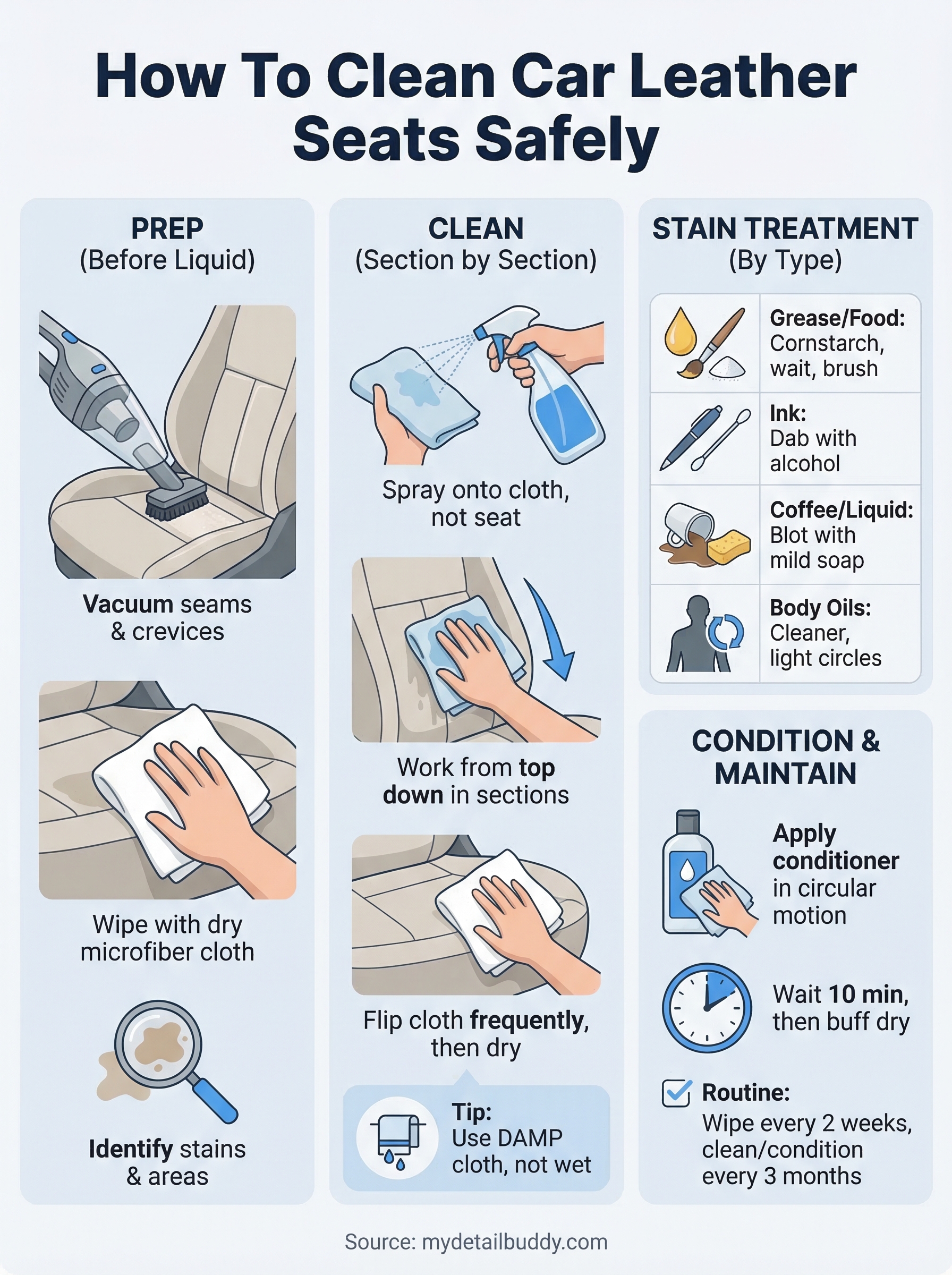
Vacuum every surface and seam
Use your vacuum with a soft brush attachment and work across the entire seat surface, including the crevices between cushions and along the stitching lines. Take your time here because most of the dirt that causes long-term leather wear hides in the seams rather than sitting on the visible flat surface.
Spending an extra two minutes vacuuming along seam lines removes more damaging grit than any cleaning product can address after the fact.
Wipe down with a dry cloth
After vacuuming, run a dry white microfiber cloth across the full seat surface to pick up any remaining dust or fine particles. This quick pass also lets you identify areas with visible staining or uneven discoloration before you apply any liquid, so you know exactly where to focus when you move into the cleaning steps below.
Step 2. Clean safely with the right solution
With the seat prepped and dry, you’re ready to apply your cleaning solution. Work in small sections rather than soaking the entire seat at once, which gives you control over how much moisture contacts the leather at any one time. Learning how to clean car leather seats safely comes down to using light, controlled applications that lift dirt without saturating the surface.
Apply and wipe in sections
Spray your solution lightly onto a microfiber cloth first, not directly onto the seat. Applying the solution directly risks over-saturating the leather, especially near seams where moisture can pool and cause damage. Start at the top of the seat back and work downward so any loosened grime doesn’t drip onto areas you’ve already cleaned.
Always work with a damp cloth, not a wet one. If you can wring visible moisture out of the cloth, it’s too wet for leather.
After wiping each section, flip to a clean side of the cloth before moving on. This prevents you from spreading dirt back across areas you’ve already treated. Once you cover the full seat, use a dry microfiber cloth to absorb any remaining moisture before the leather finishes air-drying on its own.
Step 3. Tackle stains without damaging leather
Stains on leather need a different approach than general surface cleaning. Scrubbing harder or applying more product usually makes the problem worse, so the key is identifying the stain type first and matching it to the right treatment before it sets deeper into the grain. This is one of the more precise parts of how to clean car leather seats, but it’s manageable once you know what you’re working with.
Match the treatment to the stain type
Not every stain responds to the same solution, and using the wrong product on the wrong stain can set it permanently. Here’s a quick reference for the most common leather seat stains:
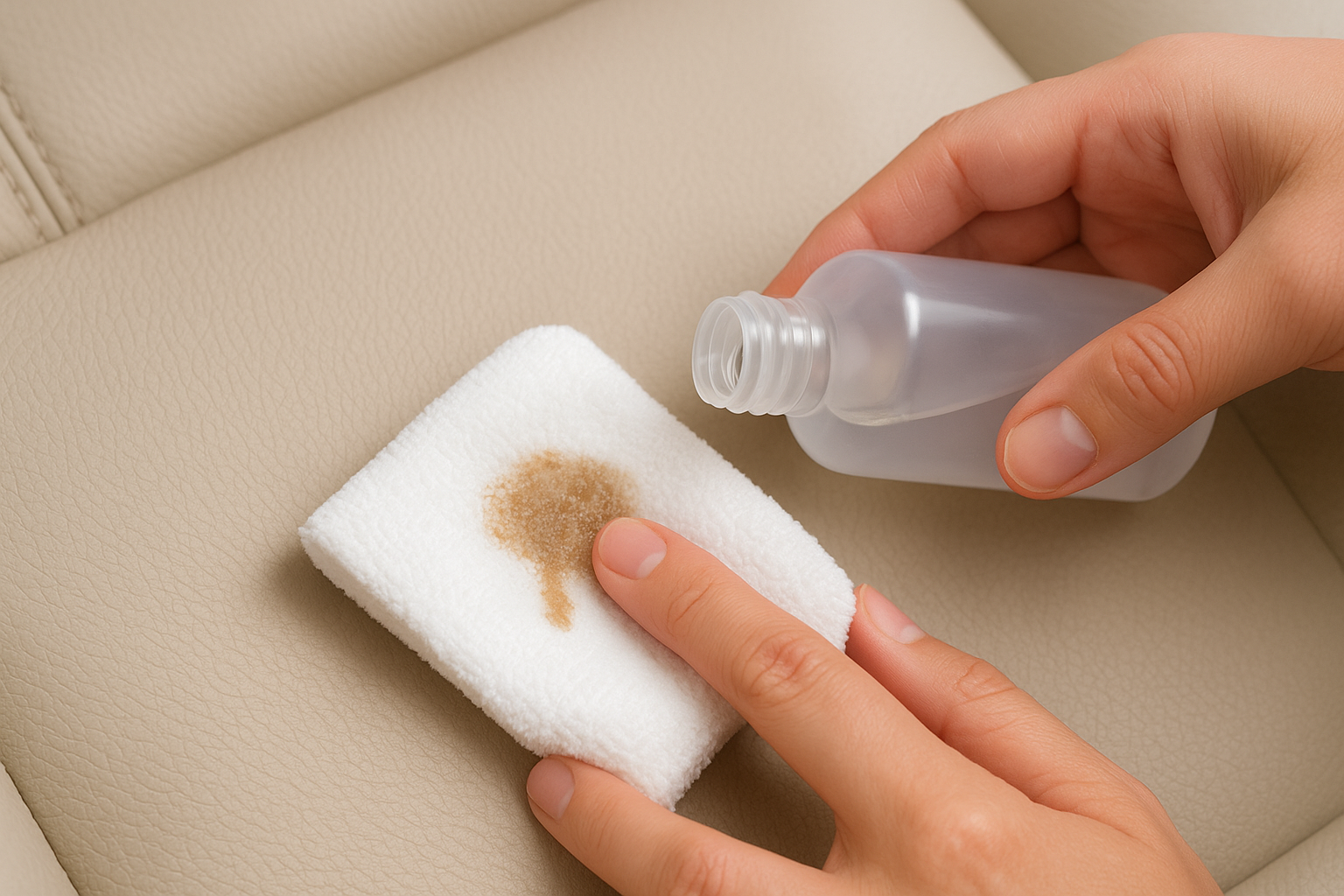
| Stain Type | Recommended Treatment |
|---|---|
| Grease or food | Apply cornstarch, wait 30 minutes, brush off, then wipe |
| Ink | Dab with rubbing alcohol on a cotton swab |
| Coffee or dark liquid | Blot with mild soap solution immediately |
| Body oil buildup | pH-neutral cleaner in a light circular motion |
Never rub a fresh stain. Blotting lifts the material while rubbing pushes it further into the leather grain.
Apply with control, not pressure
Once you’ve matched the treatment to the stain, apply your product sparingly to a microfiber cloth first. Work from the outer edge of the stain inward to avoid spreading it, and use light blotting pressure throughout the process rather than scrubbing.
Step 4. Condition, protect, and maintain
Cleaning removes dirt, but conditioning is what keeps leather healthy long term. Once the seat is clean and fully dry, applying a quality conditioner replenishes the natural oils that cleaning strips out over time. Skipping this step is one of the most common reasons leather cracks within a year or two, even when someone has learned how to clean car leather seats correctly.
Apply conditioner the right way
Apply a small amount of conditioner to a clean microfiber cloth and work it into the leather using slow, circular motions. You don’t need much product. A thin, even layer absorbs better than a heavy application, and excess product sitting on the surface will attract dust and feel tacky.
Allow the conditioner to absorb for at least 10 minutes before buffing away any remaining residue with a dry cloth.
Build a simple maintenance routine
Consistent upkeep prevents deep cleaning from becoming a frequent task. A straightforward schedule keeps your leather in solid shape between full detail sessions:
- Light wipe-down with a damp microfiber cloth every 2 weeks
- Full clean and condition every 3 months
- Spot treat stains immediately when they happen
A simple wrap-up
Learning how to clean car leather seats comes down to a few consistent habits: dry prep first, use the right solution, treat stains by type, and condition after every clean. Each step protects the leather and extends the life of your interior significantly.
Your seats stay in much better shape when you follow a regular maintenance schedule rather than waiting until the damage is visible. Consistent upkeep every few months is far easier than restoring leather that has dried out or cracked from long-term neglect.
If your seats already show wear, or you’d rather have a professional handle the job, My Detail Buddy brings mobile detailing services directly to your location across Waxhaw, Charlotte, and the surrounding area. Take a look at our car detailing packages and pricing to find the right fit, or book your appointment online when you’re ready.


