

That dark, gritty film coating your wheels isn’t just dirt, it’s brake dust, and it’s one of the most stubborn contaminants your car picks up during normal driving. Every time you hit the brakes, tiny particles of metal and adhesive shed from your brake pads and rotors, then bake onto your wheel surfaces from the heat. If you’ve been wondering how to remove brake dust from wheels without damaging the finish, you’re not alone. It’s one of the most common questions we hear from customers across Waxhaw and the greater Charlotte area.
At My Detail Buddy, we deal with brake dust buildup on a daily basis as part of our mobile detailing services. From daily drivers to high-end European cars with aggressive brake compounds, we’ve cleaned it all, and we know exactly what works and what can ruin a set of wheels if you’re not careful.
This guide breaks down the full process step by step, covering the best commercial products, DIY home remedies, and the professional-grade techniques we use on the job. Whether you’re tackling light dust or baked-on grime that’s been ignored for months, you’ll walk away knowing how to get your wheels clean and keep them that way.
What brake dust is and why it bonds to wheels
Brake dust forms every single time you press the brake pedal. Your brake pads press against the rotors to slow the vehicle, and that friction sheds microscopic particles made up of carbon fibers, metal shavings, and adhesive resins. Those particles don’t just fall to the ground; they carry heat with them and land directly on your hot wheel surfaces, where they begin bonding almost immediately. This is why brake dust is far more stubborn than ordinary road grime.
What brake dust is actually made of
The exact composition of brake dust depends on the type of brake pads your vehicle uses. Organic pads shed mostly carbon and rubber compounds, while semi-metallic pads release higher concentrations of iron and copper particles. High-performance vehicles often run ceramic pads, which produce finer dust but still leave a visible residue over time. Here’s a quick breakdown:
| Pad Type | Primary Dust Components | Staining Tendency |
|---|---|---|
| Organic | Carbon, rubber, resin | Low |
| Semi-metallic | Iron, copper, steel fibers | High |
| Ceramic | Fine ceramic particles | Low to moderate |
Why heat and time turn brake dust into a real problem
When iron particles from semi-metallic pads land on your wheel surface, they’re already hot from friction. That heat causes them to embed into the clear coat or bare metal and begin oxidizing, essentially rusting in place. This is why wheels that sit dirty for several weeks develop that reddish-brown staining that resists a standard hose-down.
The longer brake dust sits on your wheels, the deeper the iron particles oxidize into the surface, making the cleaning process significantly harder and riskier for the finish.
Understanding this bonding process is the foundation for knowing how to remove brake dust from wheels correctly. Using the wrong cleaner or an abrasive tool at that stage can scratch or permanently etch the finish, turning a cleaning job into an expensive repair.
Before you start: wheel type, tools, and safety
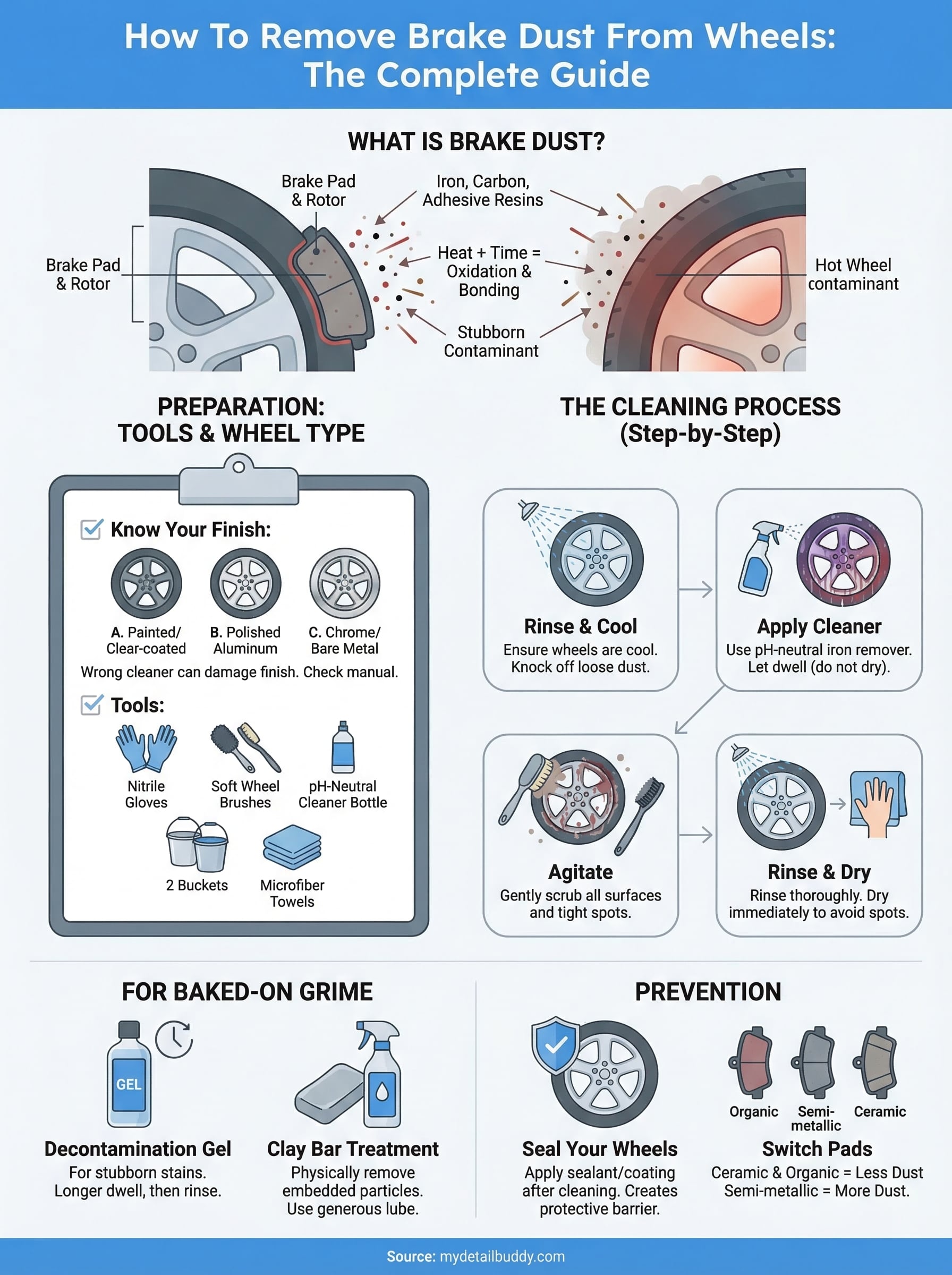
Before you learn how to remove brake dust from wheels, you need to confirm your wheel finish type and gather the right supplies. Skipping this step is where most DIY cleaning attempts go wrong, resulting in scratched finishes or damaged clear coats that cost far more to fix than the original cleaning job.
Know your wheel finish before applying anything
Different wheel finishes react differently to cleaning chemicals, and the wrong product can strip a polished or anodized surface in minutes. Check your vehicle manual or look up your factory wheel spec before buying any cleaner.
| Wheel Finish | Safe Cleaner | Avoid |
|---|---|---|
| Painted/Clear-coated | pH-neutral wheel cleaner | Acid-based cleaners |
| Polished aluminum | Mild soap, iron remover | Alkaline degreasers |
| Chrome | Gentle wheel cleaner | Acid or abrasive products |
| Bare/Raw metal | Iron remover + sealant | Strong alkaline cleaners |
Tools and safety you need on hand
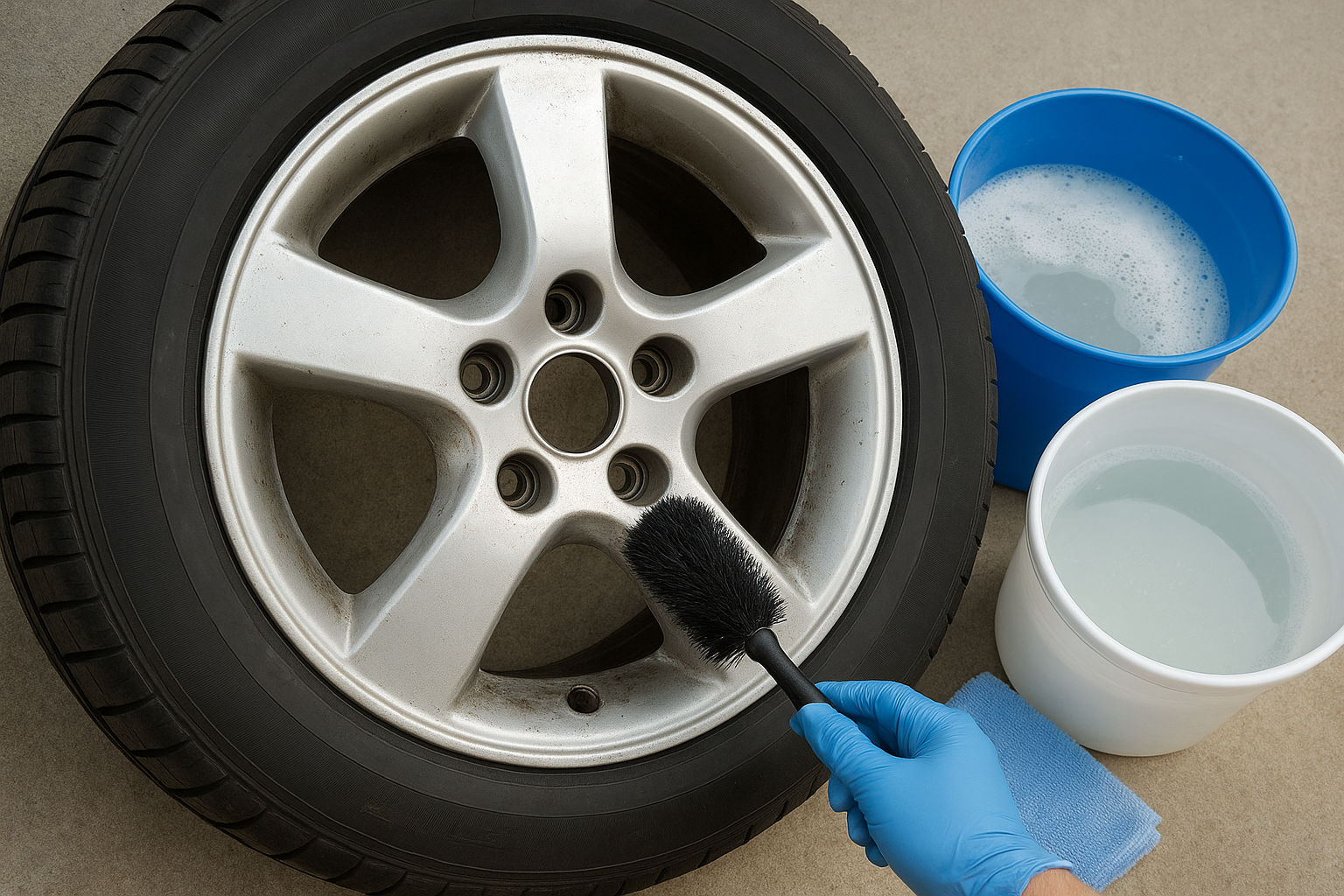
Gathering your tools beforehand saves time and prevents you from reaching for a household item that could scratch your finish. Nitrile gloves are non-negotiable since many wheel cleaners contain strong chemicals that irritate skin on contact. Here’s what to have ready:
- pH-neutral wheel cleaner or iron-fallout remover
- Soft-bristle wheel brush and a lug nut brush
- Two buckets with clean water
- Nitrile gloves
- Microfiber towels for drying
Never apply wheel cleaner to a hot surface; let the wheel cool completely first to avoid chemical streaking or permanent finish damage.
Step-by-step: the safest way to remove brake dust
Once your wheels are cool and your tools are ready, the actual cleaning process moves quickly if you follow the right order. Knowing how to remove brake dust from wheels safely comes down to working in a specific sequence that prevents cross-contamination, scratching, and chemical damage.
Rinse, apply, and agitate in the right order
Start by rinsing each wheel with a strong stream of water to knock off loose surface dust. Then spray your pH-neutral wheel cleaner or iron-fallout remover evenly across the entire wheel face, including the barrel and lug nut pockets. Let the product dwell for 30 to 60 seconds. Watch for the cleaner to turn purple or red, which signals that it’s actively dissolving iron particles bonded to the surface.
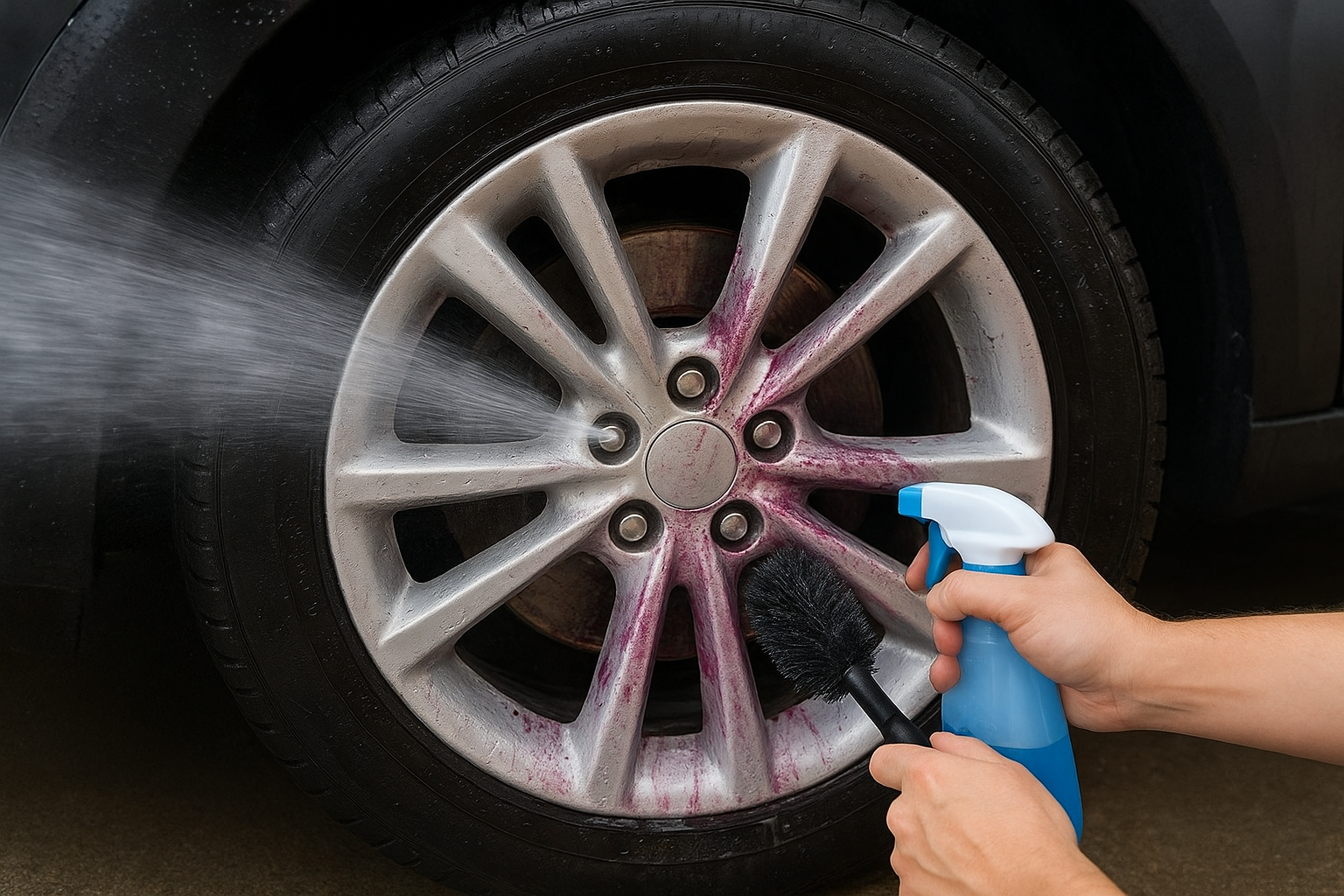
An iron-reactive cleaner is the single most effective tool for breaking down fresh brake dust without scrubbing aggressively.
Brush, rinse, and dry completely
Use your soft-bristle wheel brush to agitate the wheel face in overlapping strokes, then switch to the lug nut brush for tight spots. Rinse thoroughly with clean water, making sure no product residue remains. Dry each wheel immediately with a clean microfiber towel to prevent water spots from forming on the finish.
How to remove baked-on brake dust and heavy buildup
Fresh brake dust responds to a standard iron-fallout remover, but heavily oxidized buildup that’s been baking on your wheels for weeks needs a different approach. Knowing how to remove brake dust from wheels at this stage means layering your tools strategically rather than scrubbing harder and risking finish damage.
When standard cleaners stop working
If the staining remains after your iron remover treatment, the contamination has bonded deeper into the finish than surface-level chemistry can reach. Your best move is a dedicated decontamination gel with a longer dwell time of three to five minutes. Apply it evenly, agitate lightly with a soft brush, then rinse thoroughly and repeat if the staining persists.
Never let any decontamination product dry on your wheel surface, as this causes permanent staining or etching that no amount of cleaning will fix.
Using a clay bar for bonded contamination
A detailing clay bar physically pulls embedded particles off the surface that chemicals alone cannot dissolve. Use a clay lubricant spray generously before making any contact, since dry claying scratches finishes immediately.
- Work the clay bar in straight, overlapping strokes with light pressure
- Fold the clay to a clean side between each pass
- Wipe residue away with a fresh microfiber towel after each section
How to prevent brake dust from coming back fast
Once you’ve mastered how to remove brake dust from wheels, the next step is reducing how often you have to repeat the job. The key is applying a protective barrier directly after your cleaning session, while the wheel surface is fully decontaminated and ready to bond with a sealant.
Seal your wheels after every deep clean
Applying a wheel-specific sealant or ceramic coating after each deep clean creates a slick surface that brake dust struggles to grip. Apply the product to a dry, clean wheel, let it cure for the time listed on the label, then buff off any residue with a fresh microfiber towel.
A sealed wheel can cut your next cleaning time significantly because contamination sits on top of the protective layer instead of bonding directly to the finish.
Switch to lower-dust brake pads if buildup is constant
Semi-metallic brake pads are the biggest contributors to heavy iron-rich buildup. If you clean your wheels weekly and still fight stubborn staining, switching pad types makes a real difference. Here’s what each option delivers:
| Pad Type | Dust Level | Best Use Case |
|---|---|---|
| Semi-metallic | High | Heavy-duty or performance braking |
| Organic | Low | Light daily driving |
| Ceramic | Low to moderate | Best overall dust reduction |
Quick wrap-up
Knowing how to remove brake dust from wheels correctly comes down to three things: using the right cleaner for your wheel finish, working in the proper sequence, and sealing the surface afterward. Fresh brake dust responds quickly to a pH-neutral iron-reactive cleaner, while baked-on buildup needs a decontamination gel or clay bar treatment to pull out what chemistry alone can’t reach. Either way, the process is manageable if you follow the steps outlined here.
Prevention saves you the most time in the long run. Sealing your wheels after every deep clean creates a barrier that keeps brake dust from bonding directly to the finish, so your next cleaning session takes a fraction of the effort. Switching to ceramic or organic pads also cuts down on iron-rich buildup significantly.
If you’d rather skip the process entirely and let a professional handle it, book a mobile detailing appointment and we’ll take care of your wheels on-site in Waxhaw or the Charlotte area.


