

A shopping cart in a parking lot, a stray rock on the highway, or even a minor misjudgment while parallel parking, that’s all it takes. If you’re staring at a fresh mark on your vehicle and wondering how to fix scratches on car bumper, the good news is that many of these blemishes are totally fixable at home. Not every scratch requires a trip to a body shop, and knowing the difference can save you hundreds of dollars.
Bumper scratches generally fall into three categories: clear coat scratches, paint scratches, and deep gouges that reach the plastic underneath. Each type calls for a different approach, different materials, and a different level of effort. The method that works on a light scuff won’t do much for a scratch you can catch with your fingernail, so identifying the damage correctly is the first step before you grab any supplies.
At My Detail Buddy, we handle paint correction, surface restoration, and protective coatings on vehicles across Waxhaw, Charlotte, and the surrounding North Carolina area every day. We’ve seen every type of bumper damage imaginable, and we know which scratches respond well to a DIY fix and which ones genuinely need professional attention. This guide walks you through practical, step-by-step methods to repair bumper scratches at home, from quick remedies for surface-level marks to more involved techniques for deeper damage.
Before you start: choose the right repair path
Jumping straight into sanding or applying filler before you understand what you’re dealing with is one of the most common mistakes people make when they learn how to fix scratches on car bumper. The type of damage determines every material choice and technique you’ll use, so spending five minutes assessing the scratch correctly saves you significant time and money before you open a single product. What looks like a deep gouge from a distance might only be paint transfer sitting on top of your clear coat, and what looks like a light scuff might actually cut into the plastic beneath.
How to read the damage
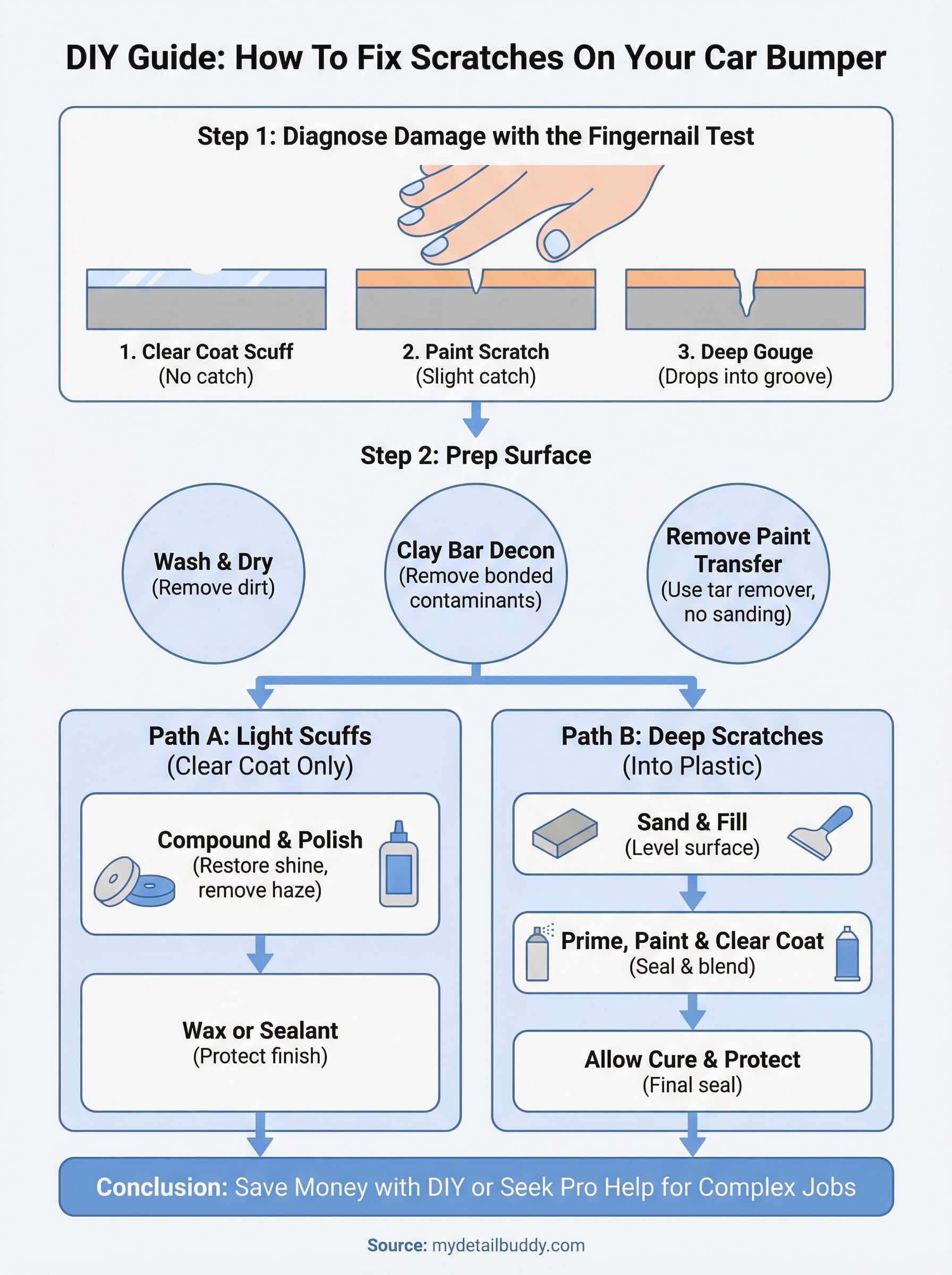
Run a clean fingernail across the scratch at a 90-degree angle to the mark. This one test tells you more than looking at it alone. If your nail glides over the surface without catching, the damage sits in the clear coat only and responds well to polish and compound. If your nail catches slightly but doesn’t drop into a groove, the scratch has reached the paint layer. If your nail drops into a clear groove, the damage cuts through paint and into the plastic or primer underneath, and that requires a more involved repair with filler and fresh paint.
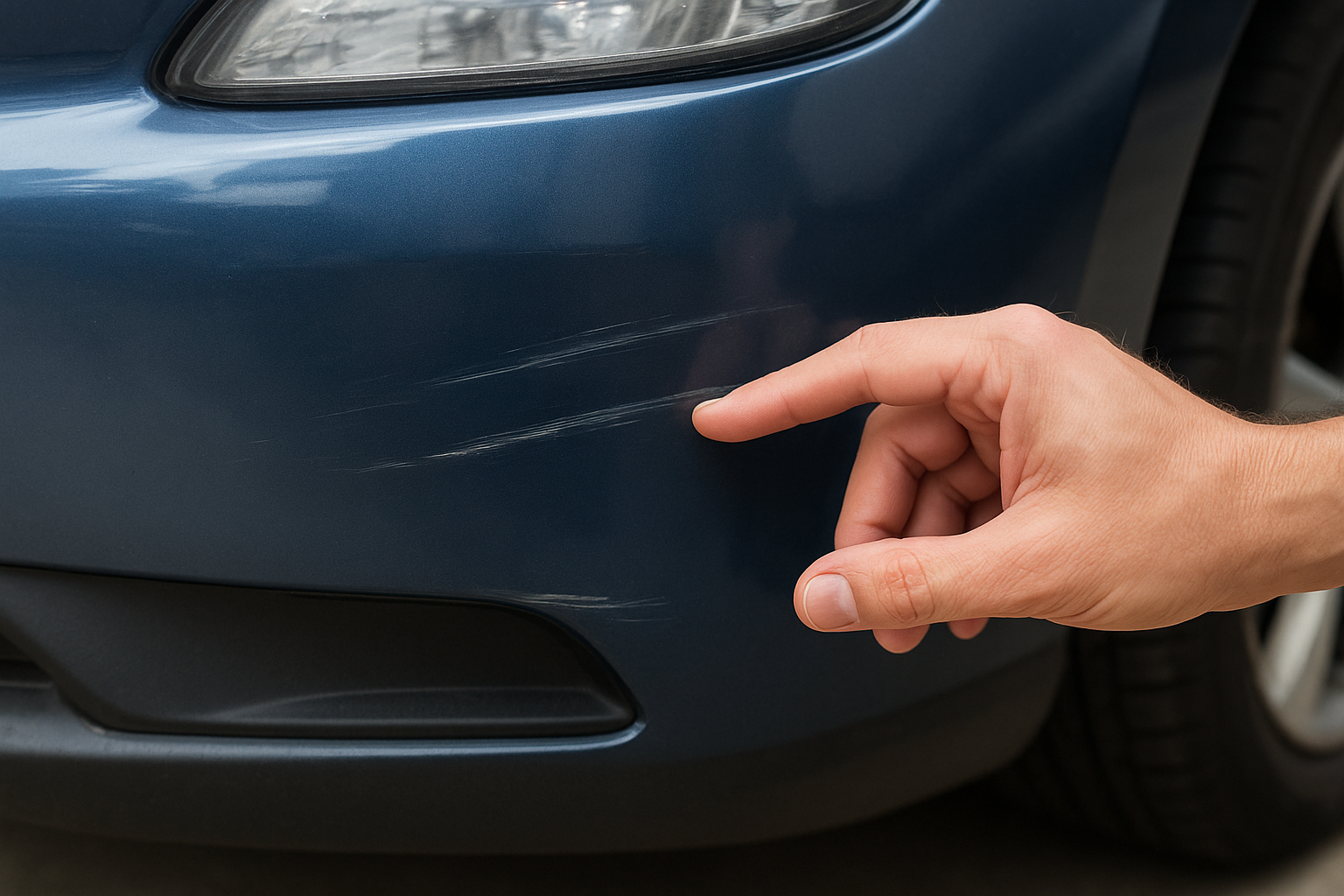
If a scratch catches your fingernail and you can see white or gray plastic at the bottom of the groove, plan for a full repair that includes filler, primer, and paint.
You also want to check for paint transfer, which happens when another vehicle or object leaves its paint on your bumper. This often looks like a scratch but is actually a deposit sitting on top of your clear coat. A clay bar or tar remover can lift it cleanly without any abrasive work needed, which is a much faster fix than it first appears.
Matching tools to the damage level
Before you pull out any products, match your repair kit to what the scratch actually needs. Using heavy compound on a clear coat scratch risks cutting through the finish unnecessarily. Grabbing plastic filler for a surface-level scuff wastes time and produces worse results than a simple polish would. The table below matches each damage level to the supplies you need to gather before you begin.
| Damage Level | What You See | Key Supplies Needed |
|---|---|---|
| Clear coat scratch | Faint line, no color change | Rubbing compound, polishing pad, microfiber cloth |
| Paint scratch | Color visible, no groove | Scratch repair kit, touch-up paint, polish |
| Deep scratch into plastic | Groove present, plastic exposed | 80-400 grit sandpaper, plastic filler, primer, touch-up paint, clear coat |
| Paint transfer | Foreign color on surface | Clay bar, tar remover, polish |
Having every material staged before you start keeps the process moving and prevents you from stopping midway to visit an auto parts store. Confirm which category your scratch falls into, build your supply list from the table, and you’ll be ready to move through each repair step without interruption.
Step 1. Wash, decontaminate, and remove paint transfer
Cleaning the bumper before any repair work is not optional. Dirt, road grime, and wax residue left on the surface will contaminate your compound, clog sandpaper, and cause you to introduce new scratches while trying to fix existing ones. Every repair technique in this guide depends on a clean, bare surface to work correctly, so this step directly affects the quality of your final result.
Wash the bumper thoroughly
Start with a two-bucket wash method: one bucket with car shampoo and water, and a second bucket of clean rinse water for your wash mitt. Wash the entire bumper, not just the scratched area, using straight back-and-forth strokes rather than circular motions, which can introduce swirl marks into undamaged paint nearby. Rinse completely and dry with a clean microfiber towel.
After drying, run your hand across the bumper surface. If it feels rough or gritty despite looking clean, you likely have bonded contaminants like industrial fallout or tree sap embedded in the clear coat. A clay bar kit removes these particles in minutes and leaves a genuinely smooth surface to work on. Lubricate the area with clay lubricant spray, then glide the clay bar across the panel using light pressure. You’ll feel the resistance drop as the surface clears.
Remove paint transfer before going further
Paint transfer is one of the most commonly misidentified types of bumper damage because it looks identical to a scratch from a distance. Before you learn how to fix scratches on car bumper the difficult way with sandpaper and filler, confirm whether the mark is actually foreign paint sitting on top of your clear coat rather than damage cutting into it.
Apply a small amount of tar and adhesive remover to a microfiber cloth and rub it gently across the mark. If color lifts onto the cloth, you’re dealing with paint transfer, not a scratch.
Isopropyl alcohol at 70% concentration also lifts lighter transfer marks effectively. If the mark clears entirely after either treatment, skip the filler and sanding steps entirely and move straight to a light polish to restore any haziness left behind.
Step 2. Remove light scuffs and clear coat scratches
Clear coat scratches and light scuffs are the most common outcome of minor contact, and they respond well to abrasive compounds and polishing if you work methodically. Your fingernail glided over the mark without catching, which means the damage sits entirely within the transparent protective layer above the paint. No touch-up paint or filler is required here, and the entire repair can typically be completed in under an hour with the right products and process.
Apply rubbing compound to cut the scratch
Start by applying a pea-sized amount of rubbing compound to a foam applicator pad or a dual-action polisher pad rated for cutting. Work the compound into the scratched area using firm, overlapping strokes in a straight line rather than circular motions, which can create new swirl marks in the surrounding clear coat. Keep the pad flat against the surface and maintain consistent pressure across the full length of the scratch.
If you use a machine polisher, keep the speed between 1,200 and 1,800 RPM on a bumper to avoid burning through the thin clear coat on plastic panels.
After two to three passes, wipe the residue away with a clean microfiber cloth and check your progress under direct light or a flashlight held at a low angle to the surface. Repeat the compound step if the scratch remains visible, but limit yourself to three passes before moving to a finer polish to avoid thinning the clear coat excessively.
Finish with polish and protect the surface
Once the scratch disappears, switch to a finishing polish to restore clarity and gloss to the area you worked on. Apply it with a clean, soft foam pad using light pressure in straight strokes. This final pass removes any micro-marring left by the compound and brings the repaired section back to a consistent shine that matches the surrounding paint.
Wipe the panel clean, then apply a coat of carnauba wax or spray sealant to protect the freshly worked clear coat. Sealing the surface is an important part of how to fix scratches on car bumper correctly, because it slows future wear on the area you just restored.
Step 3. Repair deep scratches into plastic
When your fingernail drops into a groove and you can see bare plastic or primer at the bottom, you’re dealing with damage that compound and polish alone cannot fix. This is the most labor-intensive part of learning how to fix scratches on car bumper, but working through it in the right order produces a result that’s nearly invisible once paint is applied. Rushing through the sanding or skipping the filler step leaves a raised or uneven surface that shows through your topcoat no matter how carefully you paint.
Sand the groove smooth
Start with 80-grit sandpaper wrapped around a sanding block to level any raised edges, burrs, or torn plastic around the scratch. Keep your strokes short and parallel to the scratch rather than perpendicular, which helps avoid widening the damaged area. After the rough edges are flat, switch progressively through 150, then 220-grit paper to smooth the surface and reduce the coarse scratch marks left by the initial grit.
Wet sanding with 220-grit at this stage, using water as a lubricant, produces a finer finish than dry sanding and reduces heat buildup on plastic panels.
Wipe the area dry with a clean microfiber cloth after each grit change and inspect under a direct light source. You want a dull, evenly scuffed surface with no shiny spots before you move to filler.
Fill and level the damaged area
Apply automotive plastic filler or a two-part body filler rated for flexible bumpers to the sanded groove using a plastic spreader. Press the filler firmly into the scratch and draw the spreader across the surface in one smooth pass to leave it slightly proud of the surrounding panel. Flexible bumper filler is important here because rigid filler will crack when the bumper flexes slightly during normal driving.
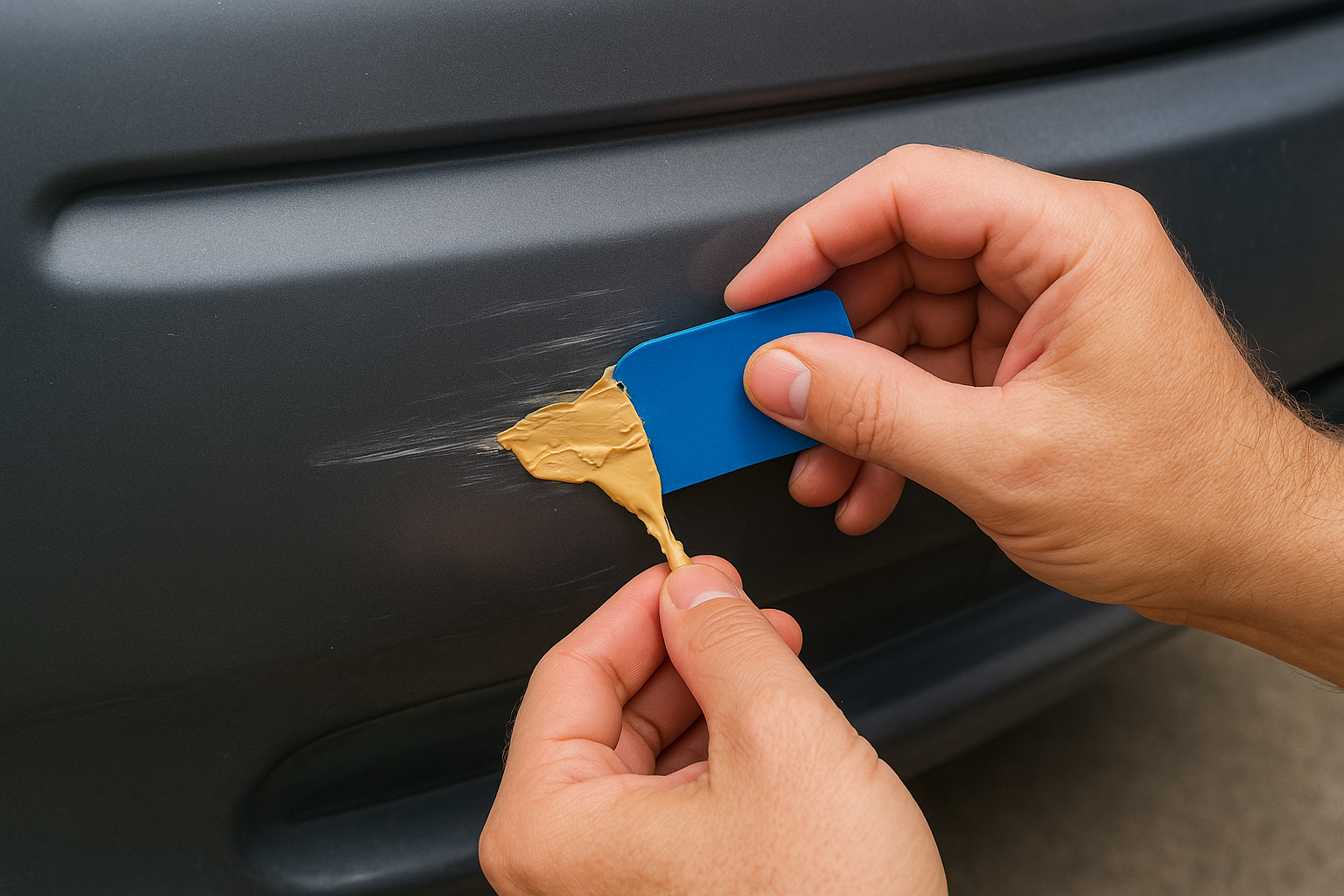
Allow the filler to cure fully according to the product instructions, then sand it level with 220 and 320-grit paper until it sits flush with the surrounding surface. Run your fingers across the repair to confirm there are no high spots or dips before moving to primer and paint.
Step 4. Prime, paint, and clear coat for a blend
Your filler is level, the surface is smooth, and now primer, paint, and clear coat need to go on in the correct sequence to make the repair disappear. Skipping primer is the single biggest reason DIY bumper repairs look patchy after the paint dries, because bare filler absorbs paint unevenly and creates dull spots that show through the topcoat. Work in a shaded area with temperatures between 60 and 85 degrees Fahrenheit to get proper adhesion on each layer.
Apply primer to seal the repair
Shake your aerosol automotive primer for at least 60 seconds before spraying, then hold the can 10 to 12 inches from the surface. Apply two to three thin coats, letting each coat flash off for 5 to 10 minutes before adding the next. Thin coats prevent runs and give you a more uniform base than a single heavy coat that sags before it dries.
Once the primer cures for at least 30 minutes, wet sand the primed area with 400-grit sandpaper and water using light, circular strokes until the surface feels uniformly smooth under your fingers. Wipe it dry and check for any low spots or pinholes. If you find either, apply one more coat of primer, let it cure, and wet sand again before moving forward.
Paint and clear coat for a seamless finish
Color-matching your touch-up paint is critical for a clean result. Find your vehicle’s paint code on the sticker inside the driver’s door jamb and use that code when ordering a matched aerosol or touch-up pen. Apply the basecoat in two to three thin passes, allowing five minutes between each.
Hold the can moving before you press the nozzle and release it after each pass to prevent paint buildup at the edges of your spray pattern.
After the basecoat dries fully, apply two light coats of aerosol clear coat using the same technique. This final layer is what protects your repair and produces the gloss that brings the patched area in line with the rest of the bumper. This is the last stage of how to fix scratches on car bumper with a full repair, and letting the clear coat cure for 24 hours before washing keeps the finish intact.
Conclusion
Knowing how to fix scratches on car bumper at home saves you real money when the damage is caught early and matched to the right technique. Clear coat scuffs respond to compound and polish, paint-deep scratches need touch-up paint after surface prep, and gouges that expose plastic require filler, primer, and a matched topcoat before the repair holds up long term. Working through each step in sequence, from washing and decontamination all the way to clear coat, gives you a result that lasts rather than a quick cover-up that fails after the first wash.
Some repairs fall outside what a DIY kit can realistically handle, whether the damage is too extensive, the paint match is too complex, or you simply want a guaranteed finish. Professional paint correction and surface restoration delivers results that protect your vehicle’s value. If you’re in the Waxhaw or Charlotte area, book a mobile detailing appointment and let My Detail Buddy handle it directly at your location.


