

You just washed your car, stepped back to admire the results, and there they are, cloudy white spots all over your glass. If you’ve ever tried to figure out how to remove water spots from car windows, you already know they don’t come off with a regular towel wipe. Those marks are mineral deposits left behind by hard water, sprinkler overspray, or even rain, and they bond to the glass surface over time.
The good news: you can get rid of them yourself with the right approach and a few products you might already have at home. No special equipment required, and no streaks left behind if you follow the steps correctly. We deal with this exact problem daily at My Detail Buddy while detailing vehicles across Waxhaw, Charlotte, and the surrounding areas, so we know what actually works and what’s a waste of your time.
This guide walks you through proven DIY methods for removing water spots from car windows, from mild household solutions to stronger options for stubborn buildup. We’ll also cover how to prevent them from coming back, so you’re not fighting the same battle every week.
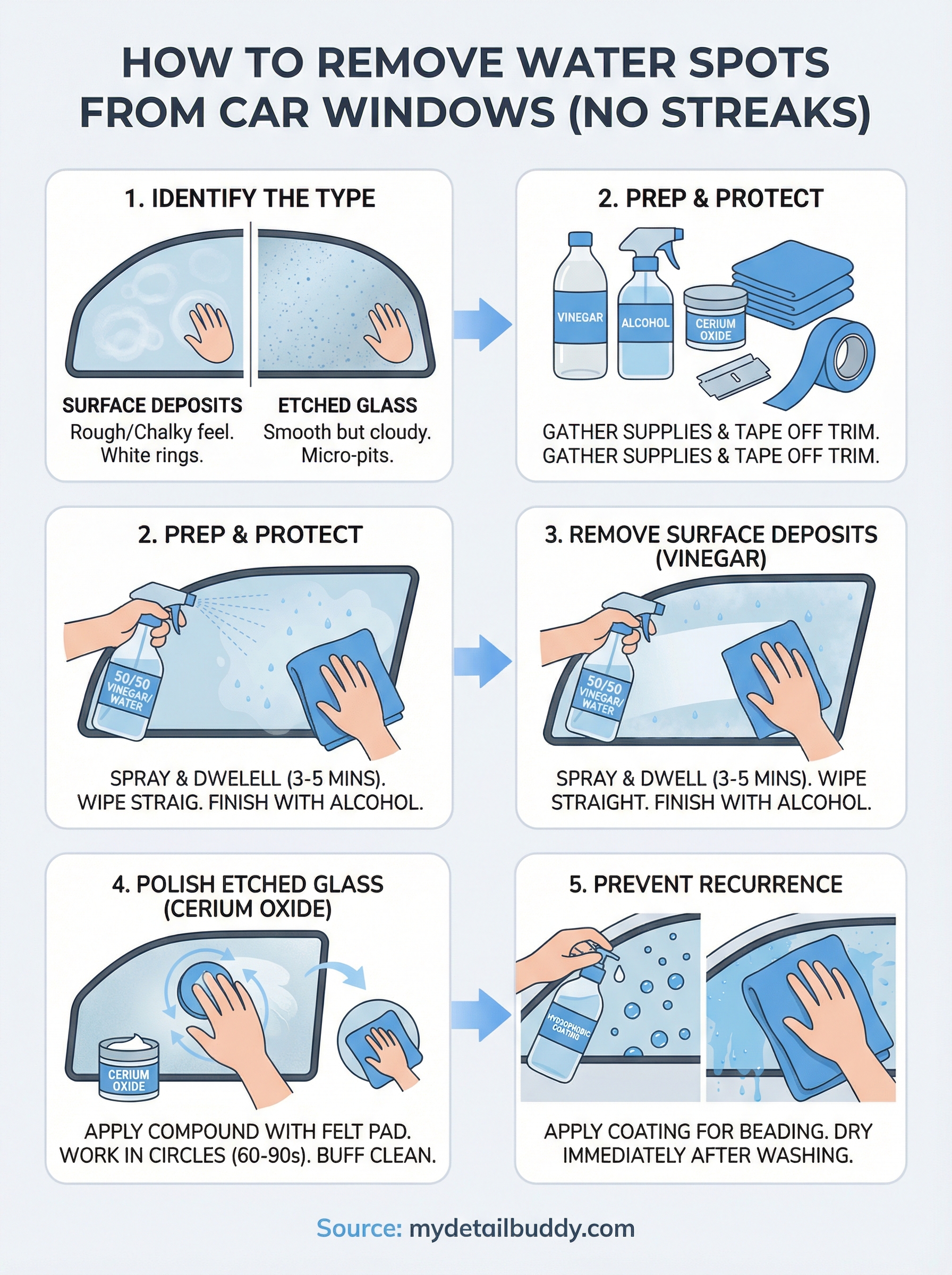
Step 1. Identify deposits vs glass etching
Before you grab any product, you need to know what type of water spots you’re dealing with. Treating etched glass the same way you treat surface-level mineral deposits wastes your time, and using the wrong abrasive on a fresh deposit can create new scratches. The two types look nearly identical at first glance, but they require very different fixes.

Surface mineral deposits
Mineral deposits form when water evaporates and leaves behind calcium, magnesium, and silica sitting on top of your glass. Sprinkler overspray is a common culprit because it typically carries higher mineral content than rainwater. These spots show up as cloudy white rings or a hazy film, and they haven’t yet worked their way into the glass itself.
Run your fingertip across the affected area. If you feel a slightly rough or chalky texture, the minerals are still sitting on the surface and haven’t bonded deeply into the glass. That’s good news, because these spots respond well to mild acidic solutions you likely already have at home.
Etched glass
Glass etching happens when water spots are left untreated for weeks or months. The minerals and acidic compounds in the water slowly eat into the glass, leaving behind permanent microscopic pits that scatter light and create a dull, frosted appearance. Etching is most common on windshields hit repeatedly by hard well water or sprinkler runoff that dries in direct sunlight.
If your glass still looks hazy after cleaning it with a fresh microfiber cloth and standard glass cleaner, you’re most likely dealing with etching, not surface deposits.
Slide your fingernail across the spot. If the surface feels smooth but the glass still looks cloudy, the damage has gone below the surface. Etched glass needs a glass polish or cerium oxide compound to restore clarity, which this guide covers in Step 4.
Why this step matters before anything else
Knowing how to remove water spots from car windows the right way starts with this quick diagnosis. Here’s what you risk by skipping it:
- Scrubbing surface deposits with an abrasive polish can scratch clean glass unnecessarily
- Applying vinegar to etched glass will produce zero improvement after an hour of work
- Using a harsh chemical on a lightly spotted window can strip protective coatings you didn’t know were there
Take two minutes to assess the glass first. Once you know what you’re dealing with, every step after this becomes faster and more effective.
Step 2. Gather supplies and protect trim
Having everything ready before you start saves you multiple trips and keeps you from stopping mid-process with wet products sitting on your glass. Gathering the right supplies upfront also prevents you from reaching for an abrasive cloth or the wrong type of acid that can scratch glass or stain adjacent rubber trim. Knowing how to remove water spots from car windows the right way includes protecting everything around the glass, not just the glass itself.
What you need
You don’t need a full detailing kit to get started. The supplies below cover both surface deposit removal and light etching correction, so you’re prepared for either situation based on your diagnosis from Step 1.
| Supply | Purpose |
|---|---|
| White distilled vinegar | Mild acid to dissolve mineral deposits |
| Isopropyl alcohol (70%+) | Pre-clean and degreasing before treatment |
| Cerium oxide glass polish | Corrects etched spots (Step 4) |
| Microfiber cloths (at least 3) | Applying, working, and buffing products |
| Plastic razor blade | Scraping stubborn buildup without scratching |
| Spray bottle | Applying diluted solutions evenly |
| Painter’s tape | Protecting trim during treatment |
A plastic razor blade is safer than a metal one on automotive glass because it lifts stubborn mineral deposits without leaving behind micro-scratches.
How to protect surrounding trim
Rubber seals, painted surfaces, and plastic trim around your windows can absorb acidic cleaning solutions and discolor or dry out if you skip this step. Before applying any product, run a strip of painter’s tape along all edges where glass meets trim. This takes about 60 seconds and prevents staining that would give you a second problem to fix after you’ve already solved the first.
Step 3. Remove mineral deposits with gentle acids
This step applies to surface mineral deposits identified in Step 1. Gentle acids break down the calcium and magnesium bonds that hold the minerals to your glass. If you know how to remove water spots from car windows using household products, white distilled vinegar is your starting point. It costs almost nothing and works on most fresh and moderate buildup without any risk of scratching.
Vinegar solution method
Mix equal parts white distilled vinegar and distilled water in your spray bottle. Distilled water matters here because tap water can reintroduce the same minerals you’re trying to remove. Saturate the affected area generously and let the solution sit on the glass for three to five minutes so the acid has time to loosen the deposits before you touch them.
Do not let the vinegar solution dry on the glass. If you’re working in direct sunlight, move your vehicle to shade or work in small sections at a time.
After the dwell time, wipe the glass in straight, overlapping strokes using a clean microfiber cloth. Avoid circular motions, which tend to redistribute the minerals rather than lift them off. If spots remain, apply a second round and use a plastic razor blade held at a 30-degree angle to gently scrape the stubborn areas before wiping again.
Isopropyl alcohol finish
Once the deposits are gone, wipe the entire treated surface with isopropyl alcohol on a fresh microfiber cloth. This step removes any vinegar residue, evaporates quickly, and leaves the glass clean and streak-free before you move on to Step 4 if any etching remains.
Step 4. Polish etched spots to restore clarity
Surface mineral deposits respond to acid, but etched glass requires mechanical correction. Polishing works by using a fine abrasive compound to level out the microscopic pits in the glass surface, eliminating the light-scattering that creates that dull, frosted appearance you can’t wash away. This step covers how to remove water spots from car windows that have already bonded into the glass.
Choose the right glass polish
Cerium oxide is the standard compound for glass polishing and produces better results on automotive windows than generic metal polishes or household abrasive pastes. You can find cerium oxide powder or pre-mixed glass polish at most auto parts stores. Pair it with a felt polishing pad or a dedicated glass buffing pad, not a foam paint pad, since glass requires a different surface contact to cut effectively.
Avoid using paint correction compounds on your windows. Products designed for clear coat will not cut glass properly and can leave a residue that’s harder to remove than the original spots.
How to apply cerium oxide
Apply a small amount of cerium oxide polish directly to your felt pad and work one section of glass at a time. Keep the pad moving in overlapping circular motions with moderate pressure for 60 to 90 seconds per section. The compound will turn slightly clear as it works into the surface. Wipe away the residue with a clean microfiber cloth and check the area in natural light before moving on.
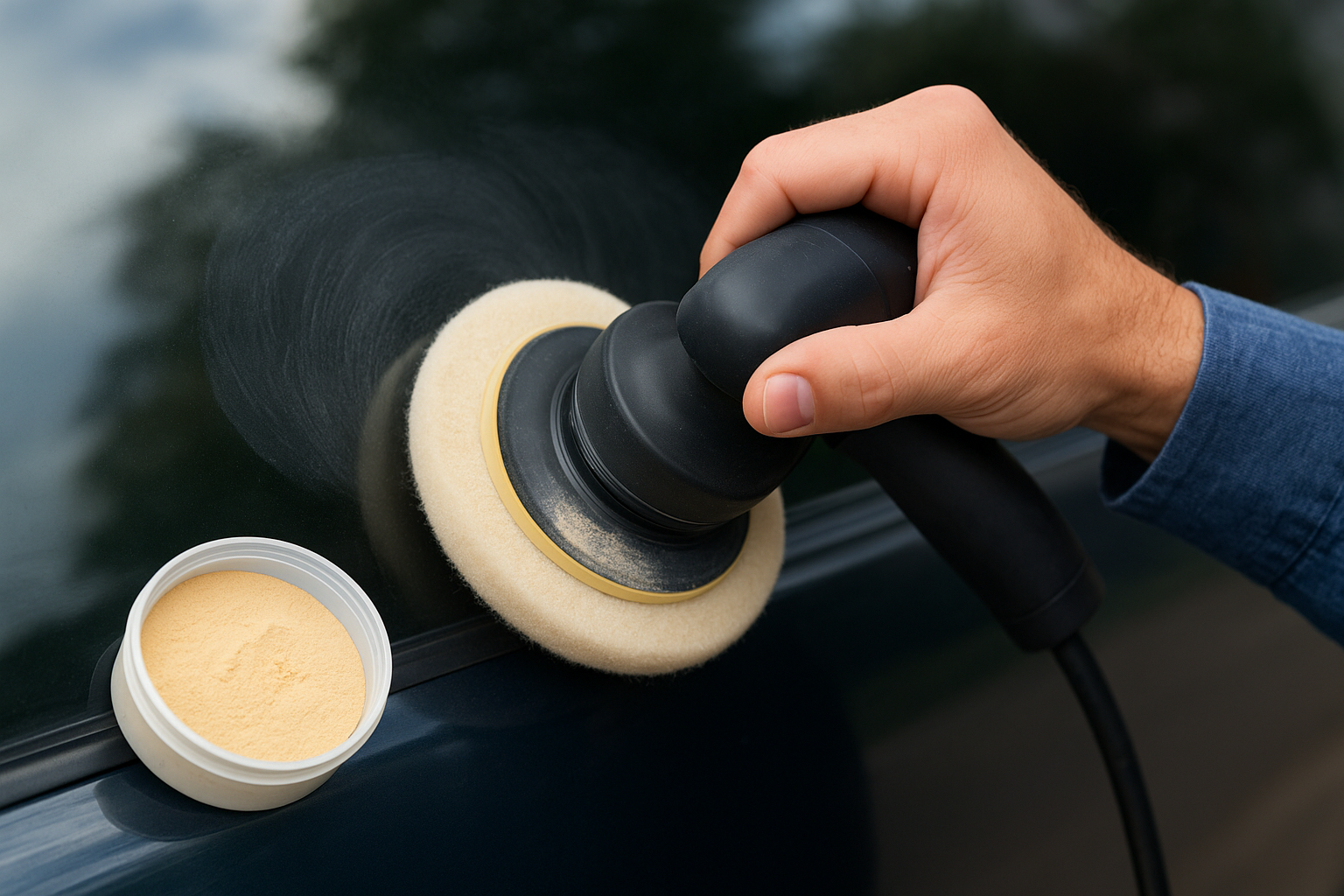
Repeat the process on any spots that still look hazy after the first pass. Two passes typically handle moderate etching without requiring a power tool.
Step 5. Prevent water spots and streaks next time
Knowing how to remove water spots from car windows solves today’s problem, but prevention is what stops you from repeating the process every few weeks. Most water spots form because water sits on glass long enough to evaporate and leave minerals behind. Cutting that dwell time and adding a protective barrier are the two most effective habits you can build into your regular car care routine.
Apply a water-repellent coating
A hydrophobic glass coating causes water to bead up and roll off your windows before it has a chance to dry in place. Rain-X Original Glass Treatment is the most widely available option and takes about five minutes to apply by hand. After polishing it in and buffing it clear, water sheets off the glass at highway speeds instead of pooling and evaporating into mineral rings.
Reapply your glass coating every four to six weeks, or any time you notice water no longer beading up on the surface.
Apply the coating in this order to avoid missing sections:
- Windshield (driver side first, then passenger)
- Front side windows
- Rear side windows
- Rear window
Change your drying habits
Drying your windows immediately after washing is the single biggest factor in preventing mineral buildup from returning. Pull a clean, dry microfiber towel across the glass in straight horizontal passes before any water has a chance to evaporate on its own. If sprinkler overspray hits your parked car, wipe the glass down within 30 minutes to stop the minerals from bonding to the surface. Parking in a garage or under a carport also cuts down significantly on how often spots form in the first place.
Quick wrap-up
Water spots are a fixable problem once you know what you’re dealing with. Surface mineral deposits respond well to a diluted vinegar solution and a plastic razor blade, while etched glass needs cerium oxide polish to restore clarity through light abrasion. The five steps in this guide give you a clear path for how to remove water spots from car windows without leaving new streaks or scratches behind. Finish each session by applying a hydrophobic coating and drying your windows immediately after washing, and you’ll stop most spots before they form.
Some situations call for more than a DIY fix. If your windows have years of hard water buildup or the etching runs deep, a professional detail gets better results faster. My Detail Buddy serves Waxhaw, Charlotte, and surrounding areas with mobile service that comes directly to your location. Check our car detailing packages and pricing to find the right option for your vehicle.


