

That hazy, yellowed film on your headlights isn’t just ugly, it cuts your nighttime visibility by up to 80%, according to AAA research. If you’ve been searching for how to restore cloudy headlights, you’re already on the right track. UV exposure, road debris, and oxidation break down the factory clear coat over time, leaving your lenses looking like they’ve been dipped in fog.
The good news? You can fix this at home with a few common supplies and some elbow grease. From quick toothpaste fixes to more permanent wet-sanding and clear-coating methods, there’s a solution for every level of cloudiness, and every budget. This guide walks you through each method step by step, so you can pick the one that fits your situation and get those headlights looking clear again.
At My Detail Buddy, we restore headlights professionally across Waxhaw, Charlotte, and the surrounding areas as part of our mobile detailing services. We wrote this guide based on what we see every day on the job. Some fixes hold up well, others won’t last a month, and we’ll be straight with you about the difference so you can make a smart call before you start.
Why headlights get cloudy and what fixes it
Most modern headlights use polycarbonate plastic lenses, not glass. Polycarbonate is lightweight and impact-resistant, but it oxidizes when exposed to UV light, heat, and road chemicals over time. The factory applies a thin UV-protective clear coat to the lens when the car is built, but that coating degrades after a few years, especially in sunny climates or if your car sits outside regularly. Once that clear coat goes, the degradation accelerates fast.
The science behind lens oxidation
When the clear coat fails, UV rays attack the polycarbonate directly, causing the surface to yellow, pit, and haze. Micro-abrasions from road debris also scratch the lens surface, and those tiny scratches scatter light instead of letting it pass through cleanly. That scattered light is exactly why your headlight output drops so dramatically even when the bulb itself works fine. The cloudiness you see is surface-level damage, which matters because it means you can physically remove it rather than replacing the entire housing.
Surface oxidation is a mechanical problem with a mechanical fix: you need to remove the damaged layer, not just wipe over it.
What stage is your oxidation?
Not all cloudy headlights are in the same condition, and the method you choose should match the level of damage. A mild haze that appeared recently responds well to a chemical polish alone. A heavily oxidized lens with deep yellowing and rough surface texture needs wet sanding before polishing will do any good at all. Running a polish over a badly damaged lens without sanding first is one of the most common DIY mistakes, and it’s why many store-bought headlight kits leave people frustrated after two or three weeks when the haze returns.
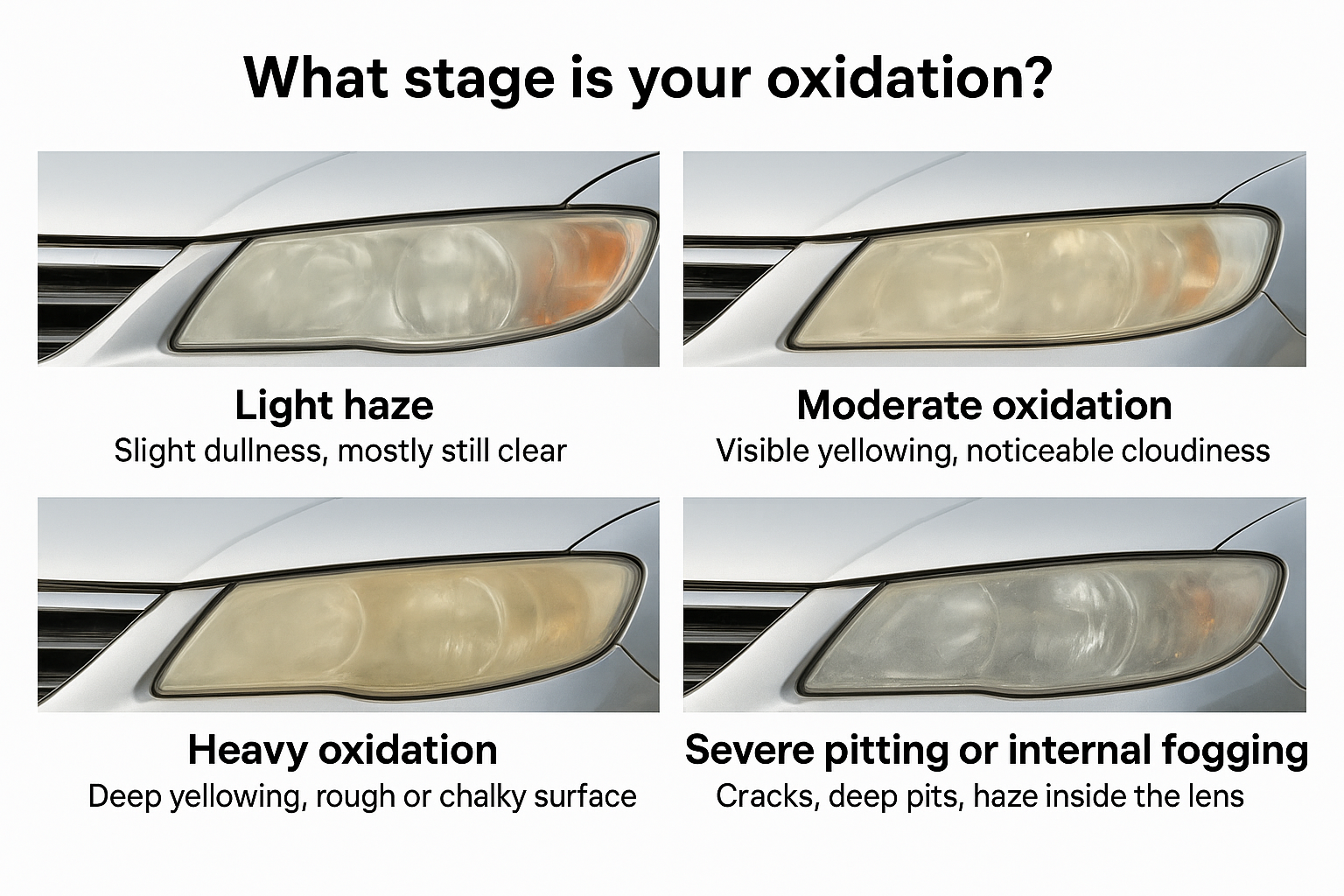
Here’s a quick way to judge where your lenses stand before you pick a method:
| Condition | What you see | Best fix |
|---|---|---|
| Light haze | Slight dullness, mostly still clear | Polish only |
| Moderate oxidation | Visible yellowing, noticeable cloudiness | Compound + polish |
| Heavy oxidation | Deep yellowing, rough or chalky surface | Wet sand, then polish |
| Severe pitting or internal fogging | Cracks, deep pits, haze inside the lens | Professional restoration or replacement |
Why cheap kits often fall short
Many store-bought restoration kits include a polish and a prep wipe, but they skip the sealing step entirely. Without reapplying a UV-resistant clear coat or dedicated sealant after polishing, the bare polycarbonate sits exposed to the same UV rays that caused the problem. You might get two to four weeks of clarity before the haze returns, sometimes faster than before because you removed what little protection remained on the surface.
Understanding how to restore cloudy headlights properly means treating it as a two-part job: remove the oxidation, then protect the surface so the damage doesn’t come back quickly. Each method in this guide addresses both steps, and where a method skips the protection stage, we’ll say so clearly so you know what to expect from your results.
Before you start: tools, prep, and safety
Gathering the right supplies before you start saves you from stopping mid-job to make a hardware store run. Knowing what you need upfront also helps you pick the right method, since the tools for a light polish differ from what you’ll need for a full wet-sand restoration. When learning how to restore cloudy headlights, preparation is what separates a result that lasts months from one that fades in weeks.
What you’ll need
Your supply list depends on which method you plan to use, but several items are common to both. Masking tape is one you never want to skip, since it protects your paint and trim from accidental abrasion during sanding or compounding. Pick up blue painter’s tape rated for automotive use if you can find it, since it holds well and removes cleanly without leaving residue.
Here’s a full breakdown by method:
| Item | Light polish | Wet sand + polish |
|---|---|---|
| Masking tape | Yes | Yes |
| Microfiber cloths | Yes | Yes |
| Automotive polish or compound | Yes | Yes |
| Wet/dry sandpaper (400, 800, 1500, 2000 grit) | No | Yes |
| Spray bottle with water | No | Yes |
| UV sealant or clear coat | Recommended | Required |
| Applicator pad | Yes | Yes |
Skipping the UV sealant after polishing is the single most common reason DIY headlight restorations fail within a few weeks.
Prep your headlights before you touch them
Clean the lens thoroughly with soap and water before you apply any product or sandpaper. Dirt and grit sitting on the surface will scratch the lens further if you start polishing over them. Rinse well, dry with a clean microfiber cloth, and let the lens dry completely before moving on.
Once the lens is clean, tape off the surrounding paint and trim using two to three layers of masking tape along every edge of the headlight housing. This matters especially if you’re wet sanding, since the sandpaper will damage your clear coat quickly if it drifts off the lens. Take an extra two minutes to tape carefully, because you’ll be moving fast once you’re working with wet sandpaper in hand.
One safety note
Working in direct sunlight causes products to dry too fast, which leads to streaking and uneven results. Choose a shaded spot or a cloudy day for best results. If you’re wet sanding, wear nitrile gloves to keep the abrasive slurry off your hands, and keep a spray bottle of clean water within reach so you can rinse the lens frequently without interrupting your work.
Method 1. Clean and polish light haze
This method works best when the oxidation is still in its early stages, meaning your lenses look dull or slightly yellow but the surface still feels relatively smooth to the touch. If you catch the damage early, a chemical polish or compound alone can cut through the degraded layer without any sanding, and the whole job takes under 30 minutes per headlight.
What this method works for
Light haze usually shows up as a milky film that sits right on the surface of the lens. When you run your finger across it, the texture should feel mostly flat rather than rough or chalky. If your lenses fit that description, this is the right starting point for learning how to restore cloudy headlights without introducing heavier abrasives that could thin the lens unnecessarily.
If your lens feels rough like sandpaper, skip this method and go straight to wet sanding, because polish alone won’t cut deep enough to remove that level of oxidation.
Step-by-step: polish method
Follow these steps in order for the best result:
- Wash and dry the lens completely with soap and water before touching it with any product.
- Tape off the surrounding paint and trim using painter’s tape along every edge of the headlight housing.
- Apply a dime-sized amount of automotive polish or plastic-safe compound to a foam applicator pad.
- Work the polish into the lens using firm, circular motions, covering the entire surface in sections. Apply moderate pressure and keep the pad moving.
- Buff off the residue with a clean microfiber cloth, turning the cloth to a fresh section as it picks up product.
- Inspect the lens under natural light. If haze remains, repeat the polish step one or two more times before moving to the seal step.
Locking in your results
Polishing removes the oxidized layer, but it leaves bare polycarbonate exposed to UV light again. Apply a dedicated UV sealant or a thin coat of spray clear coat rated for plastic as soon as you finish polishing. Let it cure fully before driving. Skipping this step means you’ll likely see the haze returning within a few weeks, sometimes faster because you removed the last of the original protection.
Method 2. Wet sand and polish heavy oxidation
Wet sanding is the right move when your lens feels rough or chalky, shows deep yellowing, or didn’t improve much after a polish-only pass. This method physically levels the surface by removing the damaged outer layer with progressively finer sandpaper before polishing it back to clarity. It takes more time than Method 1, but it’s the only approach that delivers lasting results on severely oxidized lenses.
What this method works for
Use wet sanding when the lens surface feels gritty or rough to the touch, or when polishing alone left the lens only marginally clearer than before you started. Heavy oxidation builds up in layers, and chemical polish doesn’t cut deep enough to remove all of them. If you’ve been trying to figure out how to restore cloudy headlights that have gone completely yellow or chalky, this is the method that will actually work.
Don’t skip straight to fine-grit paper: starting coarse and working progressively finer is what produces a smooth, scratch-free finish.
Step-by-step: wet sand and polish method
Work through each grit in order, keeping both the paper and the lens wet throughout the process. Rinsing frequently prevents the sandpaper from loading up with residue, which causes uneven scratches that are harder to polish out later.
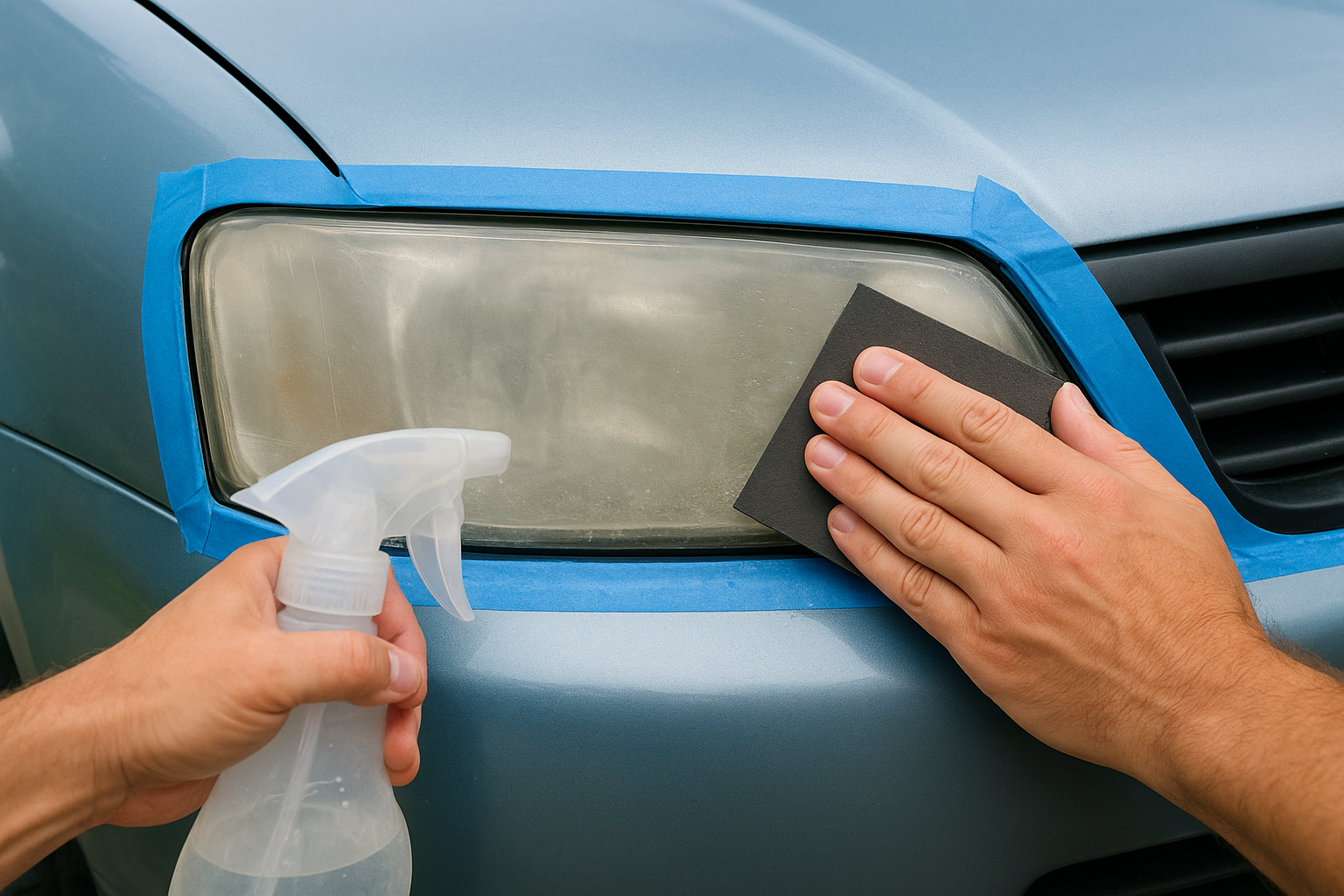
- Tape off all paint and trim around the headlight housing with two to three layers of painter’s tape.
- Soak 400-grit wet/dry sandpaper in water for five minutes before you start.
- Sand the lens using firm, horizontal strokes, keeping the surface wet with a spray bottle. Work until the entire lens looks uniformly hazy and the rough texture is gone.
- Switch to 800-grit sandpaper and repeat using vertical strokes to remove the scratches left by the 400-grit.
- Move to 1500-grit using circular strokes, then finish with 2000-grit to refine the surface before polishing.
- Rinse the lens completely and dry it with a clean microfiber cloth.
- Apply an automotive compound or plastic polish with a foam pad, working in firm circular motions across the full lens surface.
- Buff off the residue with a fresh microfiber cloth until the lens clears.
Check your work before sealing
Hold a flashlight or portable work light directly against the lens at a low angle after polishing. This raking light reveals any remaining haze, swirl marks, or uneven spots that need another polish pass. Fix them now, because a sealant coat locks in whatever surface condition sits underneath it, good or bad.
Seal and maintain for long-lasting clarity
Sealing your lens after polishing is not optional if you want results that hold up for more than a few weeks. Every method in this guide on how to restore cloudy headlights strips away oxidation, but that process also removes whatever UV protection remained on the lens. Without a new protective layer, bare polycarbonate sits fully exposed to the same UV rays that caused the damage in the first place, and the yellowing returns quickly.
Apply your UV sealant correctly
The product you choose matters here. A dedicated plastic UV sealant or automotive spray clear coat rated for plastic gives you the most durable protection. General-purpose wax provides limited UV blocking and breaks down faster when applied to headlight lenses. After polishing, wipe the lens with a clean, dry microfiber cloth to remove any remaining residue before you open the sealant.
Apply sealant within 30 minutes of finishing your polish so the bare polycarbonate spends as little time exposed as possible.
Follow these steps to apply your sealant correctly:
- Confirm the lens is dry and residue-free before you open the sealant.
- Apply a thin, even coat using a foam applicator pad or spray nozzle, working in smooth passes from top to bottom.
- Let it cure for the full time listed on the product label, typically 15 to 30 minutes, before touching the lens.
- Apply a second coat once the first has fully cured for added UV protection.
- Remove the masking tape only after the final coat is completely cured to avoid disturbing the edges.
Keep up with a simple maintenance routine
Your sealant will not last forever, but a consistent maintenance schedule extends your results significantly. UV sealants break down over time, especially on lenses that face direct sun daily. Build a quick inspection into your regular car wash routine to catch degradation early, before surface haze advances into deep oxidation that forces you through the full wet-sand process all over again.
Use this schedule to stay ahead of the damage:
| Task | Frequency |
|---|---|
| Wash headlights with soap and water | Every wash |
| Apply a fresh coat of UV sealant | Every 3 to 6 months |
| Inspect for early haze or yellowing | Monthly |
| Light polish pass if haze appears | As needed |
Spotting early haze and hitting it with a quick polish pass before it worsens saves you from reaching for wet sandpaper again, and keeps your lenses performing well between full restoration sessions.
Ready for a clearer night drive
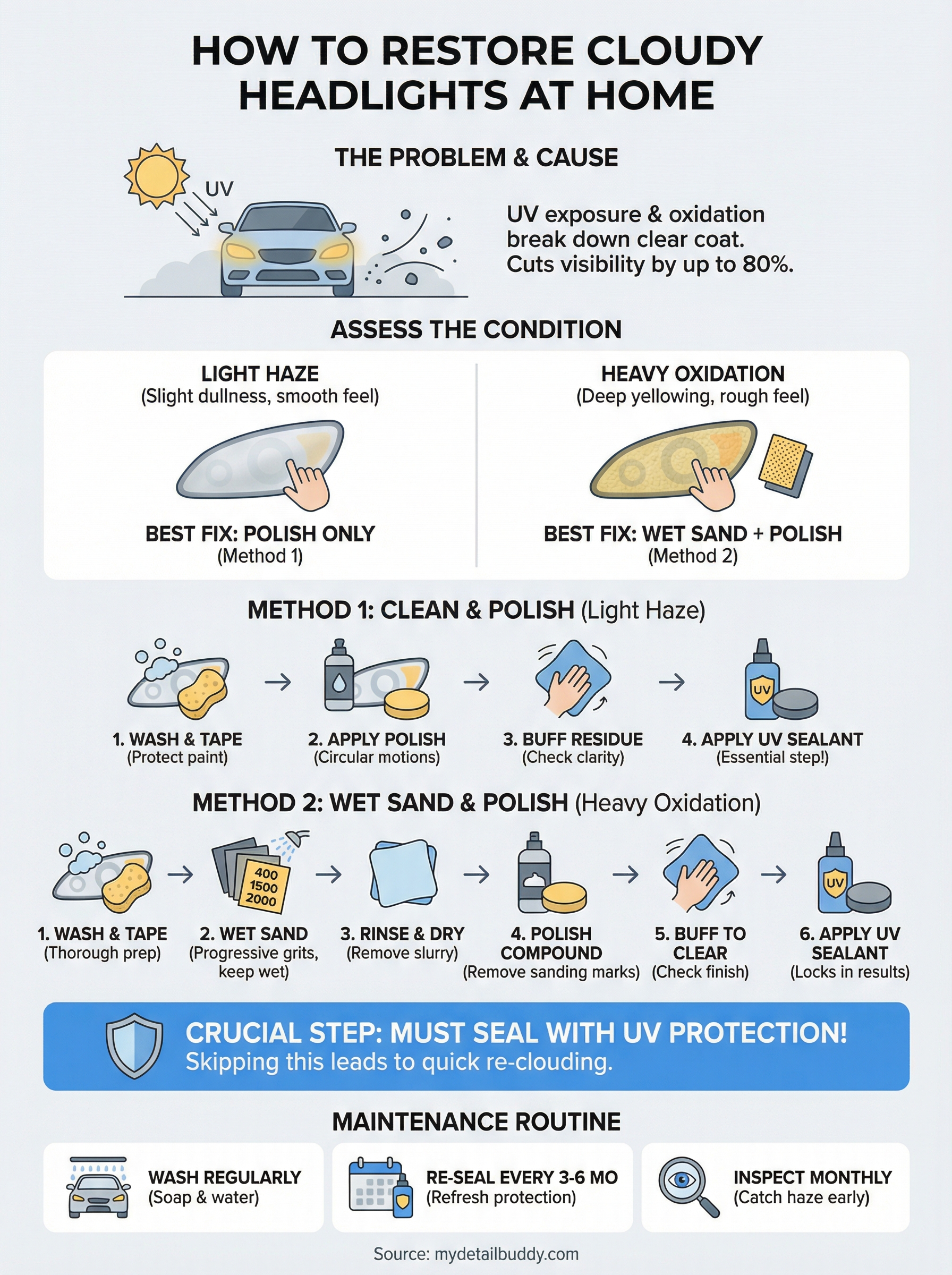
You now have everything you need to know about how to restore cloudy headlights at home, from a quick polish pass on mild haze to a full wet-sand and seal job on heavily oxidized lenses. The method you pick comes down to the severity of the damage, and the maintenance schedule keeps it from coming back fast. Follow each step in order, seal the lens after every restoration, and inspect monthly so small problems stay small.
Some lenses are too far gone for DIY work to hold up, and others just need a professional touch to get back to factory clarity. If your headlights have deep pitting, internal fogging, or damage that polishing won’t fix, our certified technicians bring the tools and experience directly to your driveway. Check out our headlight restoration and detailing packages to see what fits your vehicle and your budget.


