

Leather car seats look and feel great, until they don’t. Without regular conditioning, that smooth leather starts to dry out, stiffen, and eventually crack. If you’re wondering how to condition leather car seats the right way, you’re already a step ahead of most car owners who wait until the damage is visible. The good news is that proper leather conditioning isn’t complicated, and doing it yourself at home is absolutely doable with the right products and technique.
At My Detail Buddy, we treat leather interiors daily as part of our mobile detailing services across Waxhaw, Charlotte, and the surrounding NC area. We’ve seen firsthand what neglect does to leather, and what a consistent care routine prevents. That hands-on experience is exactly what shaped this guide. Whether you drive a luxury sedan or a family SUV, keeping your leather seats conditioned protects your investment and keeps your cabin looking sharp for years.
This guide walks you through every step, from prepping and cleaning your leather to choosing the right conditioner and applying it correctly. You’ll also learn how often to condition, what mistakes to avoid, and when it might make sense to call in a professional detailer instead. Let’s get into it.
What you need before you start
Before you learn how to condition leather car seats properly, gather everything you need in one place. Trying to condition leather while hunting down supplies mid-job leads to mistakes, like leaving product on the surface too long or skipping steps entirely. Having the right tools and products ready before you begin makes the entire process faster and the results noticeably better. A quick five-minute prep saves you from unnecessary frustration later.
The right leather care products
Not all leather care products work the same way, and using the wrong one can do more harm than good. You need two core products: a dedicated leather cleaner and a quality leather conditioner. These are separate products with separate jobs. The cleaner lifts dirt, oils, and residue from the surface without stripping the leather’s natural moisture. The conditioner then replenishes that moisture and creates a protective barrier against drying and cracking.
Avoid using household cleaners like dish soap or all-purpose sprays on leather. They strip the protective coating and speed up cracking.
Look for pH-balanced formulas for both products. Options like Chemical Guys Leather Cleaner and Leather Honey Conditioner are widely available and perform well across most leather types. If you have perforated leather seats, choose a conditioner that’s light enough not to clog the perforations during application.
Tools and supplies you’ll need
The right application tools make a real difference in how evenly products spread and how well the leather absorbs them. Here’s what to have ready before you start:
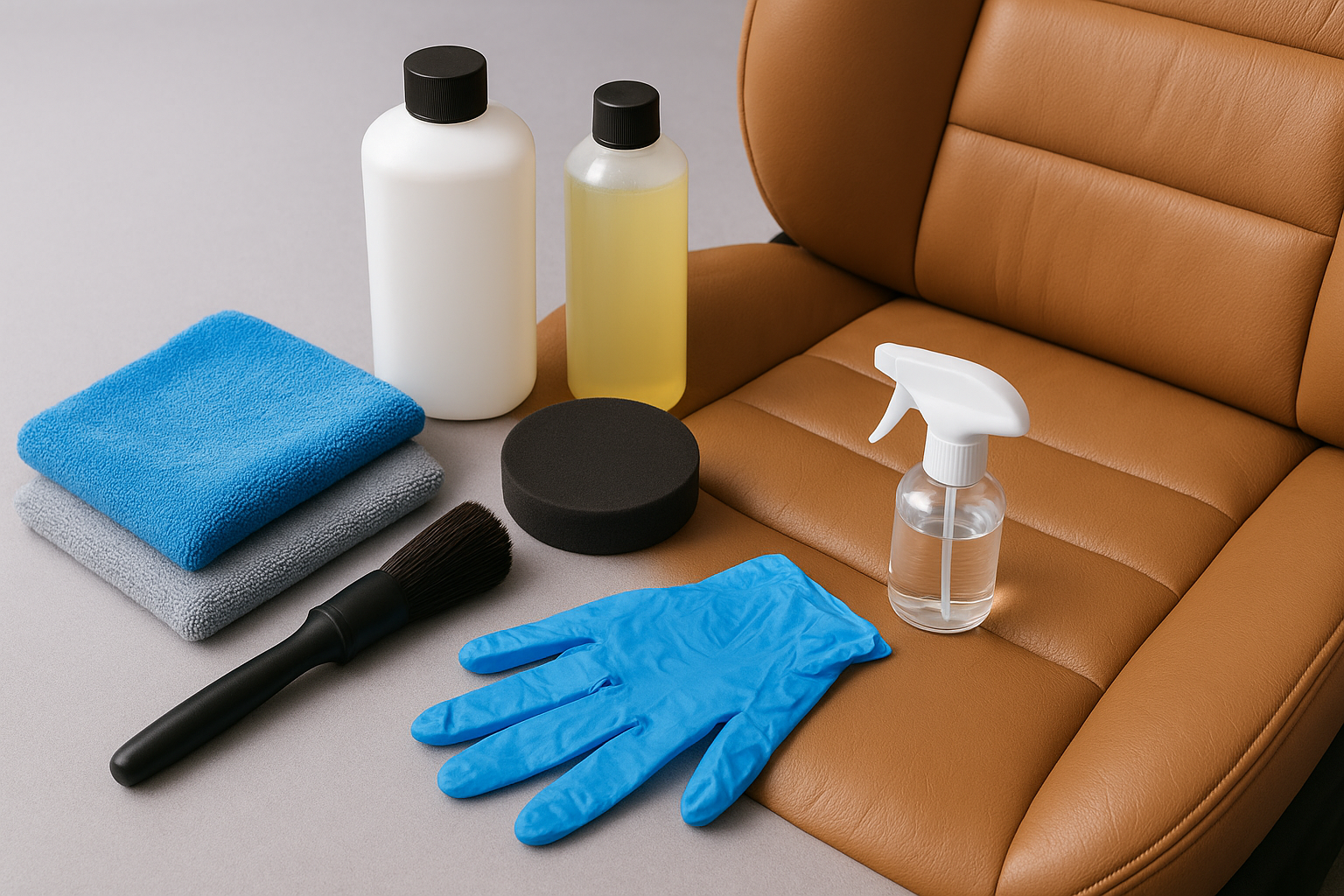
- Microfiber cloths (at least 4, clean and dry): Use separate cloths for cleaning and conditioning
- Soft-bristle detailing brush: Works cleaner into seams and stitching without scratching
- Foam applicator pads: Give you more control when spreading conditioner evenly
- A small spray bottle: Useful for diluting cleaner if the instructions call for it
- Nitrile gloves: Keep product off your hands throughout the process
- A vacuum with a brush attachment: Removes loose debris before cleaning begins
Avoid terry cloth towels or paper towels during this process. They can scratch the surface or leave fibers behind. Microfiber cloths are gentler and far more effective for both cleaning and buffing.
Setting up your workspace
Where you work matters more than most people realize. Park your car in a shaded spot or work indoors, away from direct sunlight. Leather heats up fast in the sun, and both cleaner and conditioner can dry too quickly on a hot surface, leaving streaks or uneven absorption across the seat.
Set aside at least two hours for the full process if this is your first time conditioning your seats. Rushing leads to missed spots and poor product absorption. If your seats haven’t been cleaned in a long time, budget extra time for the cleaning phase before you even open the conditioner bottle.
Step 1. Identify your leather and test products
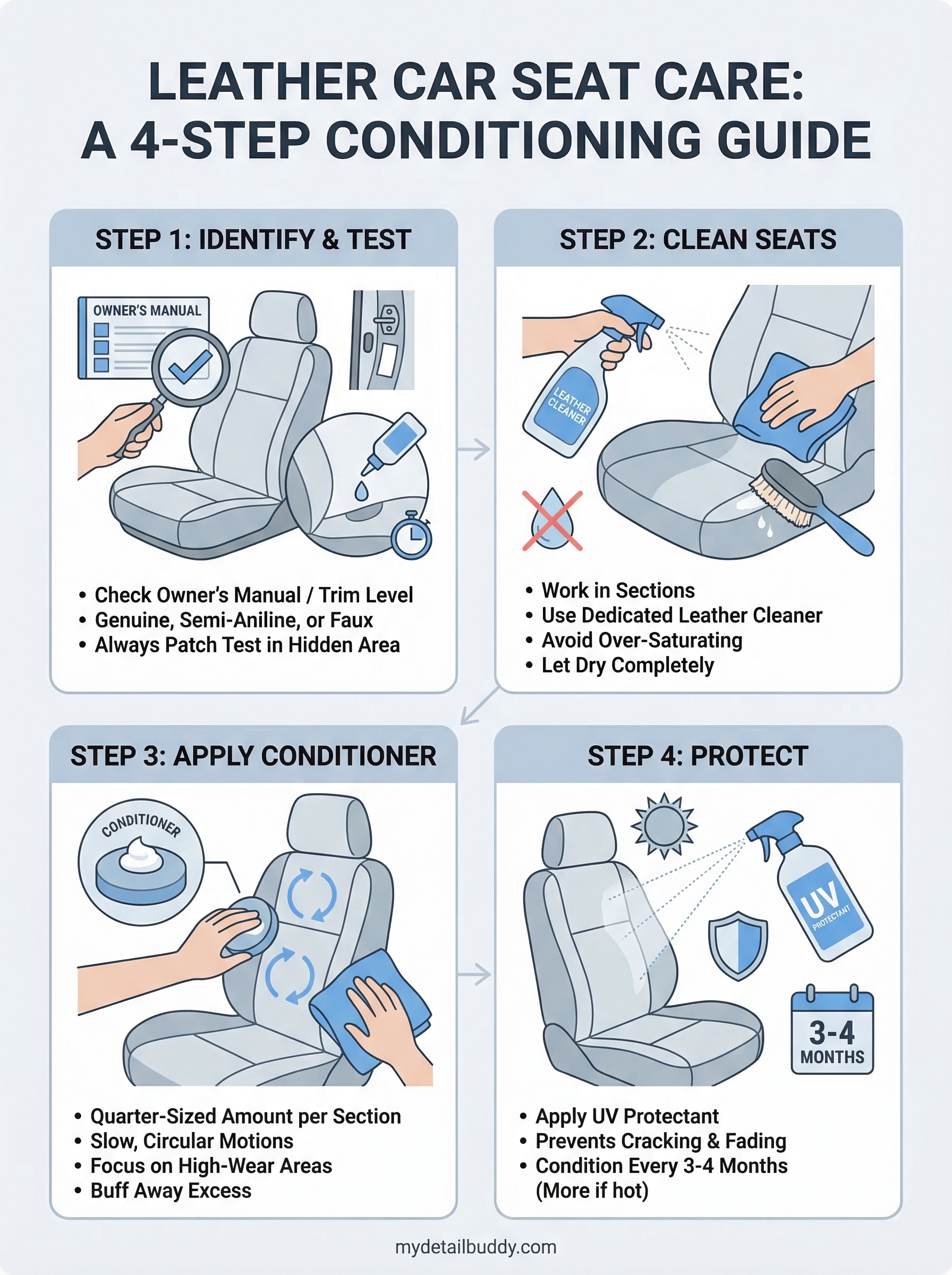
Before you apply anything to your seats, figure out exactly what type of leather you’re working with. Not all leather is the same, and using the wrong product on the wrong surface causes discoloration, residue buildup, or coating damage. Taking two minutes to identify your leather type before opening any bottle is one of the most important parts of learning how to condition leather car seats correctly.
Know what type of leather you have
Most modern vehicles use one of three materials: genuine leather, semi-aniline leather, or faux leather (also called vinyl or leatherette). Genuine leather is porous and absorbs conditioner readily. Semi-aniline has a light factory-applied coating and is common in luxury vehicles. Faux leather is fully synthetic and needs a vinyl-specific conditioner rather than a standard leather product.
Check your owner’s manual or the door jamb sticker to confirm what your seats are made of. If you can’t find the information there, look up your vehicle’s trim level on the manufacturer’s website. Knowing this detail upfront prevents you from applying a conditioner that won’t absorb, or one that reacts badly with the existing surface treatment.
Patch test before applying anything
Even with the correct product in hand, always run a patch test on a hidden area first. Use the back of the seat near the base or the underside of a seat cushion where it stays out of sight. Apply a small amount of both the cleaner and conditioner, let each product sit for the recommended dwell time, wipe it off, and check for color changes, residue, or surface reactions.
If you notice any discoloration or tackiness after the patch test, switch products before treating the full seat.
Wait at least 10 minutes after wiping the test area before evaluating the result. Some reactions take time to appear, and checking too early gives you a false reading on product compatibility.
Step 2. Clean the seats without drying them out
Cleaning leather before conditioning is not optional. If you skip straight to the conditioner, you’re sealing in dirt, skin oils, and surface grime. The conditioner won’t absorb evenly, and you’ll end up with a blotchy result that looks worse than when you started. Cleaning and conditioning are two separate steps, and doing them in the right order is a core part of knowing how to condition leather car seats correctly.
Work in sections, not all at once
Apply your leather cleaner to one seat section at a time rather than spraying the entire seat at once. Start with the seat back, then move to the cushion, and finish with the sides and bolsters. This keeps the cleaner from drying out on the surface before you have a chance to work it in. Spray the cleaner onto your microfiber cloth, not directly onto the leather, then use light, circular motions to lift dirt from the surface.
Use your soft-bristle detailing brush along the seams and stitching lines where dirt tends to pack in. Follow up immediately with a clean microfiber cloth to wipe away the loosened residue. Repeat each section once if the surface had heavy buildup, but avoid scrubbing aggressively since that damages the protective coating on the leather.
Wipe each section completely dry with a clean microfiber cloth before moving to the next area. Leaving cleaner sitting on the surface strips moisture from the leather.
Watch for over-saturating the leather
Using too much product is one of the most common mistakes during the cleaning phase. Excess moisture weakens the leather fibers over time and can cause the material to stiffen as it dries. Keep your application light and controlled. If your cloth feels soaked, wring it out before using it on the seat.
Allow the leather to air dry for five to ten minutes after cleaning each seat before moving on to the conditioning step. The surface should feel dry to the touch, not damp or tacky.
Step 3. Apply conditioner the right way
Once the leather is clean and fully dry, you’re ready to condition it. This is the step that makes the biggest visible difference, and it’s also where most people over-apply. Using too much conditioner leaves a greasy residue that attracts dust and makes the seats look dull instead of revived. Learning how to condition leather car seats correctly means applying product with control and patience, not speed.
Use the right amount of product
Squeeze a quarter-sized amount of conditioner onto your foam applicator pad before starting. That’s enough to cover one full seat section without overloading the leather. Work in the same sections you used during cleaning: seat back first, then the cushion, then the sides and bolsters. This keeps your application organized and prevents you from missing areas or doubling up without realizing it.
Less is more with leather conditioner. You can always add a second coat after the first one absorbs, but you can’t undo over-saturation once it’s in.
Work it in with steady, circular motions
Apply the conditioner using slow, circular motions that push the product into the grain of the leather rather than just coating the surface. Pay extra attention to high-wear zones like the driver’s seat cushion, seat edges, and any areas that already show early signs of dryness or color fading. These spots absorb conditioner faster than the rest of the seat and often benefit from a second light pass once the first application has soaked in.
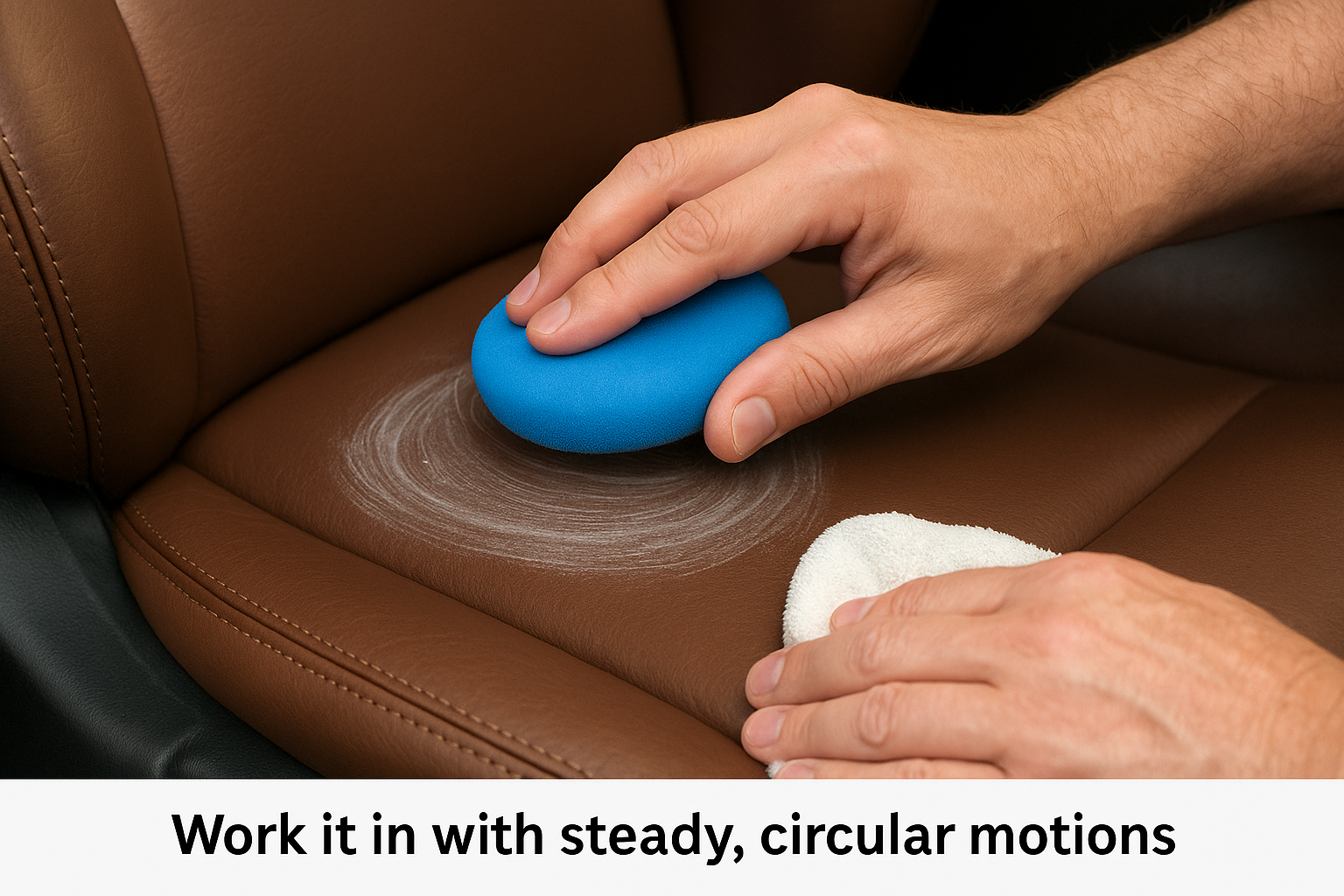
After working the conditioner into each section, let it sit for five to ten minutes so the leather can absorb it fully. Then take a clean, dry microfiber cloth and gently buff away any excess product remaining on the surface. The finished seat should feel soft and slightly smooth to the touch, not slippery or sticky. If it feels tacky after buffing, apply more pressure with the cloth until the excess conditioner is gone.
Step 4. Protect leather and prevent cracks
Conditioning restores moisture to your leather, but protection keeps that moisture locked in between sessions. The final step in learning how to condition leather car seats correctly is adding a layer of defense against the two biggest threats to leather longevity: UV radiation and daily friction. Skipping this step means your conditioning work starts breaking down the moment you park in direct sunlight or drop into the driver’s seat.
Apply a UV protectant after conditioning
UV rays break down leather faster than almost any other environmental factor. After buffing away excess conditioner, apply a dedicated leather UV protectant to the entire seat surface. Products like 303 Aerospace Protectant perform well and won’t leave a greasy film or an artificial shine. Apply it the same way you applied the conditioner: a small amount on a foam applicator pad, spread in even circular motions, then buffed off with a clean microfiber cloth.
UV damage is cumulative and irreversible, so applying a protectant after every conditioning session is the single most effective thing you can do to extend the life of your leather seats.
Placing a sun shade on your windshield whenever you park outdoors for extended periods adds another layer of protection. A protectant slows UV damage, but limiting direct sun exposure in the first place makes the biggest long-term difference for your leather.
Follow a consistent conditioning schedule
The schedule you keep matters as much as the products you use. Condition your leather seats every three to four months under normal driving conditions. If you live in a hot climate, park outdoors frequently, or use your vehicle heavily every day, shift to a two-month schedule to compensate for faster moisture loss.
Here’s a simple maintenance schedule to reference:
| Climate / Conditions | Cleaning Frequency | Conditioning Frequency |
|---|---|---|
| Mild, mostly garaged | Every 2 months | Every 4 months |
| Hot or sunny climate | Monthly | Every 2 months |
| Heavy daily use | Monthly | Every 6 to 8 weeks |
Sticking to this routine prevents the deep cracking that no amount of conditioner can reverse once it sets in.
Keep your leather looking new
Knowing how to condition leather car seats is only useful if you actually stick with the routine. The steps in this guide take less than two hours start to finish, and doing them consistently every two to four months keeps your leather soft, prevents cracks before they start, and protects the resale value of your vehicle. Small, regular maintenance sessions always outperform one major restoration job after the damage is done.
If your leather is already cracked, stained, or showing serious wear, a DIY conditioning session may not be enough to reverse it. That’s where professional detailing makes a real difference. At My Detail Buddy, we handle full leather cleaning, conditioning, and protection as part of our mobile interior detailing services across Waxhaw, Charlotte, and surrounding NC areas, bringing everything directly to your driveway. Check out our interior detailing packages to find the right option for your vehicle.


