

Crumbs wedged into seams, coffee stains that have been setting for months, and that mystery smell you can’t quite track down, your car seats take a beating. Knowing how to deep clean car seats the right way makes the difference between a surface-level freshening and an actual reset that removes embedded dirt, allergens, and stains. Whether you’re dealing with fabric upholstery or leather, the process requires more than a quick wipe-down with a damp cloth.
At My Detail Buddy, we deep clean car interiors across the Waxhaw and Charlotte, NC area every single day. Our certified detailers use professional-grade extractors, steam cleaners, and pH-balanced solutions to restore seats that look far past their prime. We’ve seen it all, kid messes, pet hair disasters, years of neglect, and we’ve brought seats back from every one of them. That hands-on experience is exactly what shaped this guide.
Below, you’ll find a complete walkthrough covering both cloth and leather seats, from household cleaning solutions you probably already own to the professional tools and techniques we use on the job. We’ll break down each step so you can tackle the project yourself with confidence. And if you get halfway through and decide you’d rather hand it off to a pro, we’re one call away. Let’s get into it.
What deep cleaning car seats really means
Most people think cleaning car seats means wiping the surface with a damp cloth or running a vacuum over the top layer. That approach handles loose debris and fresh spills, but it leaves the real problem untouched. Deep cleaning goes several layers further. It pulls contamination out of the fibers, pores, and seams where ordinary cleaning never reaches, and it treats the seat as a complete system rather than just a visible surface.
Surface cleaning vs. deep cleaning
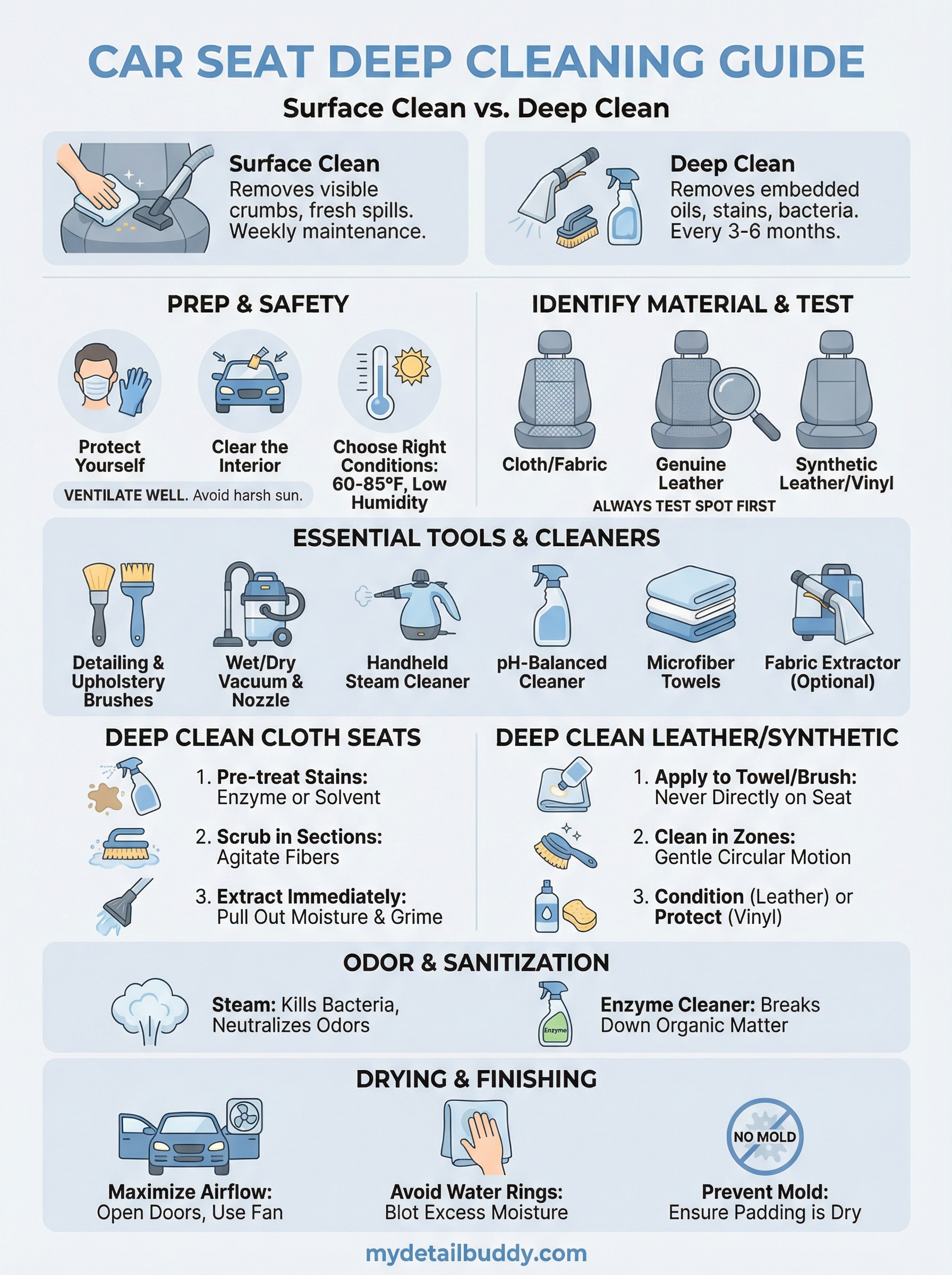
Surface cleaning removes what you can see: crumbs, pet hair sitting on top, and the dried edge of a recent spill. A quick vacuum or wipe-down handles that level of maintenance fine between deeper sessions. Deep cleaning targets what’s underneath that visible layer, the oils transferred from skin and clothing, ground-in dirt particles that have worked their way into fabric weave or leather grain, and moisture trapped inside foam padding. Those layers don’t respond to surface-level tools. You need agitation, penetrating solutions, and extraction or thorough rinsing to actually pull the contamination out.
Deep cleaning is not about scrubbing harder. It’s about getting the right product into the right layer of the material and then pulling contamination out rather than pushing it deeper.
Here’s a quick breakdown of how the two approaches differ:
| Cleaning Type | Tools Used | What It Removes | Frequency |
|---|---|---|---|
| Surface clean | Vacuum, damp cloth | Loose debris, fresh spills | Weekly |
| Deep clean | Extractor, steam cleaner, brush, cleaner | Embedded oils, bacteria, stains, odors | Every 3-6 months |
What’s actually hiding in your seats
Every time you sit down, your body transfers skin oils, sweat, and microscopic debris directly into the seat surface. Children bring food, juice, and mud into every ride. Pets shed dander and track in outdoor grime with every trip. Over weeks and months, that contamination builds up in ways that are invisible but very much present. Fabric seats absorb liquid spills into the backing material, which creates conditions for bacterial growth and persistent odors that no air freshener will cover long-term.
Leather and synthetic leather develop a film of body oils and surface grime in the grain that dulls the finish and breaks down the protective coating over time. That degradation is slow and easy to miss until the seat starts cracking or the color looks uneven. Both materials hold more contamination than they appear to, which is exactly why a genuine deep clean produces such a visible difference.
What a proper deep clean achieves
When you work through how to deep clean car seats correctly, you’re not just improving the appearance of your interior. You’re removing allergens, bacteria, and embedded grime that affect both the hygiene and the long-term condition of the upholstery. A fully deep-cleaned seat looks visibly brighter and more uniform in color, smells neutral rather than stale, and feels different to the touch because the surface is no longer carrying a layer of built-up residue.
For fabric seats, proper deep cleaning reduces the trapped particle load that causes fibers to break down from friction over time. For leather and vinyl, it sets the stage for conditioning treatments that restore flexibility and prevent cracking. The end result is an interior that’s genuinely clean rather than just presentable, and one that holds up better between sessions because you’ve reset the baseline instead of adding another layer on top of existing buildup.
Safety and prep before you start
Jumping straight into scrubbing without any preparation is one of the most common mistakes people make when figuring out how to deep clean car seats. The right prep work protects both you and your upholstery from unnecessary damage, and it takes less than ten minutes to complete. Skipping this step often leads to chemical irritation, streaked finishes, or saturated foam padding that takes days to dry properly.
Protect yourself from cleaning chemicals
Most effective seat cleaners contain surfactants, solvents, or enzyme-based compounds that work well on upholstery but can irritate skin and mucous membranes with repeated contact. Wear nitrile gloves throughout the entire process, and if you’re working in an enclosed garage or using a spray-heavy product, open the car doors and windows fully before you start. A basic respirator or N95 mask helps when you’re using enzyme cleaners or high-concentration degreasers in a tight space.
The better ventilated your workspace, the safer and more effective the cleaning process becomes. Good airflow speeds drying time and prevents chemical buildup inside the cabin.
Clear the car before you touch the seats
Remove everything from the interior before you begin. A cleared cabin gives you full access to every seam and edge without the risk of accidentally soaking personal items with cleaning solution. Pull floor mats out completely and set them aside to clean separately rather than working around them.
Here’s what to pull out before starting:
- Child car seats and booster seats
- Floor mats (front and rear)
- Loose items stored under the seats
- Items in door pockets and seatback pockets
- Any aftermarket seat covers
Choose the right conditions
Timing matters more than most people expect. Avoid cleaning on a cold or extremely humid day if you can help it. Cold temperatures slow the drying process significantly and cause moisture to sit inside fabric padding far longer than it should, which creates a real risk of mildew. High humidity produces the same result.
Working outdoors offers good ventilation, but park in shade rather than direct sunlight. Direct sun dries cleaning solution too fast and leaves residue behind before you’ve had a chance to extract or rinse it away. Aim for temperatures between 60°F and 85°F with low ambient humidity for the best results on both fabric and leather surfaces.
Identify your seat material and test spot
Before you apply any cleaner to your seats, you need to know exactly what material you’re working with and whether your chosen product is safe for it. Using the wrong cleaner on the wrong surface causes fading, cracking, or permanent staining, which turns a straightforward cleaning job into a repair situation. This step takes only a few minutes but protects you from damage that’s difficult or impossible to reverse.
How to identify your seat material
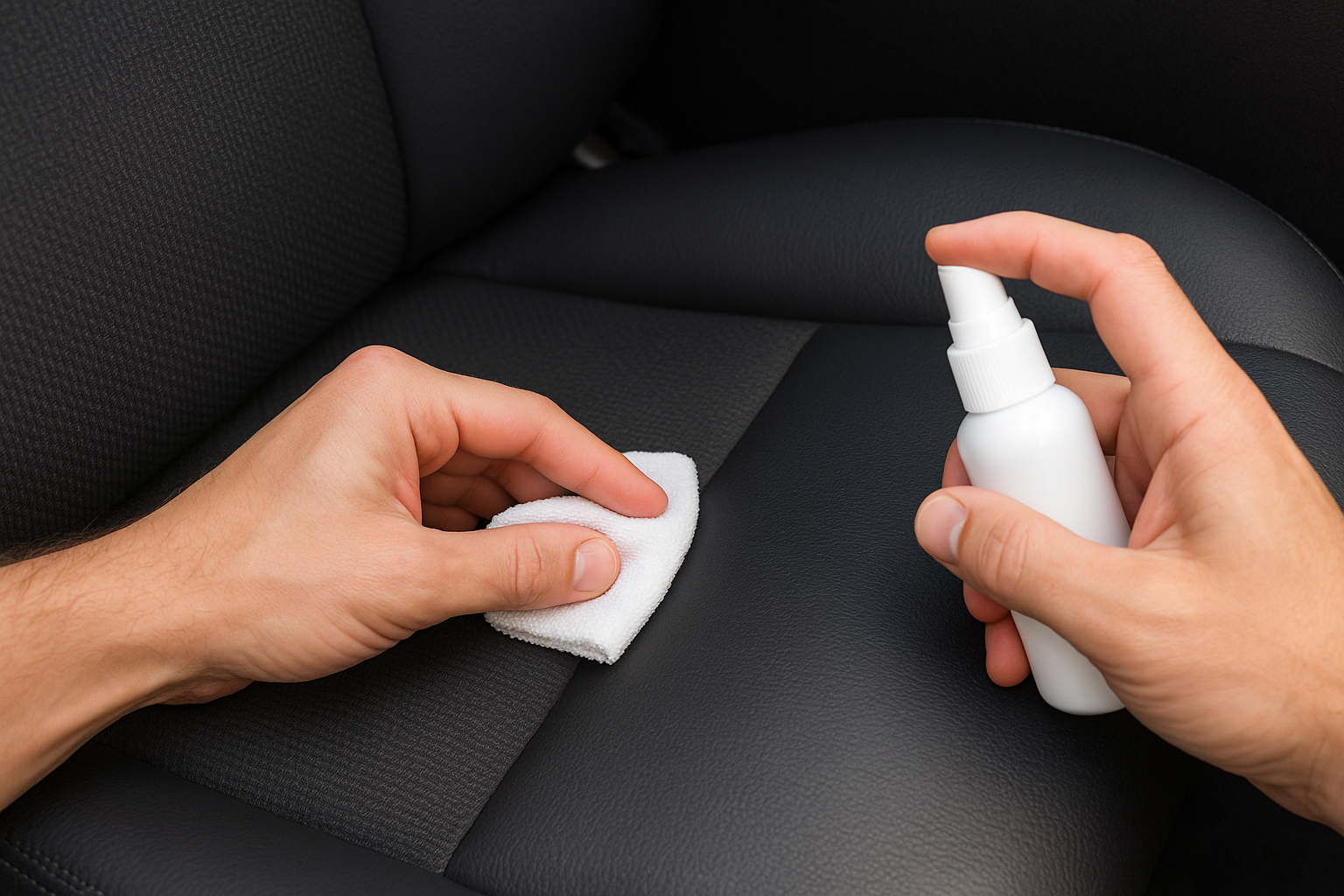
Your car’s owner’s manual lists the exact upholstery type for every trim level, so that’s your most reliable starting point. If you don’t have the manual handy, look for a tag on the seat bottom or backrest that shows material composition. Most seats fall into one of four categories: woven fabric (cloth), genuine leather, synthetic leather (also called leatherette or vinyl), or a combination of cloth center panels with synthetic leather bolsters.
Here’s how to tell them apart by touch and appearance:
| Material | Texture | Key Visual Cue |
|---|---|---|
| Cloth/fabric | Soft, textured weave | Visible fiber pattern |
| Genuine leather | Smooth with natural grain variation | Pores visible under light |
| Synthetic leather | Smooth, very uniform | No pore variation, plastic feel |
| Combination | Mixed: soft center, firmer sides | Two distinct zones on same seat |
Knowing which material you have shapes every decision you make when figuring out how to deep clean car seats, from the cleaner you select to the tools you use for agitation and extraction.
Run a test spot before any full application
Once you’ve identified your material and picked a cleaner, always test it on a hidden area first before applying it anywhere visible. Good test spots include the back of the seat closest to the floor, the underside of a headrest, or the inward-facing bolster that rarely sees direct light. Apply a small amount of the cleaner, let it sit for the same duration you plan to use on the full seat, then blot it dry and check the result after it dries completely.
If the test area shows any color change, fiber damage, or surface dulling after drying, that product is not safe for your seats.
Look for three things once the test spot dries fully: uniform color with no lightening or darkening, no surface texture change, and no residue film left behind. All three need to check out before you move forward with the full application.
Gather tools and cleaners that actually work
Having the right equipment makes a measurable difference when you’re working through how to deep clean car seats. The wrong brush damages delicate fibers, and the wrong cleaner leaves residue behind or strips protective coatings before you’ve even finished. Gathering everything before you start means you won’t stop halfway through to search for a missing item while wet cleaner sits soaking into your upholstery and foam padding.
The tools that do the actual work
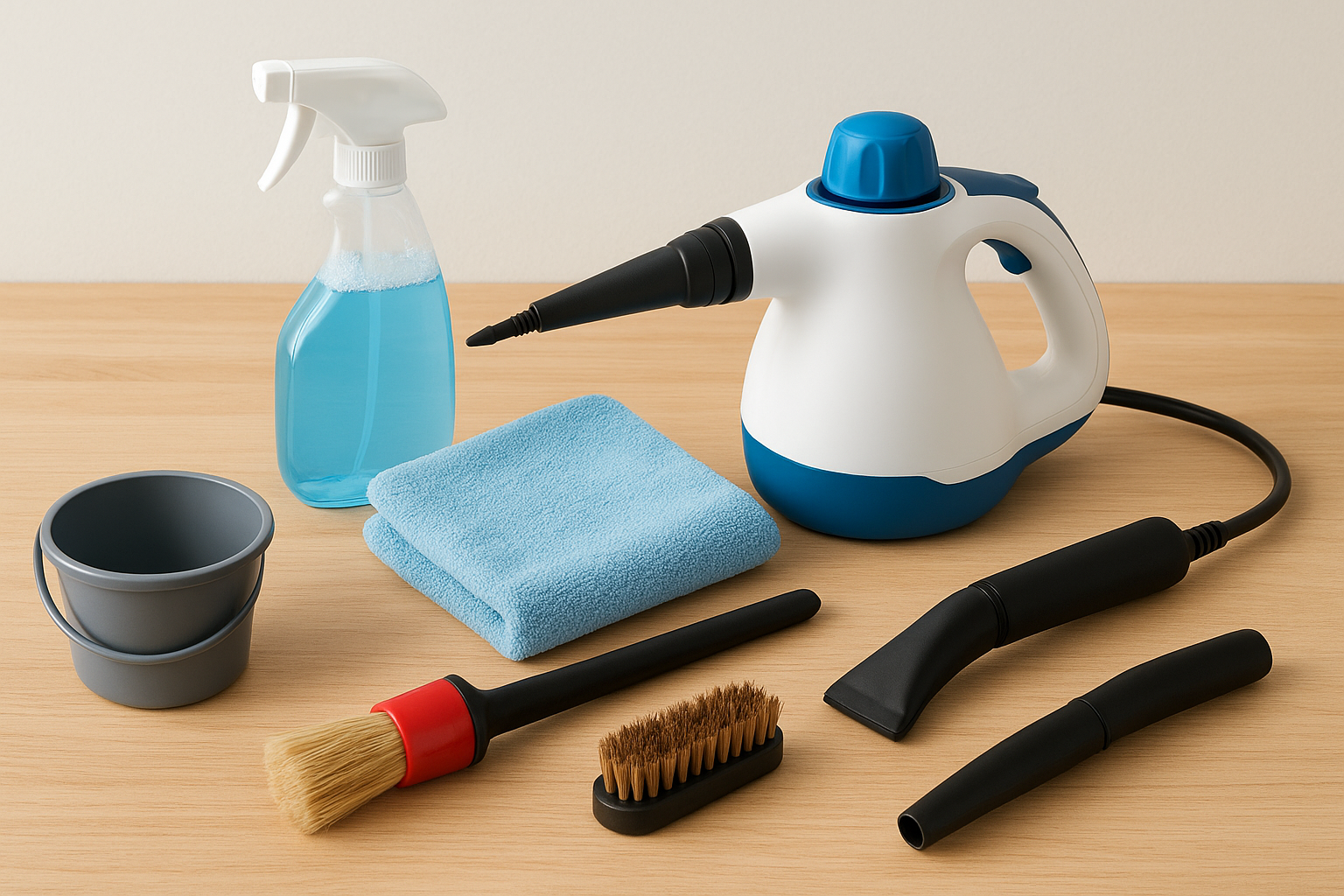
Your tool selection handles two jobs: agitating contamination loose from the material and then removing it from the seat entirely. A stiff-bristled brush works for heavily soiled fabric, but you want a soft-bristled detailing brush for leather and synthetic leather to avoid surface scratches. A wet/dry shop vacuum with a narrow upholstery attachment handles extraction on fabric seats when you don’t have access to a professional extractor. A handheld steam cleaner adds sanitizing power and lifts embedded stains on both cloth and leather without saturating the padding underneath.
Here’s the core toolkit to have ready before you begin:
- Soft detailing brush (for leather and synthetics)
- Stiff upholstery brush (for fabric and heavy soiling)
- Wet/dry vacuum with an upholstery nozzle
- Handheld steam cleaner
- Microfiber towels (at least six clean ones)
- Spray bottle for diluting cleaners
- Small bucket for rinsing brushes
A portable fabric extractor, available on Amazon in home-use models, dramatically outperforms a standard shop vacuum for pulling dissolved contaminants and moisture out of fabric seats.
Match your cleaner to your material
Using an all-purpose cleaner on leather is one of the fastest ways to strip its protective finish and cause premature cracking. Each seat material responds to specific formulations, and choosing the right product prevents damage while improving your results significantly. pH-balanced cleaners (typically rated between 6 and 8) are safe for both fabric and leather and won’t break down fibers or surface coatings with repeated use.
| Material | Cleaner Type | What to Avoid |
|---|---|---|
| Cloth/fabric | Enzyme cleaner or upholstery foam | Bleach, harsh solvents |
| Genuine leather | Dedicated leather cleaner | All-purpose degreasers |
| Synthetic leather | Mild pH-balanced cleaner | Alcohol-heavy products |
| Combination seats | Use appropriate cleaner per zone | One-size-fits-all products |
Check the cleaner label for a pH rating and listed compatible surfaces before you buy. If the label doesn’t specify, contact the manufacturer directly or select a product that clearly states upholstery compatibility for your exact seat material.
Vacuum and dry brush to pull up grit
Before any liquid touches your seats, you need to pull out the dry contamination sitting inside the material. Skipping this step is one of the most common mistakes people make when working through how to deep clean car seats, because applying a wet cleaner over loose grit turns particles into a slurry that pushes deeper into the fabric weave or leather grain. A proper vacuum and dry brush pass takes only five minutes but sets up every step that follows to work far more effectively.
Why dry removal comes before any liquid
Wet cleaning activates and binds dirt that hasn’t been physically removed first. Loose grit, dried crumbs, and hair sitting in the upper layers of your seat become significantly harder to extract once you introduce moisture, so pulling them out dry reduces the overall contamination load and gives your cleaner direct access to the stains and oils embedded below the surface rather than fighting through debris sitting on top.
Applying cleaner over un-vacuumed seats also wastes your product and extends your drying time unnecessarily. The solution saturates loose material instead of penetrating into the seat fibers, which means you use more cleaner to get less result. Dry removal first gives every subsequent step a clean baseline to work from.
Removing loose contamination before applying any liquid is the single step most people skip, and it has more impact on the final result than almost any product you choose.
Dry brush the seat before you vacuum
Start with a stiff upholstery brush or a dedicated detailing brush suited to your seat material. Work in short, overlapping strokes across the seat surface, moving from the top of the seat back down toward the bottom cushion. Pay extra attention to seams, tufted areas, and the gap between the seat back and cushion, where grit and debris collect deepest. Use a softer brush on leather and synthetic seats to avoid scratching the surface finish.
Follow this brushing sequence before picking up the vacuum:
- Start at the top of the seat back and work downward
- Brush across the bolsters using short side-to-side strokes
- Work the seat cushion top from front to back
- Finish by agitating the gap between the cushion and seat back
Vacuum in sections with firm, slow passes
Once you’ve agitated the surface, vacuum immediately before loosened debris settles back into the fibers. Use a narrow upholstery nozzle and work in overlapping rows, covering each section completely before moving on. Apply firm, consistent pressure and move slowly rather than skimming quickly across the surface. Run a crevice tool through the gap between the seat back and cushion twice, since that channel holds more debris than any other area and a standard nozzle won’t fully reach it.
Pre-treat stains the right way
Pre-treatment is the step that separates a stain that comes out completely from one that fades slightly and leaves a shadow behind. Before you scrub anything, you need to apply the right product directly to each stained area and give it time to break the stain down at the molecular level. Applying your general seat cleaner over the whole surface without pre-treating individual stains first is one of the most common reasons people finish a cleaning session and still find marks in the same spots.
Match your pre-treatment to the stain type
Not every stain responds to the same product, so identifying what caused the mark determines what you reach for first. Organic stains like food, blood, pet accidents, and coffee respond well to enzyme-based cleaners that break down the proteins and organic compounds. Oil-based stains like sunscreen, fast food grease, and hair products need a mild solvent or dedicated degreaser applied directly to the spot before the main cleaning pass.
Here’s a quick reference for common stains and the right pre-treatment approach:
| Stain Type | Examples | Pre-treatment Product |
|---|---|---|
| Protein-based | Blood, milk, pet urine | Enzyme cleaner |
| Tannin-based | Coffee, tea, juice | Upholstery cleaner or diluted white vinegar |
| Oil-based | Grease, sunscreen, lip balm | Mild degreaser |
| Ink | Pen marks, marker | Isopropyl alcohol applied sparingly |
| Mud | Dirt tracked in | Let dry first, then vacuum before applying any cleaner |
Never rub a fresh spill. Blot it vertically with a clean microfiber towel to lift the liquid out rather than spreading it further into the fabric.
How to apply pre-treatment without oversaturating
When you work through how to deep clean car seats, the amount of product you apply during pre-treatment matters as much as the product itself. Spray the pre-treatment onto a microfiber towel or detailing brush rather than directly onto the seat surface whenever possible. This gives you controlled coverage and prevents excess moisture from soaking through to the foam padding underneath.
Let the pre-treatment dwell for two to five minutes after application before you agitate the area. Check the product label for the manufacturer’s recommended dwell time, since enzyme cleaners typically need more time than standard upholstery solutions to activate fully. Longer dwell times loosen more contamination and reduce the amount of scrubbing force required, which protects the fibers from unnecessary wear during the agitation step that follows.
Deep clean cloth seats: scrub and extract
Once you’ve pre-treated your stains and let the dwell time complete, you’re ready to move into the full scrub and extract phase. This is the core of how to deep clean car seats with cloth upholstery, and the sequence you follow matters significantly. Applying cleaner, agitating it into the fibers, and then extracting it promptly produces clean results without soaking the foam padding underneath or leaving behind the residue rings that come from letting solution dry in place.
Work in sections and agitate with purpose
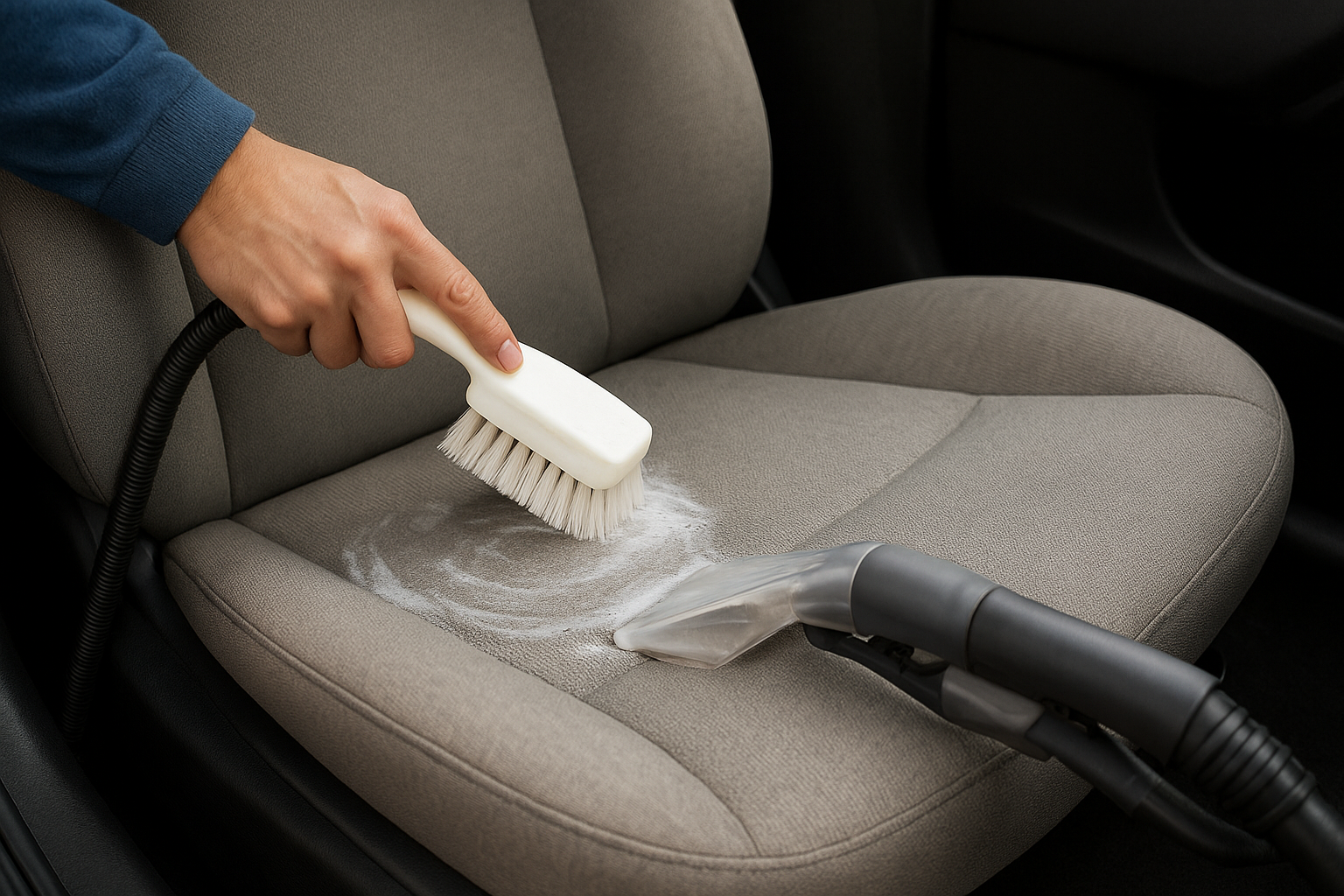
Divide each seat into manageable zones rather than spraying the entire surface at once. A standard front seat breaks down into four working zones: the upper seat back, the lower seat back, the seat cushion, and the bolsters on each side. Spray your upholstery cleaner onto one zone at a time, keeping the coverage even but not saturated, then agitate immediately before moving to the next area.
Use a stiff upholstery brush and work in overlapping circular strokes to lift embedded grime out of the fabric weave. Switch to straight back-and-forth strokes for the final pass on each zone to align the fibers and prevent a brushed, uneven appearance once the seat dries. Apply firm pressure on heavily soiled areas but ease off on thinner fabric zones near seams, where aggressive scrubbing can cause pilling or fiber damage.
The goal during agitation is to lift contamination up and out of the fiber, not drive the cleaner deeper into the padding below.
Extract immediately while the cleaner is still active
Your wet/dry vacuum or fabric extractor does the most critical work in this step. Run the upholstery nozzle across each section within 60 to 90 seconds of finishing the scrub pass, before the cleaner begins drying and re-depositing the contamination it just lifted. Move the nozzle in slow, overlapping rows and apply firm, consistent downward pressure to pull maximum moisture and dissolved grime out of the seat.
Follow this extraction sequence for each zone:
- Run the nozzle in horizontal rows from top to bottom
- Repeat with vertical passes to cross the coverage pattern
- Finish with a single slow pass along each seam line
- Blot any remaining surface moisture with a clean, dry microfiber towel
Repeat the spray, scrub, and extract cycle on any zone that still shows visible soiling after the first pass. Two lighter passes with full extraction between them produce a cleaner result than one heavy application that saturates the padding and extends your drying time significantly.
Deep clean leather and synthetic leather seats
Leather and synthetic leather seats require a different approach than cloth because you’re working with a surface material that doesn’t tolerate saturation and can crack or fade if you use the wrong product or technique. The cleaning process here focuses on lifting contamination from the surface grain and protective coating rather than extracting it from deep fibers, which means less moisture and more controlled application throughout.
Apply cleaner and work in small zones
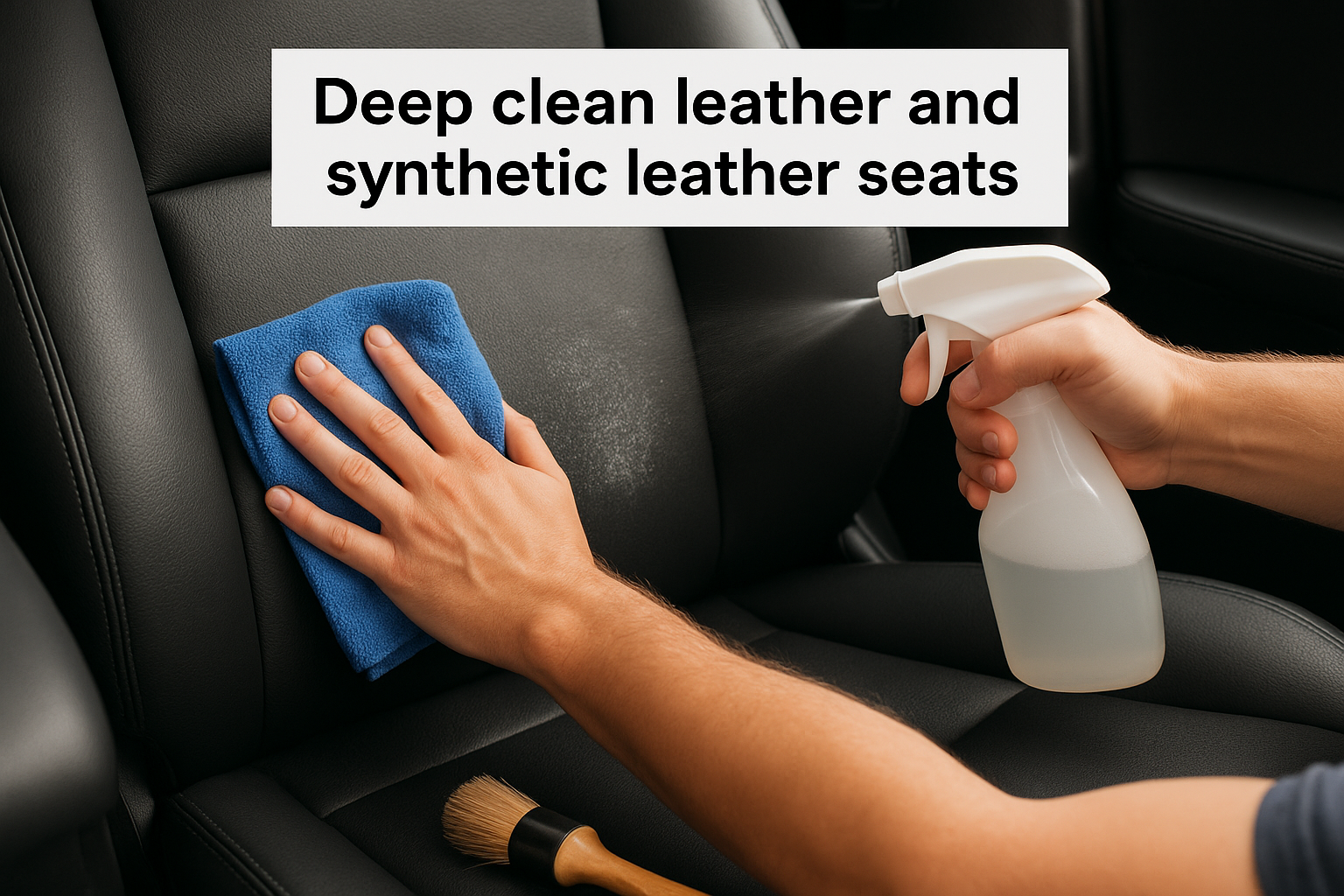
Spray your leather cleaner onto a clean microfiber towel rather than directly onto the seat, then apply it to the leather surface in a small area, roughly the size of your hand. Work in the same four-zone breakdown you used on cloth seats: upper seat back, lower seat back, seat cushion, and bolsters. Use a soft-bristled detailing brush to work the cleaner into the grain using light, circular strokes, which dislodges body oils and surface grime without scratching the finish.
Never apply leather cleaner with heavy pressure or a stiff brush. The grain holds contamination, but it also holds damage from abrasive contact.
Follow each scrubbing pass with a dry microfiber wipe to lift the suspended grime off the surface before it dries back into the grain. For synthetic leather, use the same technique but reduce dwell time to under 60 seconds, since vinyl-based materials don’t absorb product the way genuine leather does and leaving cleaner sitting too long can affect the surface coating.
Condition leather after every deep clean
Cleaning strips some of the natural oils and protective compounds from genuine leather, which leaves it slightly more vulnerable to cracking and drying if you don’t follow up with a conditioner. Apply a dedicated leather conditioner with a clean microfiber applicator in thin, even coats, working it into the surface using circular strokes. Let it absorb for five minutes, then buff off any excess with a separate dry towel.
Synthetic leather doesn’t absorb conditioner the way genuine leather does, but applying a UV protectant spray designed for vinyl surfaces extends the life of the coating and keeps the material from becoming brittle over time. This final step matters most if you’re working through how to deep clean car seats as part of a seasonal maintenance routine rather than a one-time fix, because consistent conditioning keeps the material flexible and resistant to surface cracking between sessions.
Remove odors and sanitize without damage
Odors don’t live on the surface of your seats. They’re embedded in the foam padding, fabric fibers, and seams where spills, sweat, and bacteria have been sitting long enough to break down into compounds that hold a persistent smell. Covering that up with an air freshener buys you a few days at most. Working through how to deep clean car seats correctly means treating the source of the odor directly rather than masking what’s coming off the seat.
Find the odor source before treating it
Before applying any sanitizing product, locate the specific area producing the smell rather than blanket-treating the entire interior. Pet urine and milk spills are the two most common sources of persistent odors, and both absorb deep into the seat padding, which means the stained area on the surface often represents only a fraction of where the contamination actually spread. Press a clean microfiber towel firmly against suspect areas and check whether it picks up any residual odor after contact. That pressure test quickly identifies the zones that need targeted treatment versus areas that just need a light pass during the general cleaning.
Treating the full surface with a heavy product when only one zone is the source wastes your cleaner and increases the total drying time for the entire seat.
Sanitize with steam or enzyme cleaners
Your two most effective options for sanitizing without damaging the seat material are a handheld steam cleaner and a dedicated enzyme-based cleaner. Steam reaches temperatures that kill bacteria and neutralize odor-producing compounds without leaving any chemical residue behind. Hold the steam nozzle two to three inches from the surface and move it in slow, overlapping passes. Avoid holding it stationary on genuine leather for more than two seconds per spot, since sustained heat concentration can dry out the grain.
Enzyme cleaners work differently. They contain active biological compounds that break down the proteins and organic matter causing the odor rather than simply covering the smell with a fragrance. Apply the enzyme cleaner to the affected zone, let it dwell for the time listed on the label (typically five to ten minutes), then blot the area firmly with a clean towel and follow with a steam pass if you have one available.
Here’s how to choose between the two approaches:
| Situation | Best Method |
|---|---|
| Bacteria and surface odors | Steam cleaner |
| Pet urine or milk spill | Enzyme cleaner first, then steam |
| Mildew smell after wet cleaning | Steam only |
| General stale interior odor | Enzyme cleaner diluted and applied lightly |
Avoid baking soda left sitting on wet fabric for extended periods, since it can clog fiber weave and require significant extra vacuuming to fully remove. Sprinkle it only on completely dry surfaces, let it sit for 30 minutes, and vacuum it out thoroughly before moving to the next step.
Dry fast and prevent water rings and mold
Drying is the step that determines whether your work holds up or causes a new problem. When you work through how to deep clean car seats, the cleaning itself only succeeds if the seat dries quickly and evenly. Moisture left sitting in foam padding or fabric fibers for more than a few hours creates the conditions for water rings, musty odors, and mold growth, all of which are harder to fix than the original stain you started with.
Get air moving immediately after cleaning
The moment you finish your final extraction or blotting pass, open every door and window in the vehicle to maximize airflow through the cabin. Place a box fan directly at one open door, aimed inward, to push air across the seats and out through the opposite side. This cross-ventilation setup cuts drying time significantly compared to leaving the car sitting with doors closed.
Running your car’s climate control on maximum fan speed with fresh air mode (not recirculate) adds another layer of airflow through the cabin from below. Keep this running for 20 to 30 minutes after cleaning while the doors remain open. If you’re working in a garage, crack the garage door open rather than running the fan in a fully enclosed space.
Fast airflow in the first 30 minutes after cleaning does more to prevent mold and water rings than anything you apply to the seat afterward.
Avoid water rings by lifting moisture before it settles
Water rings form when dissolved residue carried by cleaning solution dries at the outer edge of a damp zone rather than evaporating evenly. You prevent them by removing as much moisture as possible before the edges of the cleaned area begin drying on their own. Press a clean, dry microfiber towel firmly over each cleaned section immediately after extraction and hold it in place for 10 to 15 seconds before lifting straight up rather than wiping across the surface.
Prevent mold from forming in the padding
Fabric seats that feel only slightly damp on top may hold significant moisture in the foam layer below, which is where mold actually grows. Test the seat by pressing firmly in the center with a dry towel held flat against the surface. If visible moisture transfers to the towel, run another extraction pass before relying on airflow alone to finish the job.
Avoid sitting in or placing anything on cleaned seats until they feel completely dry to the touch on both the surface and the compressed center when you press firmly. In humid conditions, this process can take four to six hours even with fans running, so plan your cleaning session with that window in mind.
Final checks and next steps
Once your seats are fully dry, run a final inspection before calling the job done. Press firmly across each section of fabric to confirm no residual moisture remains in the padding. Check seams and tufted areas under direct light to spot any remaining residue or missed staining. On leather seats, verify the conditioner has absorbed fully and no surface tackiness or uneven sheen remains. If you find a spot that didn’t come out completely, a second targeted pass with the right pre-treatment will usually finish it off.
Working through how to deep clean car seats yourself delivers real results, but some interiors need more than a DIY session can provide. Heavily embedded contamination, persistent odors, and paint-safe exterior work call for professional equipment and trained hands. If your seats need a full reset or you’d rather skip the process entirely, book a mobile detailing appointment and let us handle it at your home or office.


