

Run your hand across your car’s paint after a wash. If it feels rough or gritty instead of glass-smooth, that’s contamination sitting on your clear coat, and a regular wash won’t remove it. This is exactly what a clay bar for cars is designed to fix. It’s a simple, specialized tool that pulls embedded contaminants like industrial fallout, tree sap, and brake dust right out of your paint’s surface.
At My Detail Buddy, clay bar treatment is a core step in our mobile detailing process across Waxhaw, Charlotte, and the surrounding areas. We use it before applying ceramic coatings or performing paint correction because skipping this step means sealing contamination under your protection layer, the opposite of what you want. Our certified detailers see the difference it makes on vehicles every single day, and it’s one of the most misunderstood tools in car care.
This article breaks down how a clay bar actually works, when your car needs one, and how to use it correctly without damaging your paint. Whether you’re a hands-on car owner or just want to understand what goes into a professional detail, you’ll walk away with clear, practical knowledge you can actually use.
Why clay bars matter for paint and glass
Your car’s paint looks smooth after a wash, but that appearance is misleading. Contaminants like iron particles, brake dust, and industrial fallout bond themselves to your clear coat over time, sitting below the surface level that water and soap can reach. When you run your hand across the paint after washing and feel that sandpaper-like texture, those are embedded particles your wash mitt glides right over and leaves behind.
What contamination actually does to your clear coat
Paint contamination isn’t just a cosmetic issue. Iron particles from brake dust oxidize when they bond to your clear coat, and that oxidation spreads into the paint layer, creating micro-damage you can’t see at first but will absolutely feel and eventually see as dull, uneven paint with a rough texture. Tree sap and industrial fallout etch directly into the clear coat if left long enough, leaving permanent marks that require paint correction to fix.
Contamination that stays on your paint doesn’t sit still. It reacts with heat, UV light, and moisture, and the longer it stays, the deeper the damage goes.
Understanding what a clay bar for cars actually solves starts here. The clay bar physically lifts these bonded particles off the surface without scratching the paint, leaving a clean, smooth foundation. Without that foundation, any wax, sealant, or ceramic coating you apply sits on top of contamination rather than directly on your clear coat, which cuts the protection and longevity of the product in half.
Why washing alone isn’t enough
Standard car washing removes loose dirt, road film, and surface grime effectively, but it was never designed to extract particles that have mechanically bonded to the clear coat. Think of contamination like a splinter in your skin. Water and soap clean around it, but they don’t pull it out.
Clay bar treatment works differently because it uses a mild abrasive polymer to shear those particles away from the paint surface as you glide it across with lubrication. The result is a surface that’s genuinely clean at a deeper level, not just visually clean. This matters for glass too. Windows accumulate the same industrial fallout and overspray that paint does, and claying your glass removes the haze that wiper blades tend to smear around but can’t actually clear.
Regular washing is maintenance. Clay barring is decontamination. These are two separate processes that serve different purposes, and skipping one doesn’t replace the need for the other.
What a clay bar is made of and how it works
A clay bar is a malleable, synthetic polymer compound that looks and feels similar to modeling clay but is specifically engineered for automotive paint. Most modern clay bars aren’t made from natural clay at all. They’re built from polybutene or similar synthetic resins that give the bar its flexibility, mild abrasiveness, and ability to grab and hold contaminants as it moves across a lubricated surface.
The physical structure that makes it work
Clay bars come in varying grades, from fine to heavy cut, depending on how aggressive the abrasive particles inside are. A fine-grade bar suits most daily drivers with light contamination, while a heavy-grade bar handles serious industrial fallout or overspray. The bar’s polymer matrix holds abrasive particles in suspension, which means those particles stay distributed evenly and don’t concentrate in one spot the way a pad or cloth might.
The grade of clay you use matters as much as the technique. Using a heavy-grade bar on lightly contaminated paint removes more clear coat than necessary.
How the clay bar pulls contamination out
When you press a clay bar against a lubricated paint surface and glide it back and forth, friction causes the polymer to shear against the paint. The contamination particles, which sit proud of the clear coat, get caught in the clay’s structure and physically pulled away from the surface. The lubricant prevents the clay from dragging directly on the paint, which protects against marring.
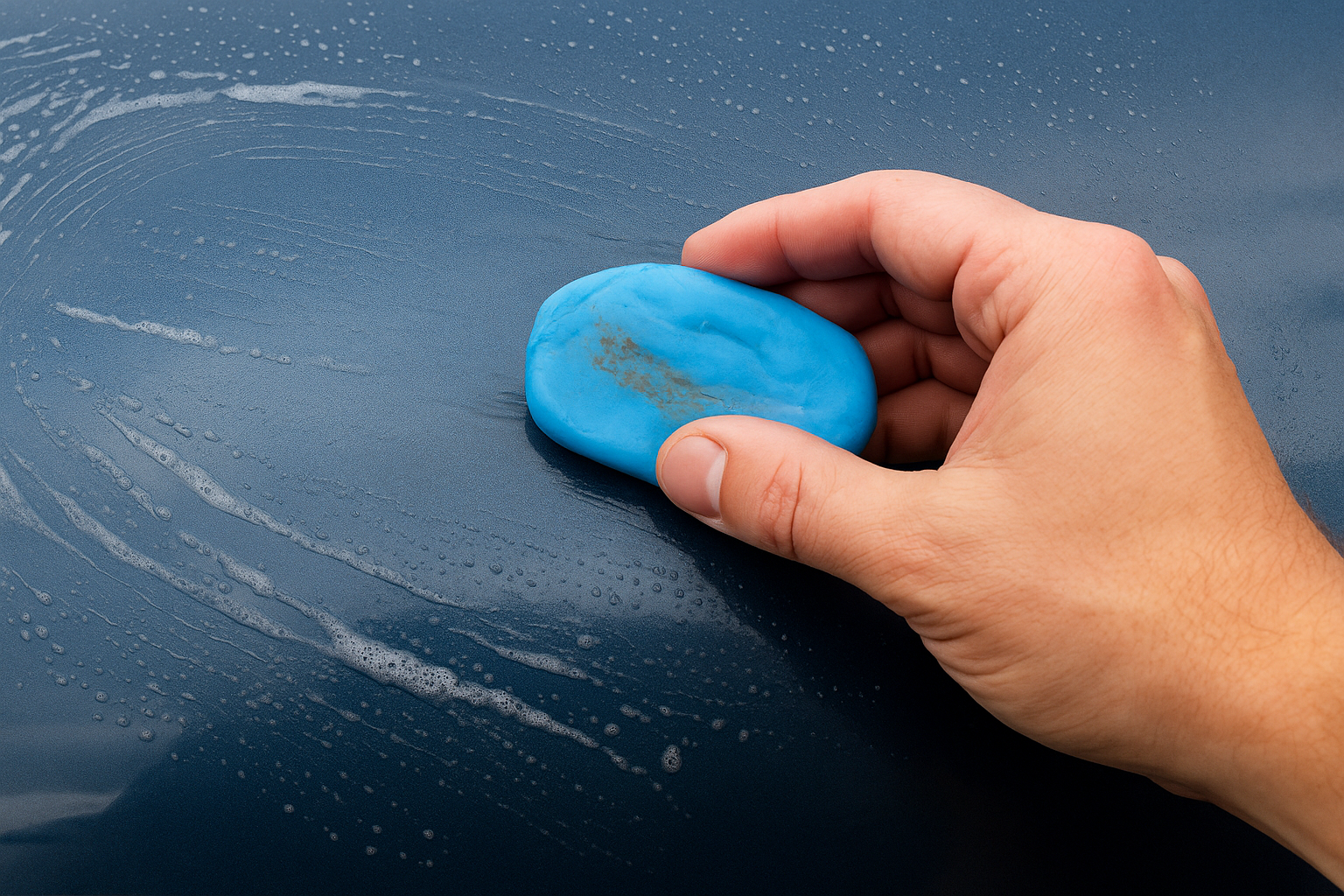
You can actually see this process working. As you clay an area, the bar picks up the contamination and the paint beneath feels noticeably smoother after each pass. That’s the core of what is a clay bar for cars: a mechanical decontamination tool that lifts what washing leaves behind.
When you should clay bar your car
Knowing what is a clay bar for cars is only useful if you know when to reach for one. Timing your clay bar treatment correctly protects your paint more effectively and makes any protective product you apply afterward bond properly. The short answer is this: clay bar your car whenever the paint feels rough after a thorough wash, and always before applying wax, sealant, or ceramic coating.
Signs your paint needs decontamination
The most reliable test requires no tools at all. After you wash and dry your car, place your hand inside a clean plastic bag and run it slowly across a body panel. The plastic amplifies every texture imperfection your bare hand might miss. If the surface feels gritty, rough, or catches slightly, contamination is bonded to your clear coat and a clay bar is the right next step.
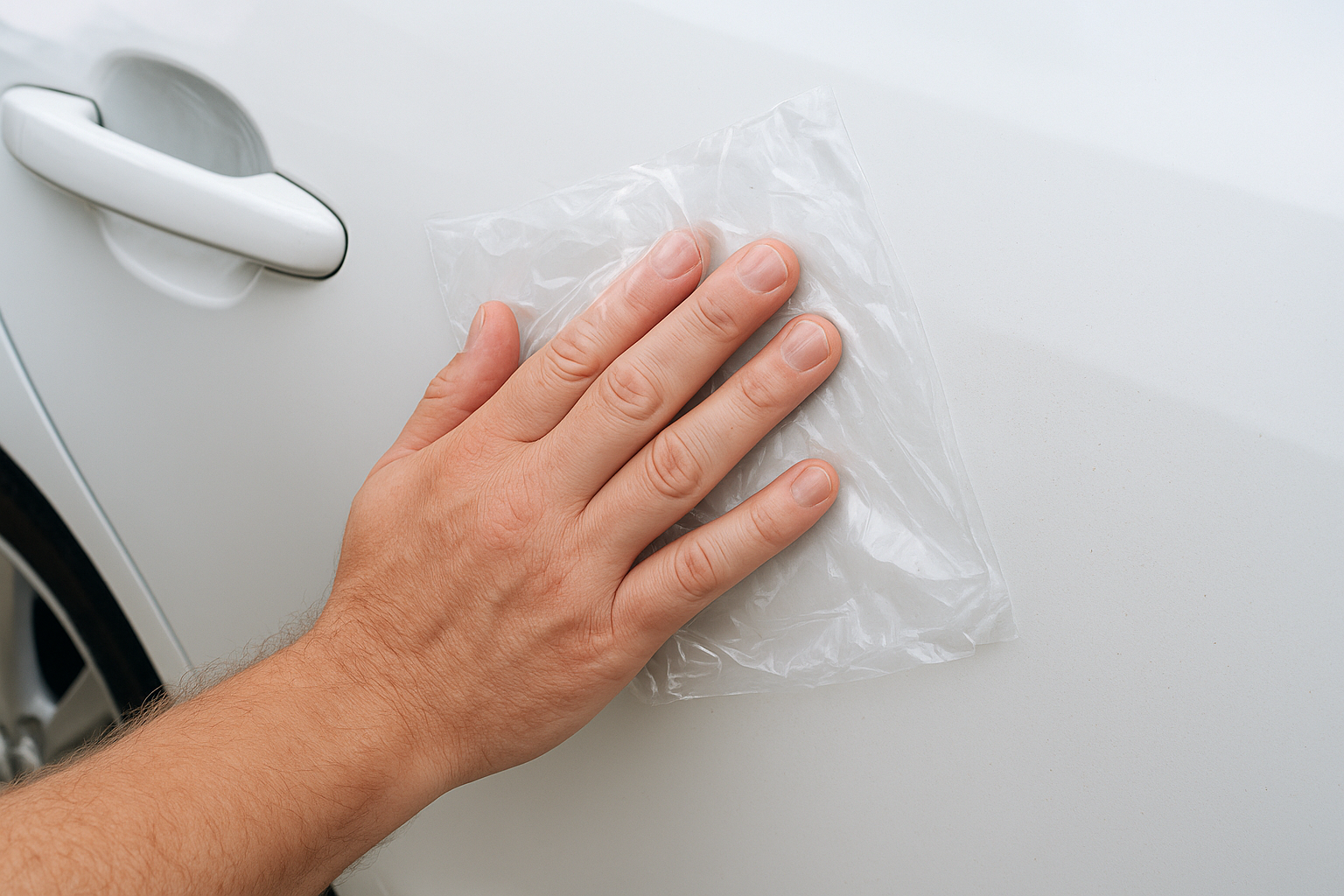
You don’t need to guess. The plastic bag test tells you exactly what your paint needs before you spend money on protection products.
Other visual and physical signs include water that doesn’t bead evenly across the paint, visible orange or brown specks on white or light-colored panels (iron fallout), and a dull appearance that washing doesn’t improve. These aren’t aesthetic quirks. They’re indicators of active contamination sitting in your clear coat.
How often to clay bar based on your situation
Most vehicles benefit from clay bar treatment once or twice a year, typically before spring and fall when seasonal contamination peaks. If you park near industrial areas, highways, or construction sites, your paint accumulates fallout faster and may need decontamination more frequently. High-mileage drivers and anyone who skips regular washing should also clay bar more often to prevent contamination from bonding deeper into the clear coat over time.
How to use a clay bar without damaging paint
The most common mistake people make with a clay bar is skipping preparation and going straight into claying. Proper preparation and technique are what separate a safe, effective treatment from one that leaves marring or swirl marks behind. Understanding what is a clay bar for cars includes knowing how to handle it correctly from the start.
Prepare your surface and supplies
Start with a thorough wash of the entire vehicle before you touch the clay bar. Any loose dirt on the surface during claying will drag across your paint and scratch it. You’ll also need a dedicated clay lubricant, a clean microfiber towel for wiping residue, and a clay bar grade matched to your contamination level.
Work in the shade on a cool panel. Heat causes lubricant to evaporate too quickly, which reduces glide and increases the risk of the clay bar dragging against your paint without adequate protection between the two surfaces.
The correct claying technique
Flatten the clay bar into a thin, workable pad and spray your lubricant generously on both the paint and the clay surface before making any contact. Use light, overlapping straight-line passes, moving forward and back rather than in circles. Circular motions concentrate friction in one spot and raise your risk of marring.
Never let the clay bar touch the paint dry. Without lubricant, even a light pass can leave scratches that require polishing to fix.
After finishing each section, fold the clay to expose a clean face and inspect it for embedded debris. If you drop the clay bar on the ground, discard it immediately. It picks up grit on contact and will scratch your paint on the very next pass, undoing every bit of work you just completed.
Common mistakes, downsides, and alternatives
Even with a clear understanding of what is a clay bar for cars, poor execution can damage your paint or waste your time. Clay barring is straightforward, but the margin for error is smaller than most people expect, and the mistakes that happen most often are also the easiest to prevent.
Mistakes that damage paint or waste product
Dropping the clay bar is the single most common mistake, and most people don’t discard it afterward. Any grit the bar picks up off the ground transfers directly to your clear coat on the next pass, creating scratches that require polishing to fix. A second frequent error is using too little lubricant, which causes the clay to drag across the paint surface and leave marring rather than pulling contamination cleanly away.
Marring from a dry clay bar pass is completely avoidable. Keep extra lubricant within reach and re-spray constantly throughout each section.
Working across large areas without folding the clay to expose a clean face is another problem. As the bar fills with contamination, it loses its ability to grip new particles and risks redepositing collected debris back onto your paint.
Downsides and alternatives worth knowing
Clay barring has real limitations you should factor in before choosing it. The process takes time, typically 30 to 60 minutes for a full vehicle, and each use removes a microscopic amount of clear coat. Overuse on already-thin clear coats compounds that wear over time. For light iron contamination, a chemical iron fallout remover spray dissolves particles without any physical contact, making it a faster option for vehicles that don’t need a full decontamination treatment. On heavily contaminated vehicles, combining a chemical decontamination spray followed by clay barring gives you the most thorough result while reducing the physical load on your clear coat during the clay pass.
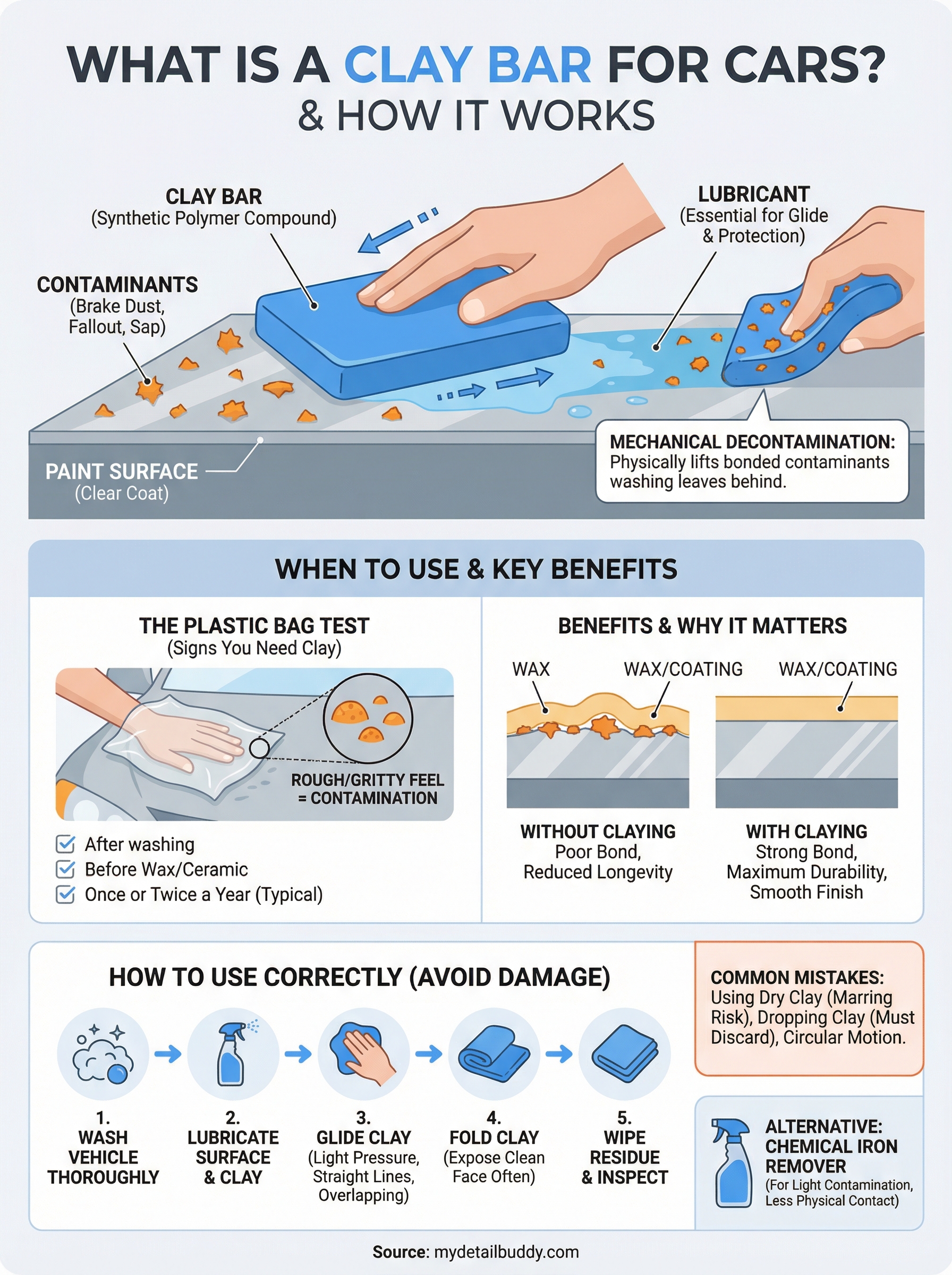
Next steps
Now you understand what is a clay bar for cars, how it removes bonded contamination from your clear coat, and why skipping it compromises every protective product you apply afterward. Clay barring your paint before wax, sealant, or ceramic coating is not optional if you want those products to perform the way they’re designed to. The plastic bag test costs you nothing and takes 30 seconds to confirm whether your paint needs decontamination right now.
If you’d rather leave it to a certified professional who brings everything directly to your driveway, My Detail Buddy handles clay bar treatment as part of our full mobile detailing services across Waxhaw, Charlotte, and the surrounding areas. Check our detailing packages and pricing to find the right service for your vehicle, or book your appointment online and we’ll handle the decontamination, protection, and everything in between.


