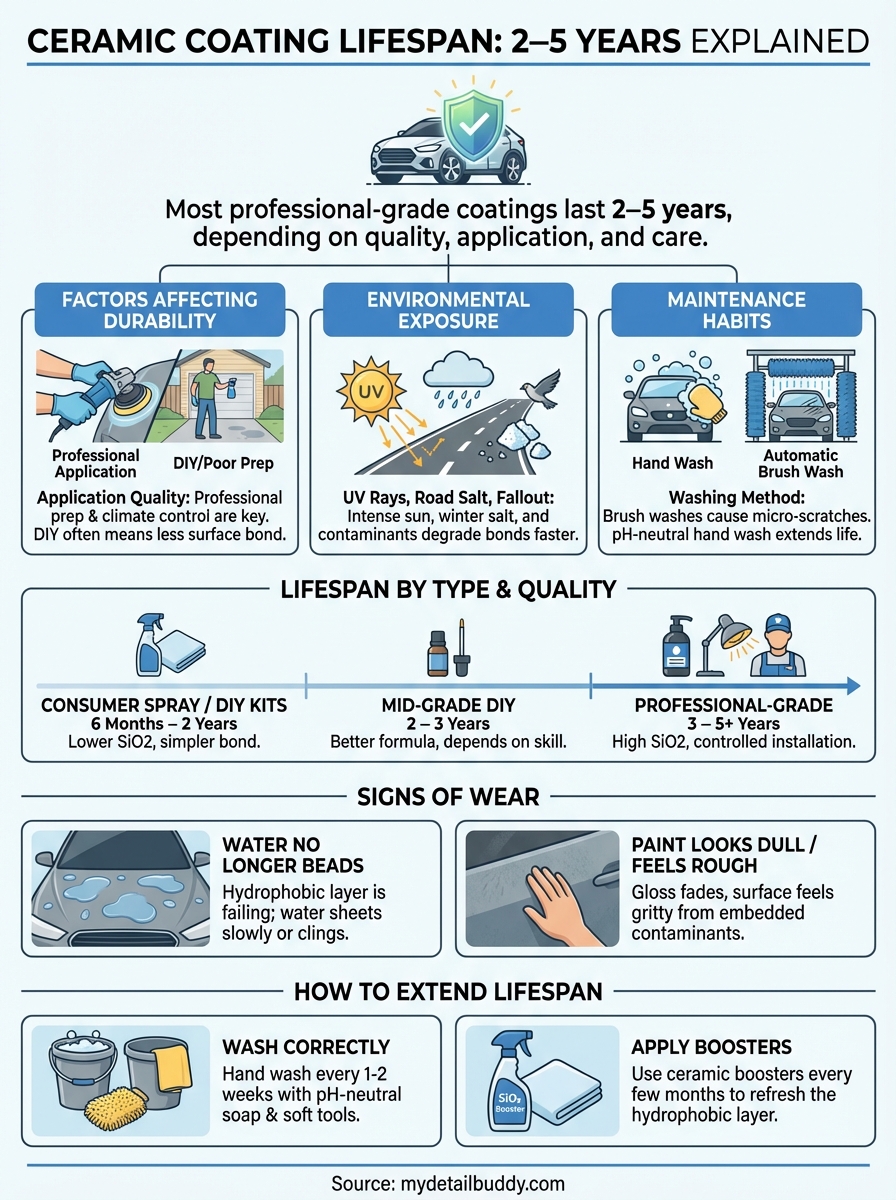
You paid good money for a ceramic coating, or you’re thinking about it, and the first question on your mind is probably how long does ceramic coating last. The short answer: most professional-grade ceramic coatings hold up for 2 to 5 years, depending on the product, how it was applied, and how you care for your vehicle afterward.
But that range is wide for a reason. A coating applied by a certified professional in a controlled environment won’t perform the same as a spray-on product from a big-box store. And even the best coating will break down faster if it’s neglected. The difference between 2 years and 5 years often comes down to choices you make after the coating cures, choices most vehicle owners don’t hear about until it’s too late.
At My Detail Buddy, we apply ceramic coatings on vehicles across Waxhaw, Charlotte, and the surrounding areas as part of our mobile detailing service. We see firsthand what makes coatings last, and what cuts their life short. This article breaks down the real-world lifespan of ceramic coatings, what affects their durability, and exactly how to maintain yours so you get every year you paid for.
Why ceramic coating lifespan varies so much
When people ask how long does ceramic coating last, they expect a clean, single number. The reality is that ceramic coatings are not all applied, stored, or maintained the same way, and those differences add up fast. A coating installed under ideal conditions by a trained technician and washed weekly will outlast a rushed DIY application on a dirty paint surface by years. Three main factors drive most of the variation you see in lifespan: how the coating was applied, where you drive and park your vehicle, and how consistently you maintain it after installation.
The application process makes a huge difference
Ceramic coating bonds directly to your vehicle’s clear coat at a molecular level, which means surface preparation is everything. If a technician applies the coating over contaminated paint, light scratches, or leftover wax residue, the bond is compromised from day one. Professional installers decontaminate the paint, perform paint correction when needed, and apply the coating in a controlled space with the right temperature and humidity levels.
A poorly prepped surface is the single fastest way to cut a ceramic coating’s lifespan in half, regardless of how premium the product is.
DIY coatings, on the other hand, are typically applied in driveways or garages where temperature, dust, and surface prep are harder to control. Most DIY products also use lower SiO2 concentrations, which directly reduces hardness and durability compared to professional-grade formulas.
Your environment plays a bigger role than most people realize
Where you live and how you use your vehicle have a significant impact on coating longevity. Vehicles parked outside year-round in areas with intense UV exposure, road salt, industrial fallout, or heavy tree sap will wear their coating faster than vehicles garaged daily in mild climates. UV radiation is one of the primary causes of coating degradation over time, as it slowly breaks down the silica bonds that give ceramic coatings their protective properties.
Drivers in areas with harsh winters face an additional challenge. Road salt and chemical deicers are aggressive contaminants that attack the coating surface consistently across months. Even a high-quality professional coating takes a harder hit in those conditions compared to a vehicle driven primarily in warm, dry weather.
Maintenance habits determine the long-term outcome
Your behavior after installation matters as much as the initial application. Automatic car washes with brush rollers are one of the most common ways vehicle owners unknowingly degrade their coating. The abrasive action of brushes creates micro-scratches that break down the hydrophobic surface layer over time.
Using a pH-neutral car wash soap and a proper two-bucket wash method keeps the coating intact and extends its functional life significantly. How often you wash also matters. Regular washing removes contaminants before they have time to etch into the coating, preserving both its appearance and its protective performance.
How long ceramic coating lasts by type and quality
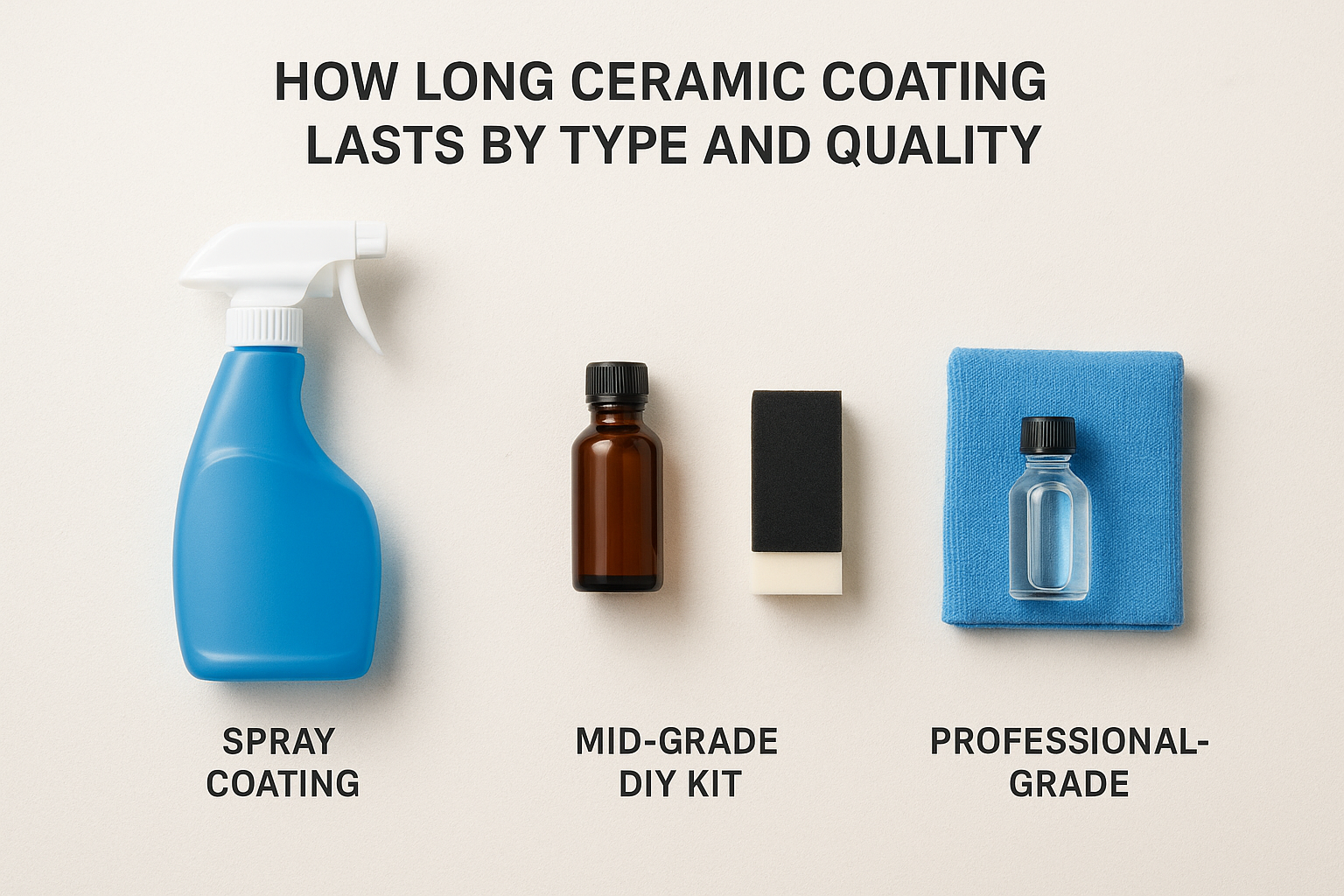
Not all ceramic coatings are built the same, and the product category you choose sets the ceiling on how long does ceramic coating last before it needs to be reapplied. The market breaks down into three broad tiers: consumer spray coatings, mid-grade DIY kits, and professional-grade products installed by certified technicians. Each tier uses different SiO2 concentrations and polymer formulas, which directly determines hardness, bonding strength, and how many years of protection you can realistically expect.
Consumer spray coatings and DIY kits
Spray-on ceramic coatings sold at auto parts stores are the most accessible option, but they typically last between 6 months and 2 years. These products use lower concentrations of silicon dioxide and rely on simpler formulas that anyone can apply without professional training. They offer a real hydrophobic effect and some UV protection, but the bond isn’t as strong or deep as professional products.
Mid-grade DIY coating kits step up the chemistry, and an experienced home installer can see results closer to 2 to 3 years with thorough surface prep and careful application. Results vary more than professional installs because application conditions and skill levels differ widely from one vehicle owner to the next.
Professional-grade ceramic coatings
Professional coatings use higher-concentration SiO2 formulas, often between 70% and 90% purity, and require controlled application conditions that only trained installers can consistently provide. When a certified detailer preps the paint correctly and applies a professional-grade product, you can reasonably expect 3 to 5 years of protection, with some premium products marketed for up to 7 to 10 years under ideal conditions.
The biggest leap in longevity happens when you move from a DIY product to a professionally applied coating, not from one professional brand to another.
Your vehicle’s specific use and storage conditions should guide which tier makes the most sense, and the investment in professional application typically pays off in years of added protection.
What affects how long ceramic coating lasts
Several real-world variables determine how long does ceramic coating last on your specific vehicle. Understanding those variables lets you make smarter decisions about application, storage, and upkeep before problems start. Two factors consistently separate coatings that reach the five-year mark from those that fail at two: environmental exposure and your wash routine.
UV exposure and climate conditions
Sunlight does more damage to a ceramic coating than most vehicle owners expect. UV radiation slowly breaks down the silica bonds that give the coating its hardness and hydrophobic properties, and that process accelerates the longer your vehicle sits exposed outdoors. If you park outside daily in a region with intense sun, your coating works harder and degrades faster than one on a garaged vehicle in a mild climate.
Parking your vehicle in a garage or under a carport even part of the time significantly extends your coating’s useful life.
Beyond UV, road salt, industrial fallout, bird droppings, and tree sap are chemical contaminants that attack the coating surface. The longer those contaminants sit on the paint, the more they etch into the coating and reduce its protective layer. Removing them quickly is one of the simplest ways to add months to your coating’s lifespan.
How you wash your vehicle
Your wash routine is the single most controllable variable in coating longevity once the product is installed. Automatic car washes that use rotating brushes create fine scratches across the coating surface, and those scratches compound over time to destroy the hydrophobic layer that makes ceramic coatings worth having.
Hand washing with a pH-neutral soap and a soft microfiber mitt keeps the coating surface clean without the abrasive contact that breaks it down. How often you wash also matters: vehicles washed every two weeks consistently show better coating condition at the two-year mark than vehicles washed infrequently, because regular washing prevents contaminants from bonding to the surface.
How to make ceramic coating last longer
Your behavior after installation determines whether your coating reaches two years or five. The good news is that most of what extends a ceramic coating’s lifespan costs nothing beyond a little time and the right products. Understanding how long does ceramic coating last in practical terms is really a question of what habits you build after the detailer drives away.
Wash with the right method
Hand washing is the most important habit you can build. Automatic tunnel washes and brush-style car washes generate abrasive contact that damages the hydrophobic surface layer with every single pass. Over time, that wear accumulates and strips the coating well before it should fail naturally.
Switching from an automatic car wash to a hand wash with a microfiber mitt is one of the simplest ways to add a full year to your coating’s life.
Use a pH-neutral car wash soap specifically formulated for coated vehicles and wash with a soft microfiber wash mitt. Rinse the vehicle before contact to remove loose debris, and dry with a clean microfiber drying towel rather than letting water air-dry, which leaves mineral deposits on the surface. Washing every one to two weeks keeps contaminants from bonding and etching into the coating.
Apply a ceramic coating booster or topper
Ceramic coating boosters are spray-on SiO2 products designed to refresh the hydrophobic layer between full reapplications. You apply them after a wash every few months, and they restore the water-beading performance that indicates a healthy coating. They do not replace a failing coating, but they do extend the life of a healthy coating in good condition.
Beyond boosters, removing bird droppings, tree sap, and industrial fallout quickly protects your coating from chemical etching. These contaminants are acidic and start bonding to the surface within hours in warm weather. The faster you remove them, the less damage they cause to the protective layer underneath.
Signs your ceramic coating is wearing out
Knowing how long does ceramic coating last on paper is useful, but knowing how to read your own vehicle tells you what’s actually happening. Ceramic coatings don’t fail all at once. They degrade gradually, and your vehicle gives you clear, visible signals before the coating fails completely. Catching those signals early lets you act before bare paint is exposed to environmental damage.
Water no longer beads properly
The most reliable early sign of a deteriorating coating is a change in how water behaves on the surface. A healthy ceramic coating causes water to bead into tight, round droplets and sheet off the paint quickly when the vehicle is moving. When the coating starts to wear, those beads flatten out, spread wider, and cling to the surface instead of rolling off.
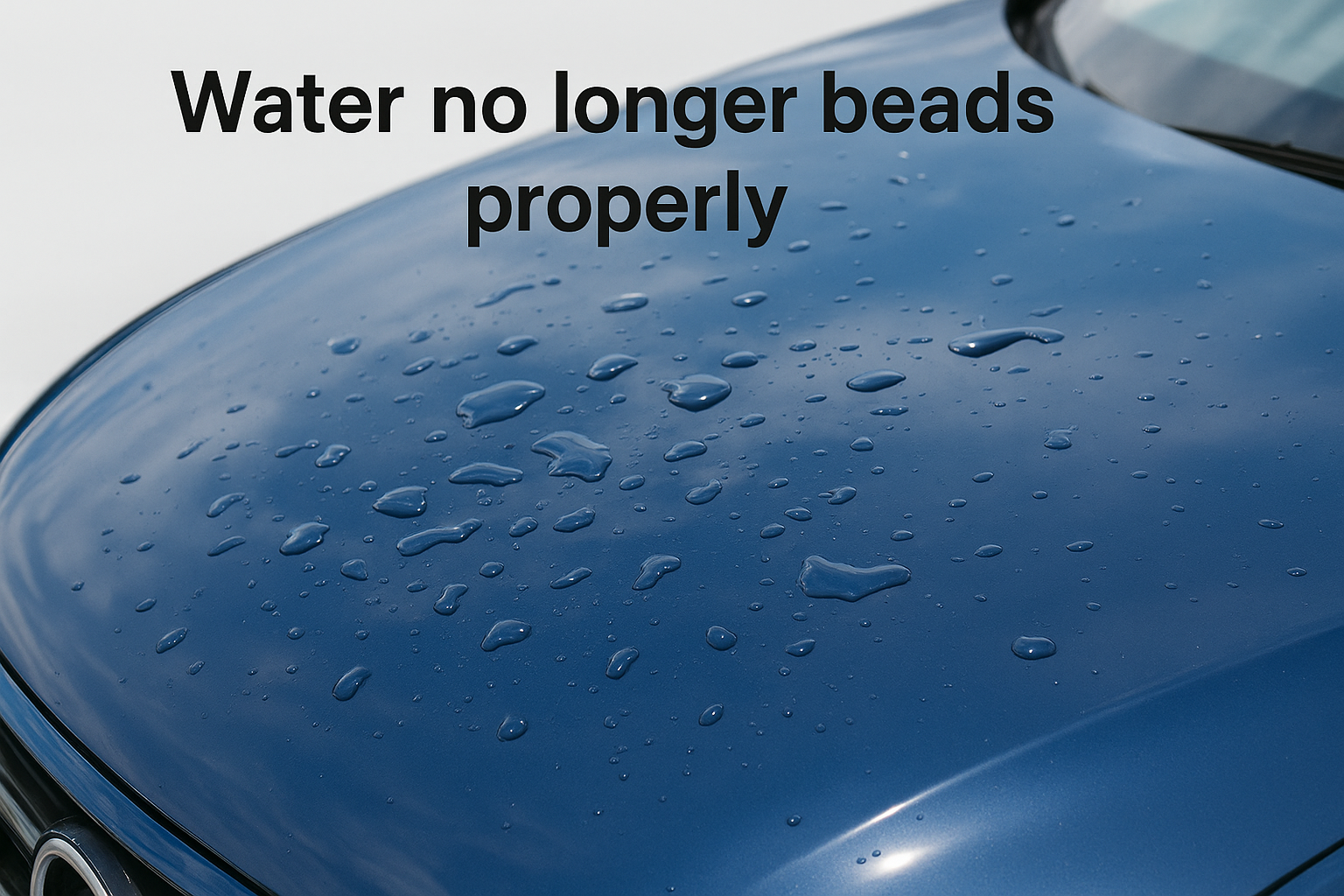
If water sits on your hood after a wash instead of beading and sheeting away, your coating’s hydrophobic layer is breaking down.
You can test this yourself after a wash by pouring a small stream of water across a horizontal panel. Tight, round beads indicate a healthy coating; flat, spreading water indicates wear. This test is one of the quickest ways to track coating condition over time.
Paint looks dull or feels rough to the touch
A worn coating also changes the visual and tactile qualities of your paint. Ceramic coatings are responsible for the deep, glossy finish that makes treated paint look significantly better than untreated surfaces. As the coating degrades, that gloss fades and the paint takes on a flatter, duller appearance that wax and quick detailers won’t fix.
Running a clean hand across a freshly washed panel is another useful check. A properly coated surface feels smooth and almost frictionless. A degrading coating feels slightly rough or gritty, which means contaminants are bonding directly to the surface rather than being repelled by the protective layer above.
Next steps for protecting your paint
Now that you understand how long does ceramic coating last and what drives that range, you’re in a better position to protect your vehicle from the start. The difference between a coating that holds up for two years and one that reaches five comes down to professional installation, consistent hand washing, and catching early wear signals before bare paint takes damage. None of those steps require expensive equipment, just the right habits and a detailer you trust to do the job correctly from day one.
If your vehicle doesn’t have a coating yet, or if yours is showing signs of wear, the next move is straightforward. My Detail Buddy serves Waxhaw, Charlotte, and the surrounding areas with mobile ceramic coating services that come directly to your home or office. You can review our ceramic coating and detailing packages or book your appointment online and get started today.