

Black paint is unforgiving. Every water spot, every fingerprint, every micro-scratch from a bad wash shows up like it’s under a spotlight. That’s exactly why ceramic coating for black cars has become one of the most requested services we perform at My Detail Buddy. Owners of dark-colored vehicles know the struggle, the car looks stunning for about 48 hours after a wash, then swirl marks and dust take over all over again.
Want it done for you? My Detail Buddy installs ceramic coating for your car in Waxhaw right in your driveway. Get a free quote.
A quality ceramic coating changes that cycle. It adds a semi-permanent layer of protection that resists UV damage, repels water, and makes routine washing far less likely to leave behind those dreaded swirls. But not every coating is the same, and application on black paint demands extra precision because the finish hides nothing.
In this guide, we break down what ceramic coating actually does for black cars, which products deliver real results versus marketing hype, and what you should expect to spend, whether you go the DIY route or hire a professional. If you’ve been on the fence about protecting your black vehicle’s finish, this will give you everything you need to make a confident decision.
Why black cars show every flaw
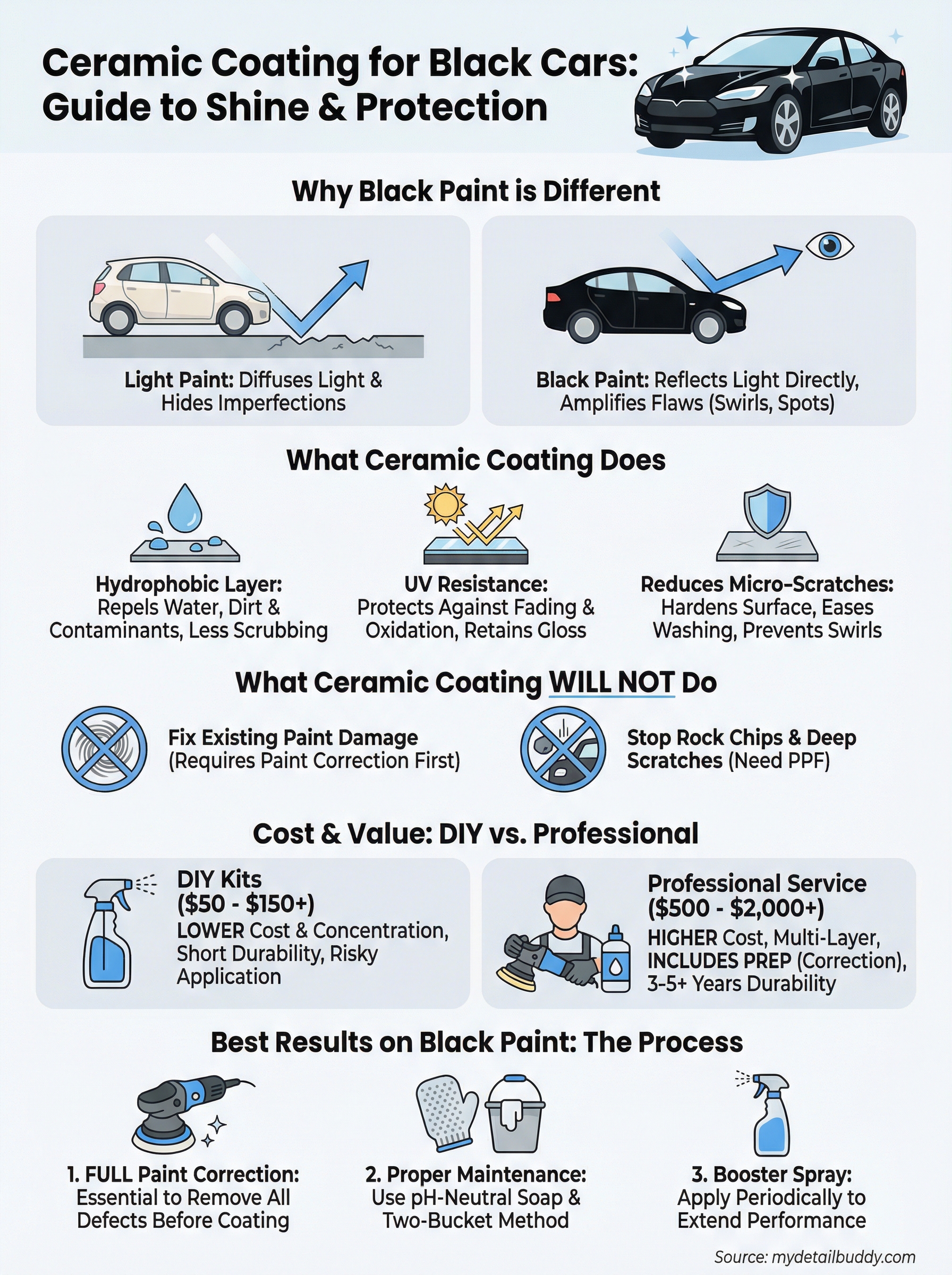
Black paint reflects light differently than any other color. Light-colored cars scatter imperfections across the surface, making them harder to detect, but black acts like a mirror, bouncing light directly back at the viewer. Every scratch, water spot, and swirl sits on top of that reflection, fully visible from multiple angles. That is the core reason black car owners deal with constant frustration, even after a fresh wash.
The science behind black paint’s reflectivity
Dark pigment contains no white or metallic particles to diffuse light. When light hits a scratched or contaminated surface, it reflects unevenly, creating what detailing professionals call micro-marring patterns. These patterns appear as swirl marks under direct sunlight or in artificial light. Dark paint amplifies every imperfection because the eye catches any disruption in an otherwise uniform reflection. This is also why paint correction before applying ceramic coating for black cars is absolutely critical. A coating does not hide flaws. It locks them in permanently.
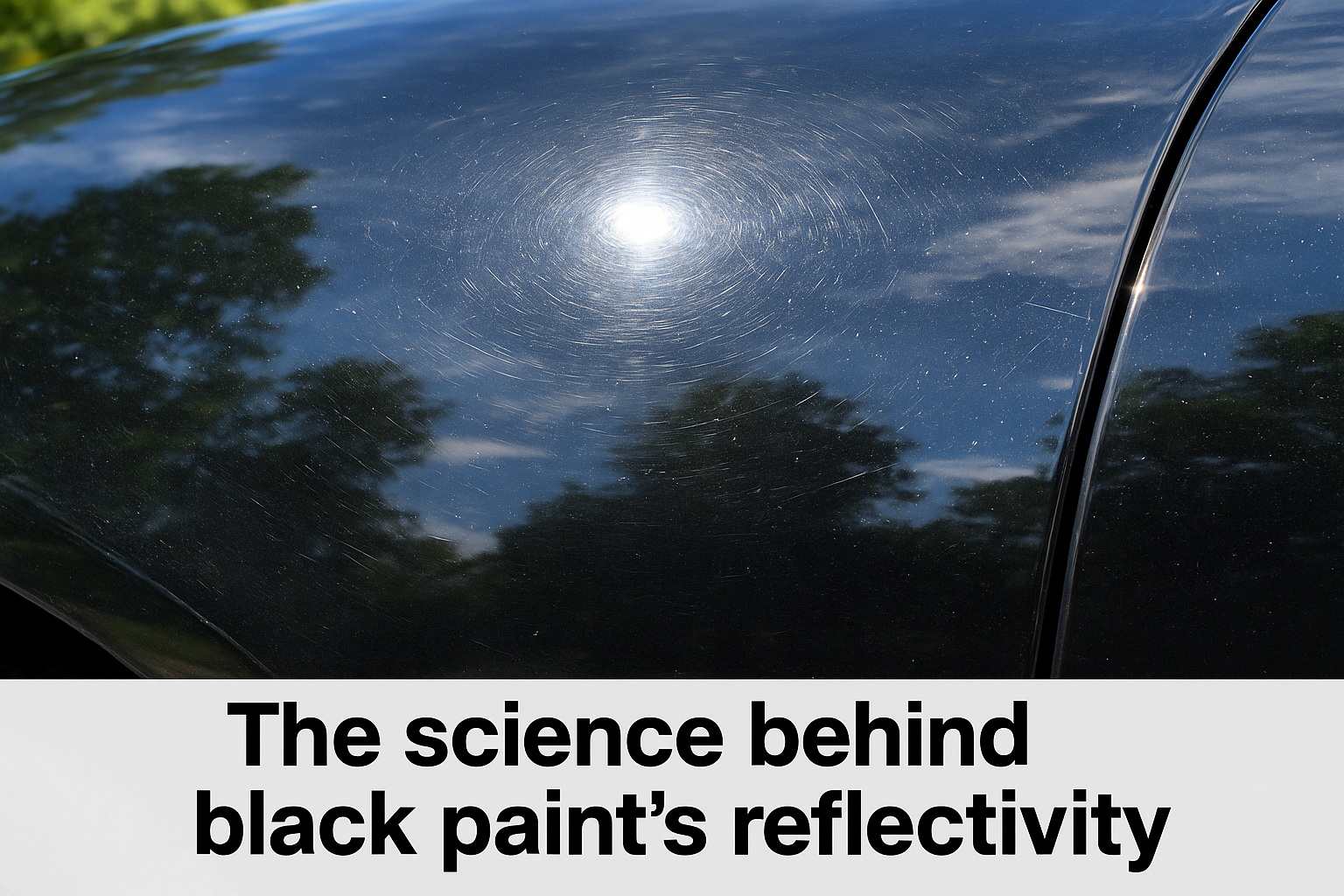
Applying any protective layer over existing swirl marks on black paint makes the damage permanent. Always correct the paint first.
Common imperfections that show up most on black paint include:
- Swirl marks from improper washing or drive-through car washes
- Water spots left by hard tap water or rain
- Fine scratches from dirty towels, sleeves, or brushes
Why washing and drying cause the most damage
Most of the scratches on a black car did not come from road debris. They came from improper washing technique, including dirty sponges, circular scrubbing motions, and low-quality drying towels. Even drive-through car washes cause fine scratches that stack up over time. Automatic brushes and generic cloths dragged across the surface pick up abrasive particles and pull them across the clear coat, creating a haze that looks gray or spiderweb-like under bright light.
Hard water is another problem that hits black paint especially hard. Dissolved minerals left behind after water evaporates create visible rings on the surface. Calcium and magnesium deposits from a garden hose or rinse station look like white stains on black paint and require chemical treatment to remove safely. If you let them sit, they etch into the clear coat and become a permanent fixture.
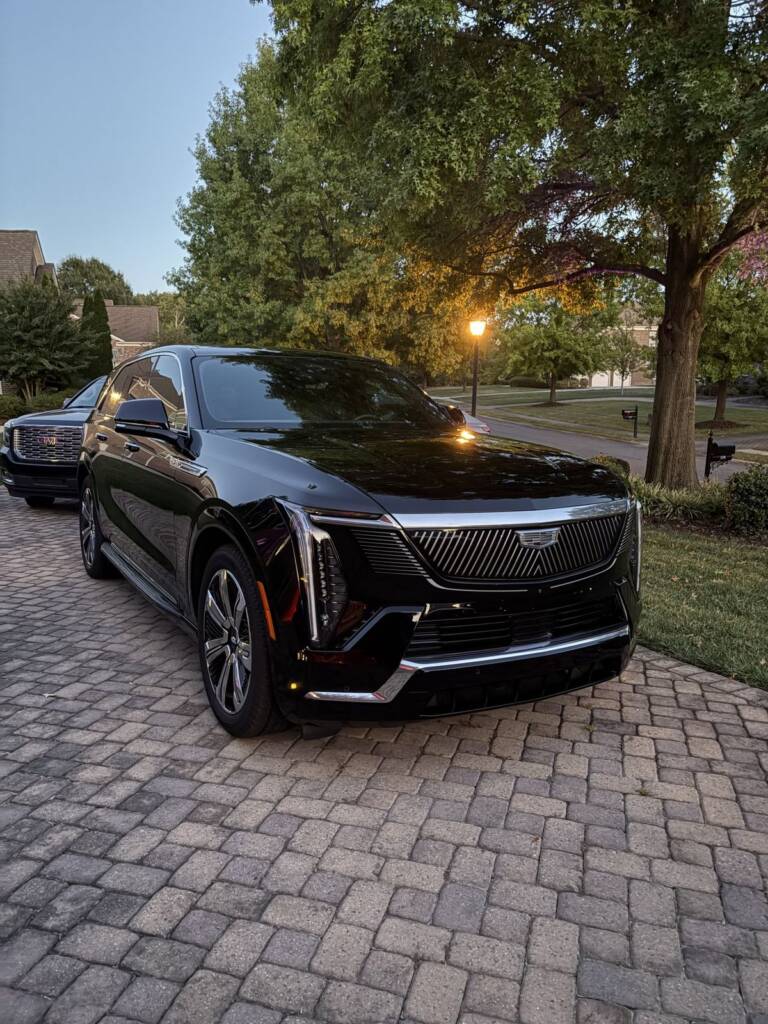
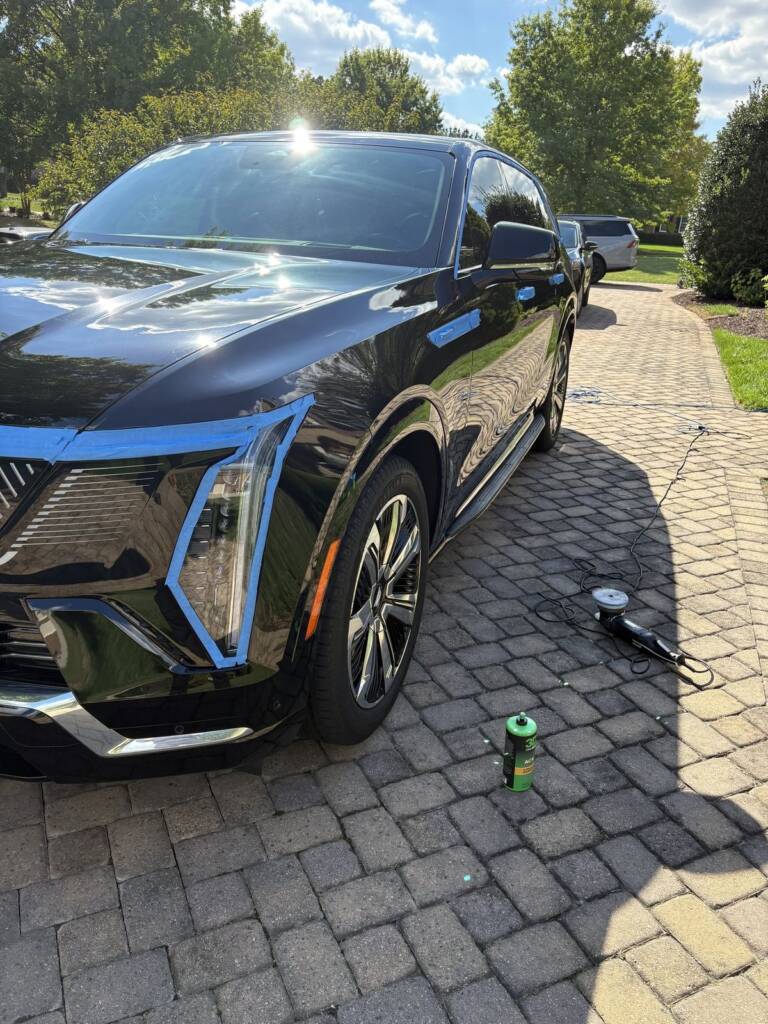
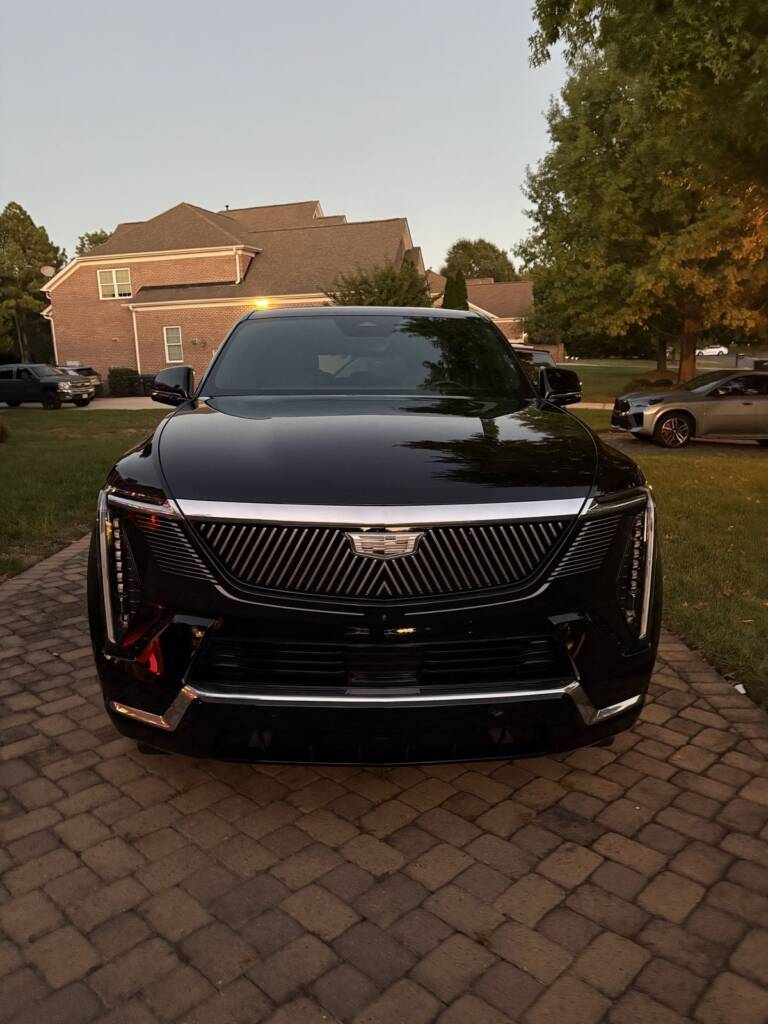
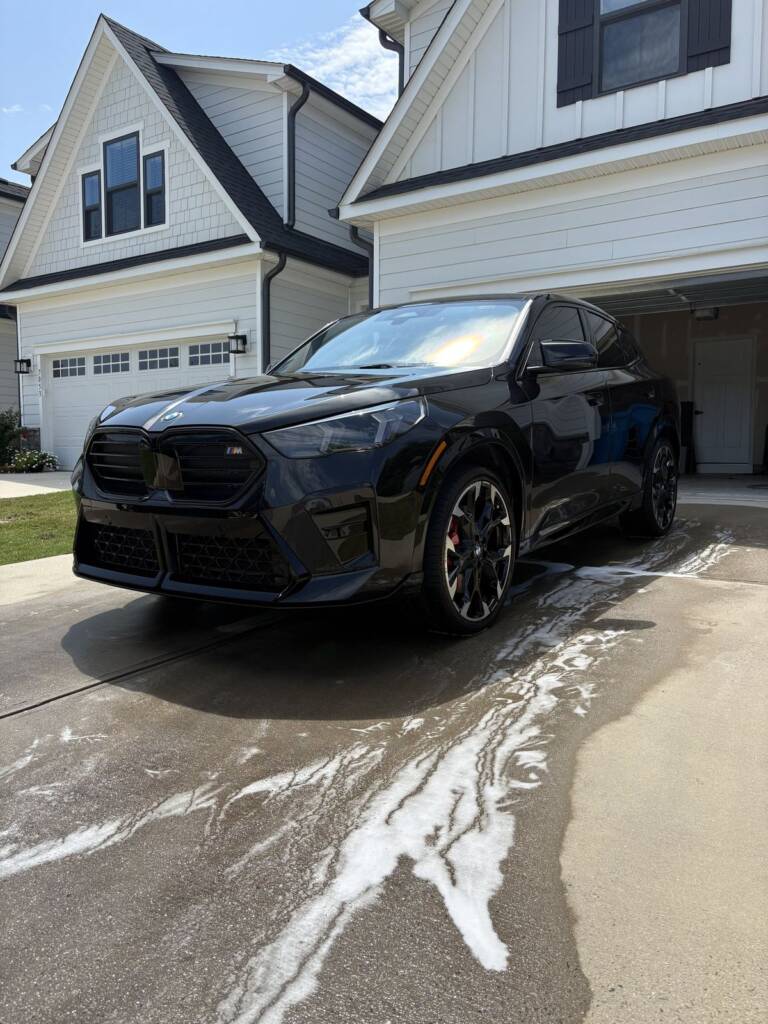
Black paint from our recent jobs
What ceramic coating does for black paint
A ceramic coating bonds to your clear coat at a chemical level, forming a rigid, hydrophobic layer that conventional waxes and sealants simply cannot replicate. For black paint specifically, that bond does two things that matter most: it locks in the gloss you already have and creates a slick surface that dirt and water struggle to stick to, which reduces the friction that causes swirl marks during washing.
A ceramic coating does not replace your clear coat. It sits on top of it and reinforces the surface against the daily wear that degrades black paint fastest.
How the hydrophobic layer protects against swirls
When water beads and rolls off a coated black surface, it takes loose contaminants with it instead of letting them sit and dry into the finish. That behavior directly reduces how much scrubbing and wiping you need to do during routine maintenance. Less contact with the surface means fewer opportunities for micro-scratches to form, which is exactly the cycle that ceramic coating for black cars is designed to interrupt.
UV resistance and long-term gloss retention
Black paint fades faster under prolonged UV exposure than lighter colors because dark pigment absorbs more heat and radiation. A quality ceramic coating reflects a portion of that UV load before it reaches the clear coat. Your paint holds its depth and gloss significantly longer, which means less oxidation and fewer correction cycles over the life of the vehicle.
What ceramic coating will not fix
Ceramic coating is a powerful protective layer, but understanding its limits keeps you from spending money on a treatment that won’t solve your actual problem. Existing paint defects, scratches, and oxidation stay exactly where they are after a coating goes on. The coating seals whatever condition your paint is in, so what you see before the application is what you get after.
If your black paint has visible swirl marks or scratches before coating, the finished result will still show those flaws, often more clearly under direct light.
It will not correct existing paint damage
Paint correction must happen before ceramic coating for black cars, not after. Deep swirl marks, water spot etching, and oxidized clear coat require machine polishing to remove first. A certified detailer uses a dual-action or rotary polisher to cut away the damaged layer before any coating touches the surface. Skipping that step locks the damage in permanently beneath a protective shell.
Paint correction your car may need before coating:
- Swirl mark and micro-scratch removal
- Water spot etching treatment
- Oxidation removal on faded clear coat sections
It will not stop rock chips or deep scratches
Hard impacts from road debris, keys, or parking lot contact cut straight through any coating product on the market. Ceramic coatings protect against light environmental wear, not physical force. If chip protection is a priority, paint protection film applied to high-impact panels works alongside a ceramic coating to cover both threats at once.
Cost and value: DIY vs professional options
Pricing for ceramic coating for black cars splits into two clear camps: consumer-grade kits and professional-grade services. DIY kits typically run between $50 and $150 for the product itself, while a professional application ranges from $500 to $2,000 or more, depending on vehicle size, the coating tier, and whether paint correction is included before the coating goes on.
What you get with a DIY kit
Consumer kits give you a starting point, but they carry real limitations on black paint. The coating concentration in retail products is significantly lower than what a certified detailer applies, which means shorter durability, usually one to two years before the hydrophobic layer breaks down. You also take on the full risk of applying the product over unpolished paint, which locks in any swirl marks permanently.
Common limitations of retail ceramic coating kits:
- Lower SiO2 concentration than professional-grade products
- No included paint correction step before application
- Shorter warranty coverage and durability window
Why professional application costs more
A professional service includes paint decontamination, machine polishing, and a multi-layer coating application under controlled conditions. On black paint, that preparation work is what determines the final result. Certified detailers use professional-grade coatings that bond harder and last three to five years or longer, which makes the upfront cost easier to justify over time.
The cost difference between DIY and professional ceramic coating usually comes down to prep work, not just the product itself.
How to get the best results on a black car
Getting the most out of ceramic coating for black cars starts well before the coating touches your paint. The preparation process determines your final result more than any product on the market, and skipping steps on black paint will cost you more time and money than doing it right the first time.
Rushing the prep work on black paint is the single most common reason ceramic coatings underdeliver on their promised results.
Start with a full paint correction
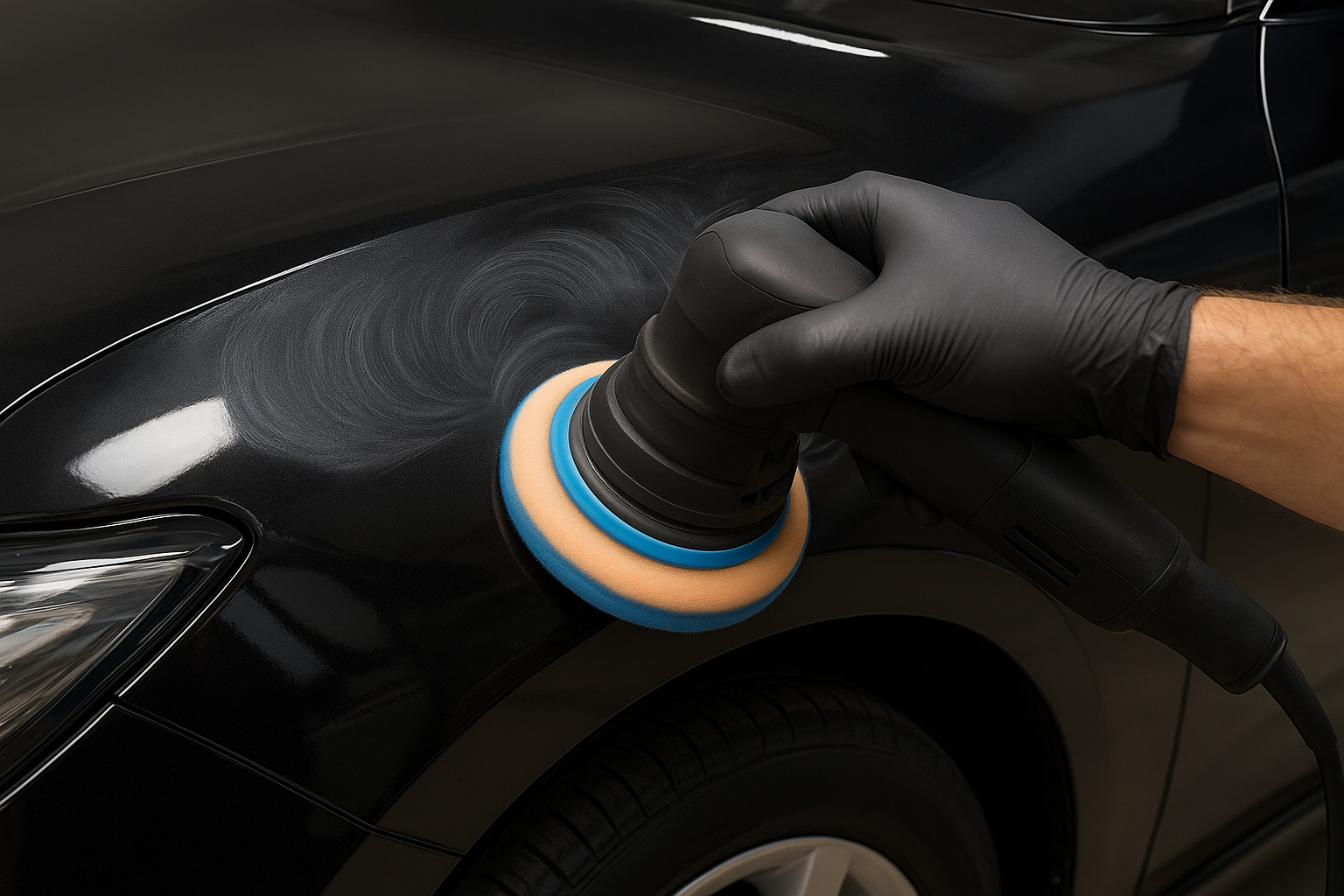
Your first priority is removing every existing defect before any coating goes on. Book a paint correction session that includes clay bar decontamination, machine polishing, and a final panel wipe-down with an IPA solution to strip any polish residue. Black paint requires a slower, more careful polishing pass because even correction tools can leave marks if used incorrectly.
Steps to complete before your coating application:
- Clay bar treatment to remove bonded surface contamination
- Machine polish to eliminate swirl marks and micro-scratches
- IPA panel wipe to ensure a clean, oil-free surface
Maintain the coating properly after application
Once your coating cures, your washing routine becomes your most important maintenance tool. Use a pH-neutral car shampoo and a two-bucket wash method to prevent cross-contamination between rinse and wash water. Avoid automatic car washes entirely, since their brushes and recycled water will degrade your coating faster than normal environmental exposure.
Applying a ceramic coating booster spray every few months extends the hydrophobic performance between annual inspections and keeps your black paint looking sharp year-round.
Next steps for your black car
You now have a clear picture of what ceramic coating for black cars delivers and where its limits are. Black paint rewards preparation above everything else. If your paint has existing swirl marks, start with a paint correction appointment before you consider any coating product. Skipping that step means sealing in damage that will frustrate you every time sunlight hits the hood.
If your car is already in good shape, a professional ceramic coating application is the most effective way to protect that finish long-term. Professional prep work, proper coating concentration, and correct curing conditions give you results that no retail kit can match on dark paint. The investment pays off in fewer correction cycles and a finish that holds its depth for years.
Ready to protect your black paint the right way? Book your ceramic coating appointment online and let My Detail Buddy handle every step.


