

That stale, musty smell hitting you every time you turn on the AC? It’s coming from your vents. Dust, pollen, mold spores, and bacteria build up inside your car’s HVAC system over time, and they don’t just smell bad, they circulate through the cabin every time you drive. Knowing how to clean car vents properly makes a real difference for both air quality and your overall driving experience.
The good news: you can handle most of this yourself with a few basic tools and about 30 minutes of your time. Regular vent cleaning prevents buildup from becoming a bigger (and more expensive) problem, and it keeps your interior looking sharp between professional detailing sessions.
At My Detail Buddy, we deal with grimy, neglected vents on a daily basis during our mobile detailing work across Waxhaw and the Charlotte area. We’ve seen everything from light dust to full-on mold growth hiding behind vent slats. This guide walks you through the exact steps to clean your car vents at home, from quick dust removal to tackling stubborn odors and mold deep inside your HVAC system. Let’s get into it.
Why car vents get dusty and start to smell
Your car’s HVAC system continuously pulls air from outside and pushes it through a network of ducts into the cabin. Dust, pollen, pet hair, and road debris all enter this system, and a significant portion sticks to the vent slats and duct walls before it ever reaches you. The problem compounds quickly because every time you run the heat or AC, you push more particles through the same pathways.
How dust builds up on the vent slats
Vent slats have an inherent design flaw when it comes to dust: their horizontal orientation and tight spacing trap particles efficiently. Electrostatic charge builds up on plastic and vinyl surfaces, which actively attracts fine dust and holds it in place. Even if you only drive a few times a week, the inside of your cabin generates its own dust from fabric fibers, skin cells, and loose debris that gets stirred up by airflow and eventually settles on every surface, including the vents.
This is part of why learning how to clean car vents matters beyond aesthetics. A thick layer of dust on your vent slats restricts airflow and forces your AC or heat to work harder than it should. Buildup inside the ducts compounds this further because there’s far more surface area back there than what you can see from the driver’s seat.
Where the odors actually come from
The smell you notice when you first switch on the AC has a specific source: moisture trapped inside your HVAC system. When warm, humid air passes over the cold evaporator coil inside your dashboard, condensation forms. That moisture, combined with organic debris like dust and pollen, creates the conditions mold and bacteria need to grow. The musty odor you’re detecting is mold releasing spores directly into your air supply.
Mold growth inside your car’s HVAC system is not just an odor problem; it’s an air quality issue that affects every person who rides in the vehicle.
Bacteria follow the same pattern. Dead skin cells, food particles, and ambient moisture give bacteria everything they need to colonize the inside of your ducts and the surfaces behind vent slats. Once established, these colonies produce persistent odors that air fresheners can only mask temporarily and never actually fix.
How your driving habits speed up the problem
Frequent use of your AC in hot, humid conditions accelerates moisture accumulation inside the HVAC system. Leaving the system running while the car sits in direct sunlight can cause the evaporator to cycle through rapid temperature changes, increasing condensation and giving mold a faster opportunity to establish itself. Similarly, driving through dusty roads or high-pollen areas with windows down introduces far more particulates than the cabin air filter was designed to handle in short intervals.
Parking outside also exposes the external air intake, located at the base of your windshield, to leaves, debris, and pooling water. All of that organic material feeds directly into your HVAC system before air even passes through the cabin filter, which is why filters clog faster than most owners expect. Your driving environment, not just your cleaning habits, determines how quickly your vents go from clean to grimy and how severe the odors become if you let it go too long.
What to gather before you start
Gathering the right supplies before you start saves you from stopping mid-clean to hunt down a missing tool. Having everything within arm’s reach also means you can move through the process efficiently without letting dislodged dust resettle on surfaces you’ve already cleaned. The good news is that knowing how to clean car vents doesn’t require specialized gear; most of what you need is already at home or available at any hardware store.
Cleaning tools you’ll need
You need a few specific tools to get into the tight spaces that make vent cleaning frustrating without the right equipment. Foam paintbrushes and small detailing brushes are ideal for working between individual slat gaps, where microfiber cloths simply can’t reach. A can of compressed air lets you blast dust out of the slats before wiping, so you push debris out rather than smearing it deeper into the trim.

Here’s a quick list of what to grab:
- Compressed air can (available at hardware or electronics stores)
- Foam paintbrush (1-inch width works best for standard vent slats)
- Small detailing brush or old toothbrush for tight corners
- Microfiber cloths (at least 2-3 so you have clean ones ready)
- Vacuum with a brush attachment to capture loosened debris
A vacuum with a brush attachment is one of the most underrated tools for vent cleaning because it captures dust as you dislodge it, instead of letting it fall onto your seats and floor mats.
Products that actually work
Choosing the right cleaning products protects your interior trim while actually eliminating the grime. An all-purpose interior cleaner diluted to the manufacturer’s recommendation works well for the vent faces and surrounding plastic trim. For odor and mold, a dedicated HVAC odor eliminator spray containing enzymes or antimicrobial agents delivers results that general cleaners can’t match.
Pick up a replacement cabin air filter before you start if you haven’t swapped yours recently. Filters are vehicle-specific, so check your owner’s manual or look up your exact make, model, and year before purchasing. Having the replacement filter ready at the start means you can complete the full process in one session rather than making a second run to the store halfway through.
Step 1. Remove loose dust from vent slats
Starting with loose dust removal is the right move because dislodging particles before any moisture touches the surface keeps you from pushing debris deeper into the plastic or smearing it across the trim. This step alone clears a significant portion of visible buildup, and doing it correctly sets up the deeper cleaning steps to actually work. Think of this as the foundation of knowing how to clean car vents the right way.
Use compressed air to blast debris loose
Hold your compressed air can upright and keep the nozzle about two to three inches away from the vent face before you start spraying. Angling the nozzle slightly downward pushes dust out and away from the vent rather than deeper into the duct. Short, controlled bursts work better than one long sustained spray, which can cause the can to frost over and spit liquid propellant onto your interior surfaces.
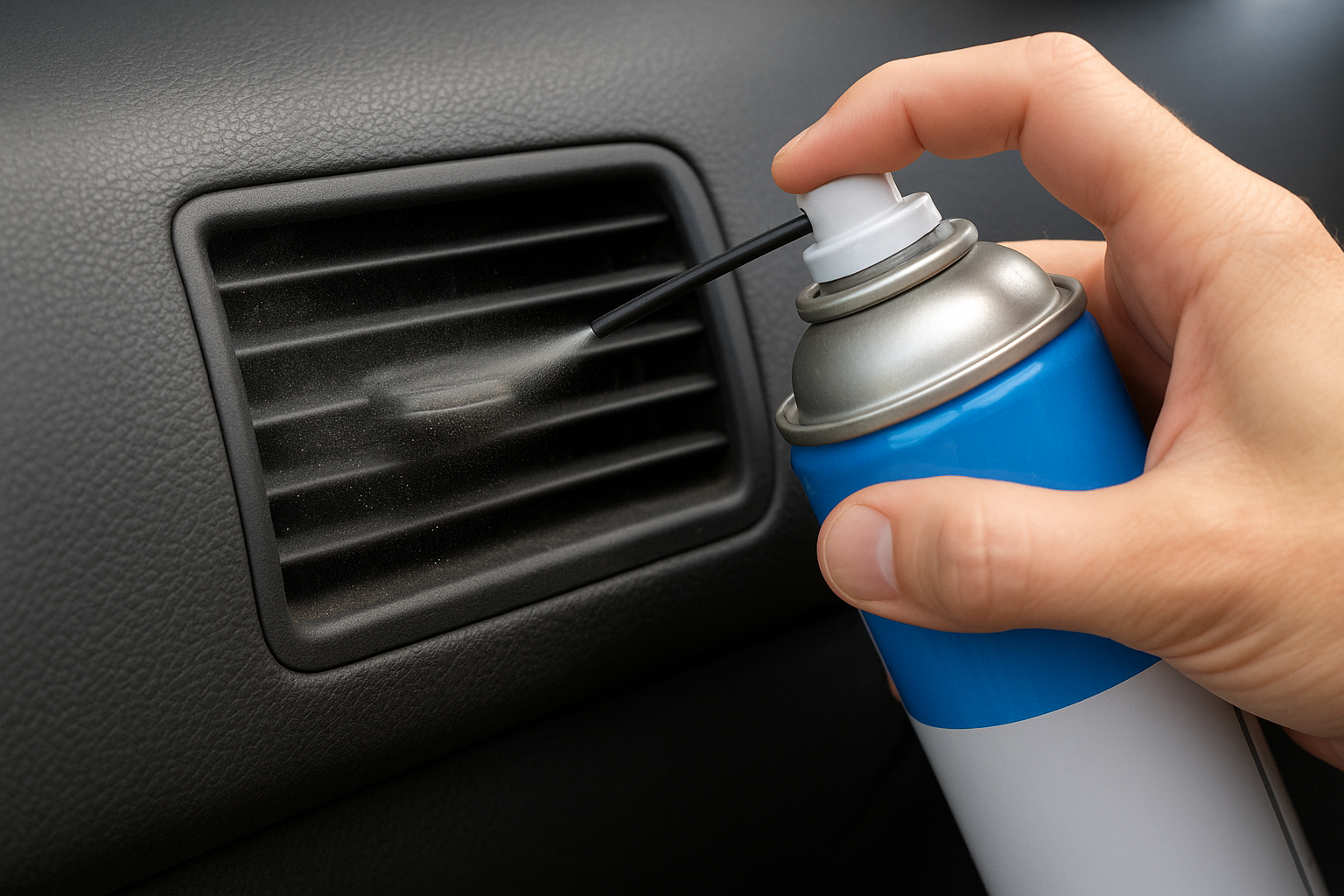
Work with your vacuum running nearby, or hold the vacuum brush attachment directly next to the vent while you spray, so the loosened dust gets captured rather than settling on your dashboard and seats.
Position yourself so you’re spraying across the slats from left to right, then repeat from top to bottom. This cross-pattern approach dislodges dust from multiple angles at once and prevents any packed buildup from sitting undisturbed in the corners of the slat gaps.
Work a foam brush between each slat
After compressed air, run a dry foam paintbrush between each individual slat using short back-and-forth strokes. The foam material picks up fine particles that air pressure alone leaves behind, and it’s soft enough that it won’t scratch the plastic finish. Focus on the top and bottom edge of each slat, where dust tends to pack most densely.
Here’s a quick reference for brush technique by vent type:
| Vent Type | Brush Angle | Stroke Direction |
|---|---|---|
| Standard horizontal slats | Flat, parallel to slat | Left to right |
| Angled directional vents | Match the slat angle | Follow the angle |
| Round vents (circular) | Straight in from the face | Rotate the brush |
Finish this step with a vacuum pass using the brush attachment to pull any remaining loose material off the vent face before you move on to the deeper clean.
Step 2. Deep clean the vent faces and surrounding trim
With loose dust cleared, you can apply your interior cleaner without trapping particles under a wet layer of product. This step targets the grime, oils, and residue that compressed air and brushing leave behind on the vent face and the surrounding trim panel. Moving from dry to wet cleaning in this order is one of the key things that separates an effective approach to how to clean car vents from a surface-level wipe-down that doesn’t last.
Apply cleaner the right way
Spray your all-purpose interior cleaner directly onto a microfiber cloth, not onto the vent itself. Spraying directly into the vent pushes moisture into the ducts, which adds to the moisture problem you’re already trying to fix. A damp cloth gives you full control over exactly where the product goes and how much you’re using.
Never saturate the cloth; you want it damp enough to lift residue, not wet enough to drip into the dashboard gaps.
Work each slat individually, wrapping the cloth tightly around a foam brush or flat plastic trim tool to get into the gaps. One pass per slat is usually enough for regular maintenance. If you’re dealing with a vehicle that hasn’t been cleaned in a long time, do two passes per slat: the first to loosen the grime, the second to wipe it away with a clean section of cloth.
Clean the surrounding trim panel
The trim surrounding your vents collects the same oils from hands, airborne grease, and settled dust as the slats themselves. Skipping this area leaves a visible contrast between clean vents and grimy surroundings that makes the whole job look unfinished. Use the same damp microfiber cloth to wipe the entire trim panel in straight, overlapping strokes from top to bottom.
Pay specific attention to these high-contact areas:
- Volume and fan speed knobs (touched constantly and rarely cleaned)
- The trim bezel directly below each vent where dust settles from airflow
- Climate control buttons and surrounding panels for a complete finish
Finish each vent cluster with a dry microfiber cloth to remove any remaining moisture or cleaner residue. This prevents streaking on the plastic and stops leftover moisture from sitting in the gaps between trim pieces and the dashboard panel.
Step 3. Remove musty odors and kill mold in the HVAC
Surface cleaning handles what you can see, but musty odors come from mold colonies living deeper inside your HVAC system where no brush or cloth can reach. This step is where you move past the visible vent faces and treat the source directly. Skipping this step is the most common reason people clean their vents thoroughly and still notice the same smell within a week.
Use an HVAC odor eliminator spray
Pick up a dedicated automotive HVAC odor eliminator that contains antimicrobial agents or enzymes rather than a simple fragrance product. Fragrance-based sprays cover the smell temporarily; enzyme and antimicrobial formulas actually break down the biological material causing it. With your engine running and fan set to the highest speed, locate the external air intake at the base of your windshield on the passenger side, directly below the wipers. This is where air enters your HVAC system before reaching the cabin.
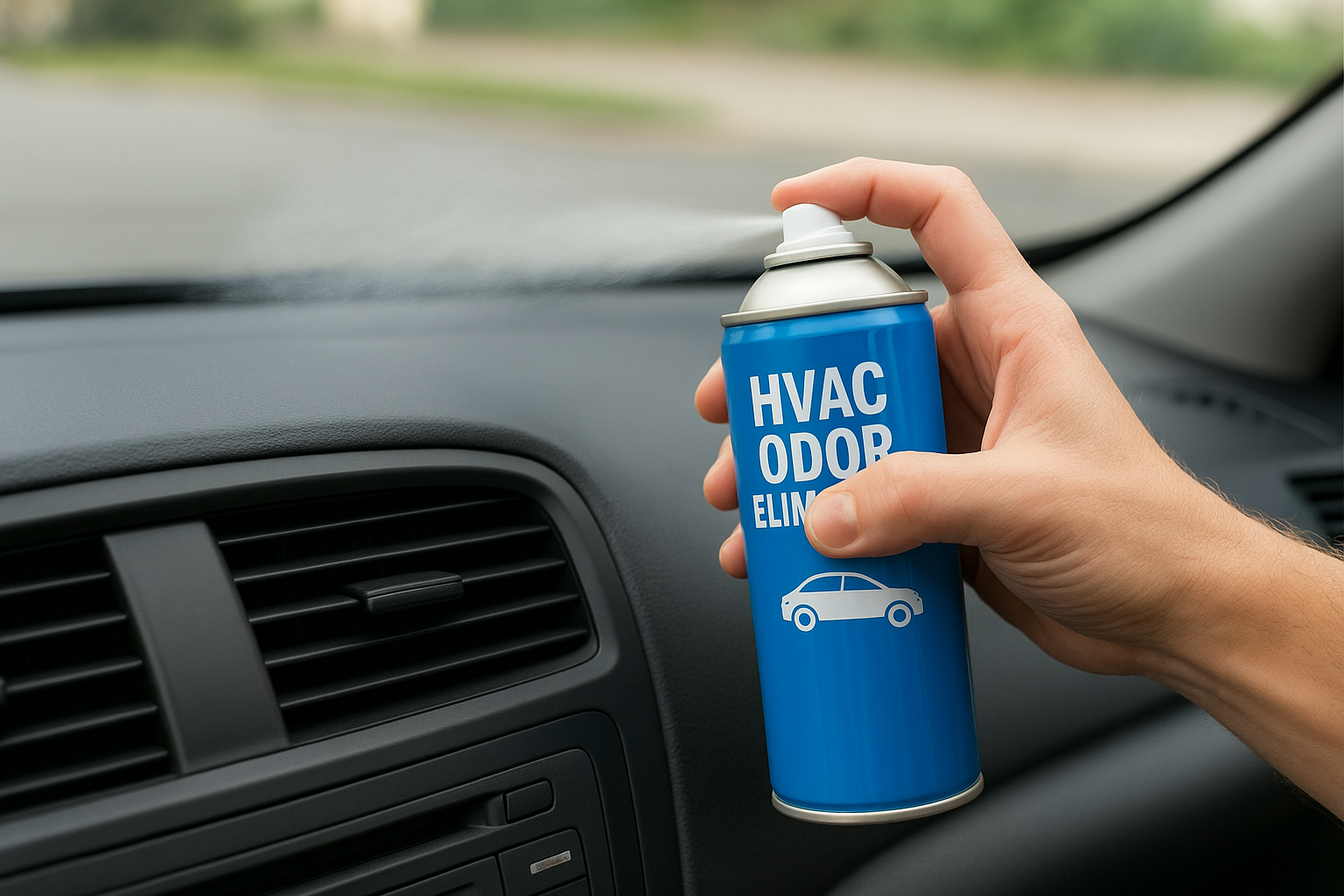
Spraying directly into the external air intake with the fan running at full blast pulls the treatment deep into the duct system, reaching areas that surface cleaning in the "how to clean car vents" process cannot touch.
Direct short bursts of the HVAC spray into the intake while the fan pulls air through the system. Most products recommend emptying roughly half the can at this point. Follow the product’s specific instructions for exact quantity, but the goal is consistent saturation of the duct interior rather than one concentrated blast in a single spot.
Run the system to distribute the treatment
After applying the spray, keep the fan running on high for at least 10 minutes with the AC switched on. The airflow carries the antimicrobial treatment through the evaporator coil, across the duct walls, and out through every vent opening in the cabin. This circulation step is what makes the treatment effective across the full system rather than just near the intake point.
Switch the system from fresh air mode to recirculation mode halfway through the run time. This keeps the treated air cycling inside the cabin and ensures the vent slats you already cleaned get a pass of the antimicrobial product from the inside out. Finish with the windows cracked open for two minutes to clear any residual spray smell from the interior.
Step 4. Replace the cabin air filter and prevent repeat issues
The cabin air filter is the last line of defense between the outside air and your interior, and a clogged filter pushes all that trapped debris back into your HVAC system every time you run the fan. Replacing it completes the process of how to clean car vents properly, because all the duct treatment and surface scrubbing you’ve done loses its effect quickly when a saturated filter reintroduces particles into the airflow. Most manufacturers recommend replacing the filter every 15,000 to 25,000 miles, but check your owner’s manual for your specific vehicle’s interval.
If you live in a dusty area or drive frequently through high-pollen environments, replace your cabin air filter every 12,000 miles regardless of the manufacturer’s recommendation.
How to find and replace your cabin air filter
Most cabin air filters sit behind the glove box, accessible by opening the compartment fully and pressing the side tabs inward to drop the door past its normal stop. Others are located under the dashboard on the passenger side or beneath a panel at the base of the windshield. Your owner’s manual will point you to the exact location for your make and model.
Once you locate the housing, pull the old filter straight out and note the direction the airflow arrow is pointing before you remove it. Insert the new filter with the arrow pointing in the same direction, typically toward the cabin. The replacement process takes about five minutes once you’ve located the housing, and a new filter costs between $15 and $30 at most auto parts stores.
Simple habits that keep vents clean longer
Preventing buildup is far easier than repeating a full deep clean every few months. Running your fan on a low setting for the last few minutes of every drive helps dry out residual moisture inside the duct system before you shut the car off, which significantly reduces mold growth over time. Turning the AC off about a minute before you reach your destination while keeping the fan running achieves the same result.
A few additional habits that extend the time between cleanings:
- Vacuum your interior weekly to reduce the particle count circulating through the HVAC system
- Park in a garage or shaded area when possible to minimize temperature cycling on the evaporator coil
- Check the external air intake at the windshield base every month and clear any leaves or debris that have collected there
- Avoid running the fan on maximum recirculation mode for extended periods in humid conditions
Next steps
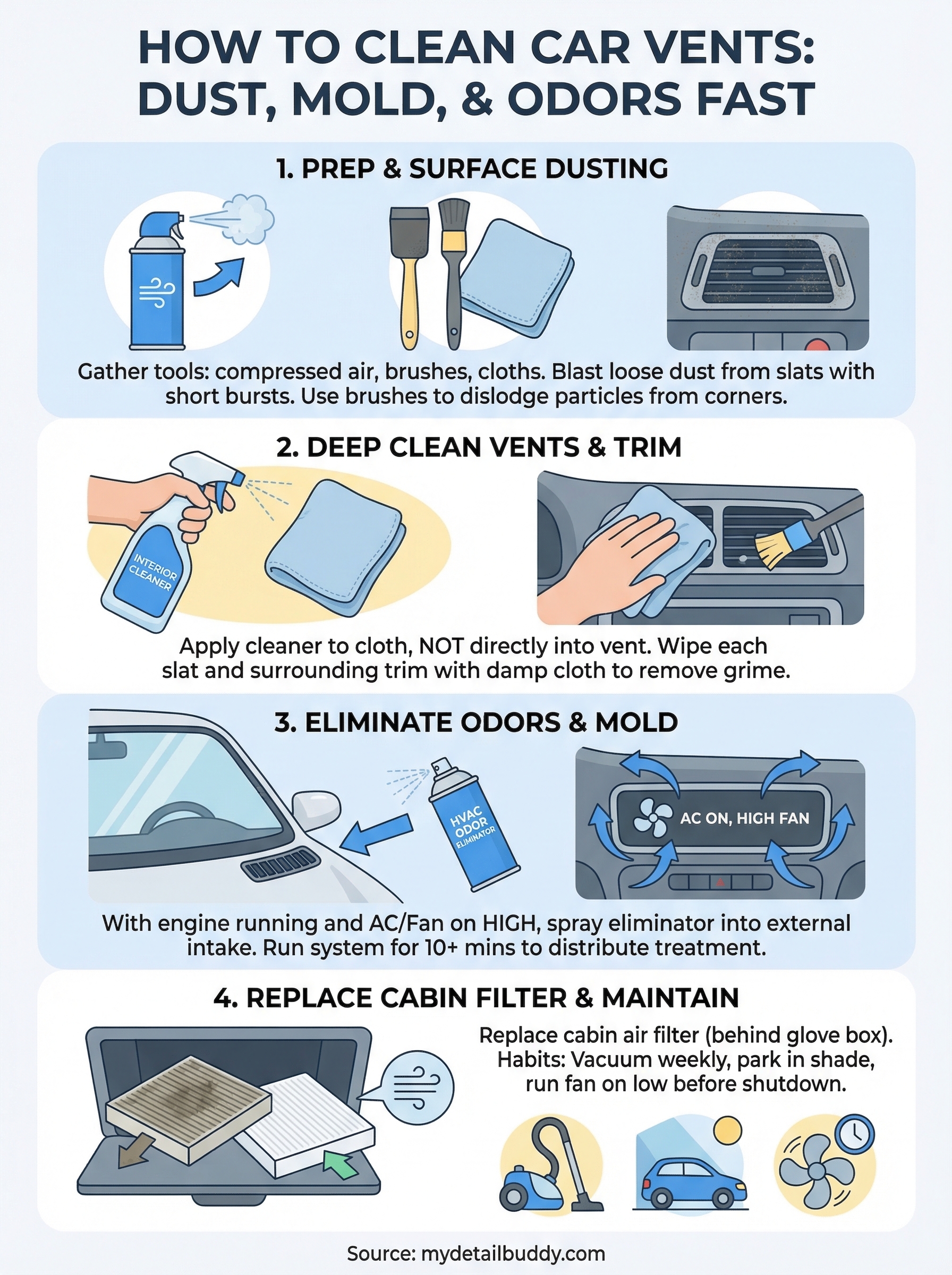
You now have a complete process for how to clean car vents, from pulling loose dust off the slats to treating mold deep inside the HVAC system and swapping out the cabin air filter. Following these steps in order makes a measurable difference in your air quality and keeps the interior looking maintained between full details. The key is consistency: a quick brush-out and compressed air pass every month prevents the kind of buildup that turns a 30-minute job into a two-hour project.
Some situations go beyond what a DIY session can fix. Heavy mold growth, persistent odors after repeated treatments, or vents that are visibly damaged call for professional attention. At My Detail Buddy, we handle full interior details at your location across Waxhaw and the Charlotte area, including thorough vent cleaning as part of our service. Check our car detailing packages and pricing to find the right option for your vehicle.


